
At DelightedCooking, we're committed to delivering accurate, trustworthy information. Our expert-authored content is rigorously fact-checked and sourced from credible authorities. Discover how we uphold the highest standards in providing you with reliable knowledge.
What is Rice Vinegar?
 Tricia Christensen
Tricia Christensen
Tricia Christensen
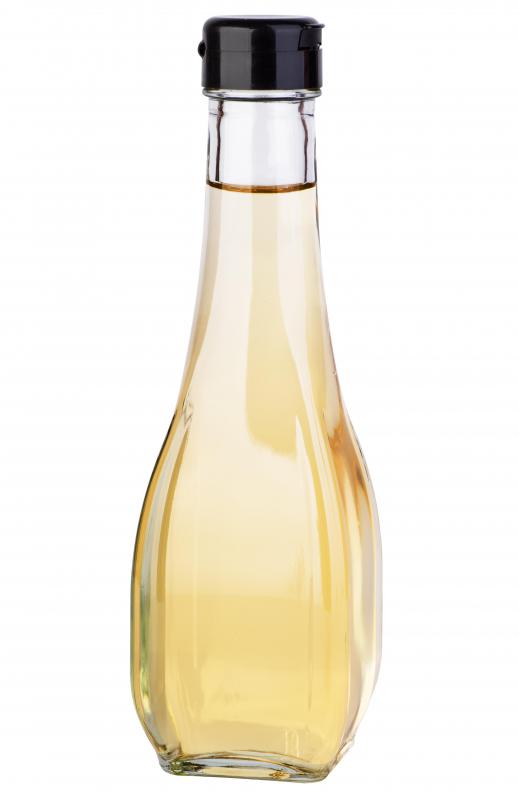
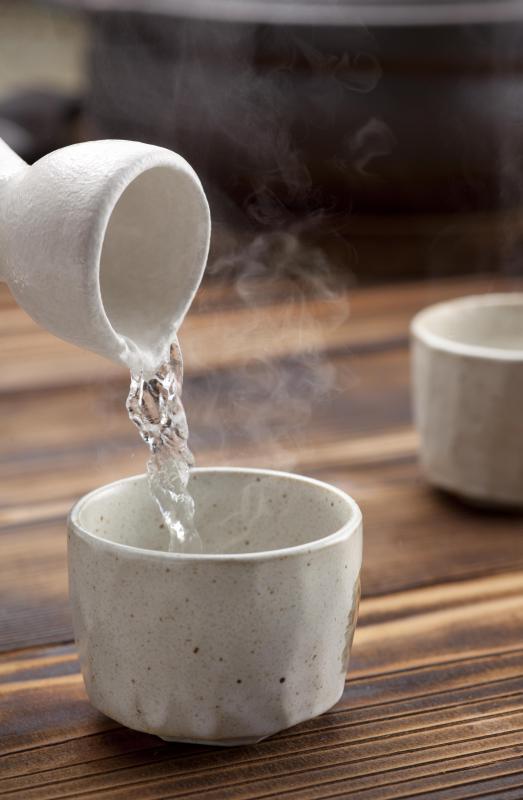
Rice vinegar comes in several varieties. The simplest is made from fermented rice and is often nearly colorless in appearance. The second type is made from sake, and is a variant on the wine vinegar familiar to those in the US. When made from sake, this condiment it is often called seasoned rice vinegar and will exhibit a stronger taste. It’s also a common ingredient in sushi.
This type of vinegar is made in several Asian countries, and differences exist in final taste and product. Japanese rice vinegars are in general much milder than Chinese varieties, and is usually most likely to be colorless. Similar simple white rice vinegar exists in China, but is still slightly sharper than Japanese varieties. Many enjoy the Chinese version as it bears slightly more resemblance to Western white vinegar. However, there is really no comparable product in either Japan or China that can be equally substituted for western white vinegar. You would need to use at least double the amount of rice vinegar in any recipe to substitute for white wine vinegar.
Black and red rice vinegar are also made in China. The black type is usually made from sweet rice and can include millet or sorghum. The name suggests the color, which is a dark brown. Its smoky flavors makes it distinct from other forms.

Red rice vinegar is made with fermented red yeast rice. Many prefer this vinegar above the others because of its complex flavor range that features both tart and sweet notes. It may be a little harder to find in Western stores, but you can usually find both red and black varieties in Asian grocery stores.
Rice vinegar tends to be slightly lower in calories than wine vinegars. It also is sweeter, and many prefer its light taste in salad dressings, as added flavor to stir fry, and in a variety of dishes. It is certainly worth trying in a number of dishes, and is especially good on any Chinese inspired salads, like Chinese chicken salad.

The sweet notes of this condiment are often best paired with sesame oil. If you use toasted sesame oil, which can be quite smoky in flavor, you may want to use one of the darker vinegar variants, so the oil taste won’t completely overwhelm the vinegary taste. Consider black or red versions for dressing and white or seasoned versions in other dishes.
Tricia Christensen
Tricia has a Literature degree from Sonoma State University and has been a frequent DelightedCooking contributor for many years. She is especially passionate about reading and writing, although her other interests include medicine, art, film, history, politics, ethics, and religion. Tricia lives in Northern California and is currently working on her first novel.
Learn more...
Tricia Christensen
Tricia has a Literature degree from Sonoma State University and has been a frequent DelightedCooking contributor for many years. She is especially passionate about reading and writing, although her other interests include medicine, art, film, history, politics, ethics, and religion. Tricia lives in Northern California and is currently working on her first novel.
Learn more...AS FEATURED ON:
AS FEATURED ON:


-
![Rice vinegar is often served with sushi.]()
Rice vinegar is often served with sushi. -
![Rice plants.]()
Rice plants. -
![Rice vinegar may be substituted for white vinegar.]() By: Roman IvaschenkoRice vinegar may be substituted for white vinegar.
By: Roman IvaschenkoRice vinegar may be substituted for white vinegar. -
![Sake is used in seasoned rice vinegar.]() By: BRADSake is used in seasoned rice vinegar.
By: BRADSake is used in seasoned rice vinegar. -
![Red rice vinegar is made with fermented red yeast rice.]() By: amenic181Red rice vinegar is made with fermented red yeast rice.
By: amenic181Red rice vinegar is made with fermented red yeast rice.



Discussion Comments
I have a couple of "old" bottles of seasoned rice vinegar. The vinegar has darkened and there is a dark brown coating of something on the inside of the bottle. There are no expiration dates on the bottles. Assuming this should no longer be ingested, can anyone suggest another use for it. Because of the sugar content, I would not think it could be used for cleaning. Thanks for any suggestions.
Using rice vinegar as a substitute for white vinegar in coleslaw and salad dressings will make for a sweeter, milder flavor.
I usually dissolve sugar in rice wine vinegar when I make coleslaw. I pour this mixture over shredded red and green cabbage and shredded carrots, and let it sit for a half hour. I add mayonnaise to the slaw, and mix well. This sweet slaw is great served on a turkey and Swiss sandwich with Thousand Island dressing.
Rice vinegar is an essential ingredient in making sushi. When making the Su-Meshi (vinegared short-grain rice) you will need to add sugar, rice vinegar, and sea salt.
Cook short grain rice as you normally would, except rinse the rice before hand until you wash all the starch off. Let the rice dry again before cooking it. Once the rice is finished, you will need to fold in the vinegar mixture.
Dissolve two teaspoons of sea salt and seven teaspoons of caster sugar into three tablespoons of Mitsukan rice vinegar. Sprinkle this mixture over the steamed rice and fold it into the rice. Let the rice cool then make your favorite sushi
I use rice vinegar to make a teriyaki glaze. It will not be authentic Japanese teriyaki, but it is a good substitute when you can't readily find the expensive mirin and sake. The basic sauce is comprised of seasoned rice vinegar, soy sauce, and sugar, but I like to add grated ginger, clear pineapple juice, and green onions at the end.
To make the sauce, I mix 1 part seasoned rice vinegar (I like to use the mild Marukan seasoned rice vinegar), one part pineapple juice, two parts soy sauce, and enough grated ginger to taste in a small saucepan. I mix these ingredients over medium heat, and once heated I add enough sugar until it begins to thicken. I continuously stir the sauce until it is reduced to the desired consistency. Use it as a glaze over grilled chicken, salmon, or burgers topped with grilled pineapple.
Post your comments