
At TheHealthBoard, we're committed to delivering accurate, trustworthy information. Our expert-authored content is rigorously fact-checked and sourced from credible authorities. Discover how we uphold the highest standards in providing you with reliable knowledge.
What is Riboflavin?
 Tricia Christensen
Tricia Christensen
Tricia Christensen
Riboflavin, also called vitamin B2, is an important supplement to the diet. It can be taken in supplement or pill form, but is also naturally available in a variety of foods and may be used as a preservative or additive in some packaged foods. Riboflavin helps the body by stimulating the metabolism and assisting in the digestion and absorption of fats, carbohydrates and proteins.
There are many fantastic natural sources of riboflavin. These include milk, soybeans, most leafy green vegetables, cheese, fish, meat, and nuts like almonds. It is also commonly used in breakfast cereals, pasta, and baby foods. Most multivitamin supplements also contain riboflavin, but since it can be obtained naturally from many foods, people who eat a healthy diet don't usually need to supplement this vitamin.

There are some good reasons why someone might want to take extra riboflavin. Some studies conducted in the year 2000 suggested that doses of 400 mg per day may reduce and lessen migraine headaches. Riboflavin also binds itself to different types of blood cells and may inactivate disease certain diseases. Researchers are therefore considering using B2 in blood transfusions so that people receiving transfused blood are less likely to get sick from viral or bacterial cells present in the blood. This knowledge may also suggest that riboflavin would have an overall beneficial effect on immunity, though it certainly hasn’t been shown to stop all illnesses.

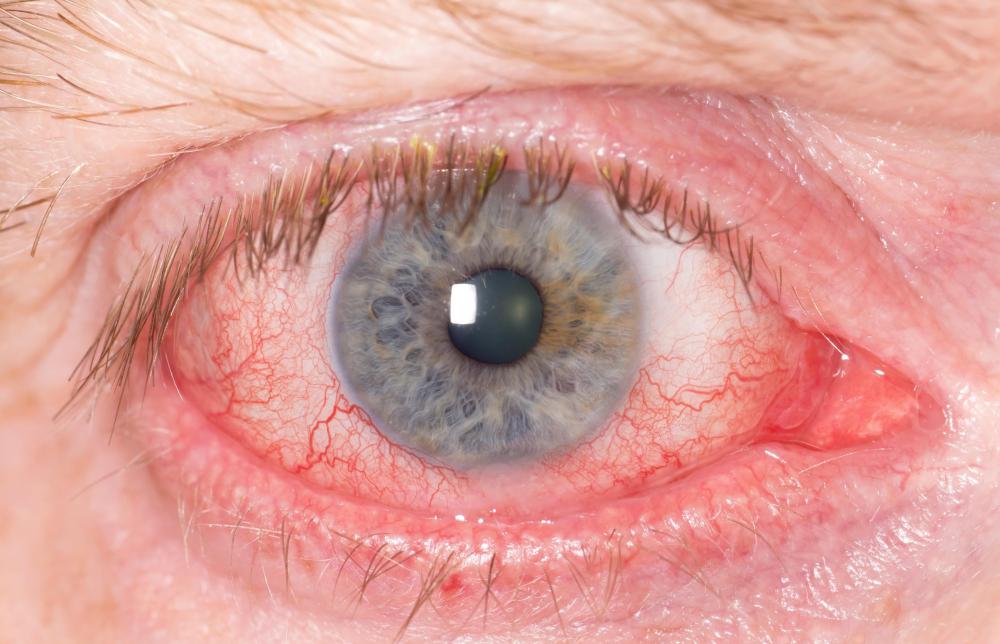
There have been some cases of riboflavin deficiency. These have either been due to a diet extremely low in vitamins, or the inability for the stomach, gut, or intestines to adequately metabolize what is consumed. Though the condition is rare, riboflavin deficiency can result in cracked lips, ulcers in the mouth, an inflamed tongue, and sore throat. Eyes may become bloodshot, and on blood tests, low iron levels or anemia is often found. B2 deficiency is most common in people with diseases of the bowel, HIV, in people with eating disorders, and in women taking birth control pills.

In animals, riboflavin deficiency is far more common and can have devastating effects. In puppies, it can result in the failure to thrive or grow. Hair loss, inability to stand, eye problems like cataracts, and kidney and liver disease can lead to eventual coma and death. Any dog food should contain a recommended daily amount of riboflavin to avoid a vitamin deficiency.
Riboflavin remains an important supplement in the diet, but actual supplementation with vitamin B2 should be done under a doctor’s supervision. At high levels, it might be toxic, especially when taken in injected form. In most cases, though, excess riboflavin is simply excreted from the body in urine. The recommended daily amount (RDA) is 1.3 mg for men and 1.1 mg for women. A bowl of fortified cereal often easily provides half to twice this amount.
Tricia Christensen
Tricia has a Literature degree from Sonoma State University and has been a frequent TheHealthBoard contributor for many years. She is especially passionate about reading and writing, although her other interests include medicine, art, film, history, politics, ethics, and religion. Tricia lives in Northern California and is currently working on her first novel.
Learn more...
Tricia Christensen
Tricia has a Literature degree from Sonoma State University and has been a frequent TheHealthBoard contributor for many years. She is especially passionate about reading and writing, although her other interests include medicine, art, film, history, politics, ethics, and religion. Tricia lives in Northern California and is currently working on her first novel.
Learn more...AS FEATURED ON:
AS FEATURED ON:


-
![Riboflavin is commonly found in breakfast cereals.]() By: OkeaRiboflavin is commonly found in breakfast cereals.
By: OkeaRiboflavin is commonly found in breakfast cereals. -
![Researchers are considering using riboflavin in blood transfusions to reduce the risk of viral or bacterial infection.]() By: PavleResearchers are considering using riboflavin in blood transfusions to reduce the risk of viral or bacterial infection.
By: PavleResearchers are considering using riboflavin in blood transfusions to reduce the risk of viral or bacterial infection. -
![A deficiency in riboflavin may cause bloodshot eyes.]() By: JGadeA deficiency in riboflavin may cause bloodshot eyes.
By: JGadeA deficiency in riboflavin may cause bloodshot eyes.


Discuss this Article
Post your comments