
At TheHealthBoard, we're committed to delivering accurate, trustworthy information. Our expert-authored content is rigorously fact-checked and sourced from credible authorities. Discover how we uphold the highest standards in providing you with reliable knowledge.
What is Reproductive Cloning?
 Mary McMahon
Mary McMahon
Mary McMahon
Reproductive cloning is a type of cloning which is performed for the purpose of creating a duplicate copy of another organism. It is accomplished using a process called somatic cell nuclear transfer. In 1996, Scottish researchers announced that they had successfully cloned the first mammal, a sheep who came to be known as Dolly. Numerous other mammals have been cloned since then, and cloning has become a contentious ethical and scientific issue in some parts of the world.
In somatic cell nuclear transfer, scientists extract the nucleus of a somatic cell, a cell which can come from anywhere in the body, and insert it into an egg which has had its nucleus removed. The egg is stimulated, and it begins dividing and growing, developing into an embryo which can be implanted into a gestational surrogate and carried to term.

Some issues have developed with reproductive cloning from a scientific perspective. Clones appear to have shorter lifespans, leading to concerns about the disadvantages of cloning. There is also the risk of losing genetic diversity as a result of using cloning, especially in the agricultural industry, where the temptation to use standardized animals is understandably tempting. Like any new scientific development, cloning was heavily challenged in the scientific community when it first emerged, especially after scandals in which scientists claimed to have cloned animals but actually hadn't.

Ethically, reproductive cloning brings up some interesting issues. Some people believe that life begins at conception, and they feel that cloning is unnatural and that it could potentially violate their religious beliefs. Others are simply perturbed by the idea of being able to clone copies of living organisms, and they wonder about the risks of using cloned animals in the food supply. Psychologists and other people who study development are intrigued by the potential to use cloning as a test of the famous nature versus nurture debate.

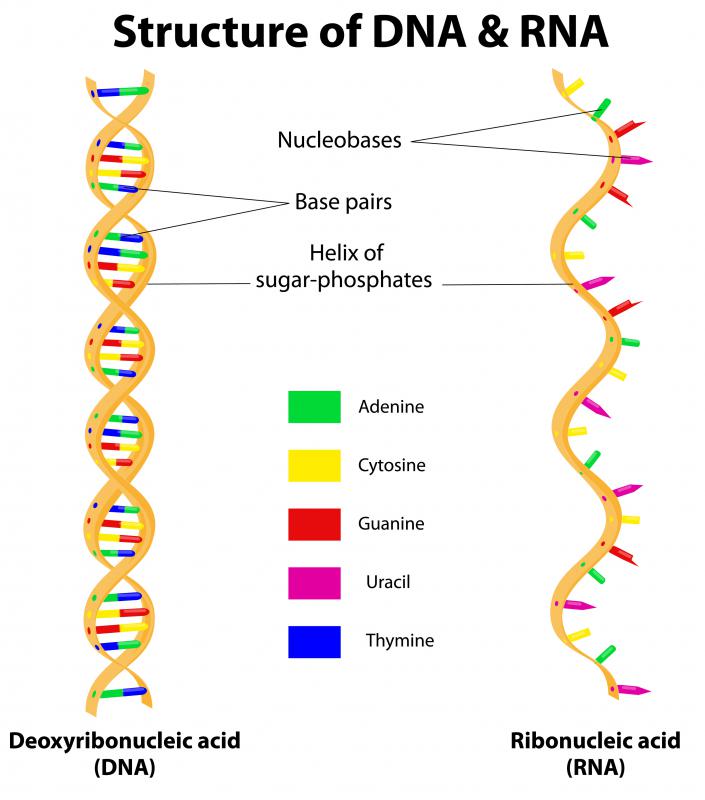
Somatic cell nuclear transfer can also be used to create stem cell lines for therapeutic cloning, a type of cloning which is performed for medical purposes, rather than with the goal of creating a copy of another organism. It is also possible to manipulate the genetic material used in reproductive cloning using recombinant DNA technology to alter DNA.
Several nations have passed resolutions to explicitly ban human cloning, out of concern about ethical issues. Others are willing to explore the potentials of this procedure, but would prefer to see closely monitored and peer reviewed experiments which address some of the concerns about cloning.
Mary McMahon
Ever since she began contributing to the site several years ago, Mary has embraced the exciting challenge of being a TheHealthBoard researcher and writer. Mary has a liberal arts degree from Goddard College and spends her free time reading, cooking, and exploring the great outdoors.
Learn more...
Mary McMahon
Ever since she began contributing to the site several years ago, Mary has embraced the exciting challenge of being a TheHealthBoard researcher and writer. Mary has a liberal arts degree from Goddard College and spends her free time reading, cooking, and exploring the great outdoors.
Learn more...AS FEATURED ON:
AS FEATURED ON:


-
![Science fiction writers have suggested cloning as a method by which extinct human populations, like the Neanderthal, could be revived.]() By: BastosScience fiction writers have suggested cloning as a method by which extinct human populations, like the Neanderthal, could be revived.
By: BastosScience fiction writers have suggested cloning as a method by which extinct human populations, like the Neanderthal, could be revived. -
![In 1996, a sheep was the first mammal to be successfully cloned.]() By: tarakiIn 1996, a sheep was the first mammal to be successfully cloned.
By: tarakiIn 1996, a sheep was the first mammal to be successfully cloned. -
![It's possible to manipulate genetic material used in reproductive cloning using recombinant DNA technology.]() By: designuaIt's possible to manipulate genetic material used in reproductive cloning using recombinant DNA technology.
By: designuaIt's possible to manipulate genetic material used in reproductive cloning using recombinant DNA technology.


Discussion Comments
Cloning is inevitable.
We won't want to clone a Hitler like being if we clone humans. I believe that we shall never clone any human being. --Harry
I want at least one biological child. It has become clear that reproductive cloning is probably my only option. I frankly don't care whether Luddites are terrified of reproductive cloning. I want it!
I personally think cloning is a great idea because it could bring animals back from extinction or save peoples' lives.
personally i think cloning is a great idea because with therapeutic cloning, we can create organs and tissue to save lives and with reproductive yes we can create life. A lot of people may be against it but it is probably a good idea and could lead the world into a new age with cheap labor act.
@monothree: she would only be using ivf because she can't have a baby another way.
@calabama71: I don’t think that cloning and in vitro can really be compared. IVF is really a more mainstream procedure with few ethical problems.
With in vitro fertilization, you actually have a sperm and an egg. Regarding cloning, two people of the opposite sex are not required. Meaning, a woman could have a child using only her own genetic material.
@cmsmith10: There are so many different things to consider when talking about cloning. The concerns about whether cloning is right or wrong is clouded by subjectivity. When talking about cloning animals that are on an endangered species list, it is considered a more positive technological breakthrough. However, if speaking of cloning an extinct dinosaur from preserved tissue (such as Jurassic Park); it is considered not so positive.
I have heard a lot of people say that cloning is “playing God”. I’m not trying to start a debate, but if that is the case, how about other reproductive procedures like in vitro fertilization and hormone treatments? I don’t really know enough about it to form an opinion at this point. Any input?
Many people think "it didn't work in Jurassic Park and it's not going to work for us".
Post your comments