
At WiseGEEK, we're committed to delivering accurate, trustworthy information. Our expert-authored content is rigorously fact-checked and sourced from credible authorities. Discover how we uphold the highest standards in providing you with reliable knowledge.
What is Radial Nerve Damage?
The radial nerve is found in the arm and helps to control muscle movement, and also allows the wrist to move in a backward direction. This nerve can be damaged by such things as placing too much pressure on it while sleeping, using crutches, or because of a broken bone in the arm. Common symptoms of radial nerve damage include numbness or a tingling sensation traveling though the area where the nerve is located. Treatment often involves the use of medication and physical therapy, but in the more severe cases, surgery may be required.
The majority of radial nerve damage can be traced to abnormal pressure being placed on the nerve, especially in long-term situations. This is especially common due to the position of the arm during sleep. If nearby structures are inflamed or swollen, pressure can be placed on the nerve as a result of the inflammation. Some medical conditions, including diabetes, kidney disease, or multiple sclerosis, can also cause nerve damage, but in many cases, the direct cause is never found.
Abnormal sensations, such as numbness and tingling in the arm and hand, are common symptoms of damage to the radial nerve. It may also become difficult to bend the arm at the elbow or the wrist. Many patients also experience varying degrees of pain.

Treatment for radial nerve damage often includes physical therapy or mild range of motion exercises, though many cases will resolve on their own without any specific treatment. Over-the-counter medications, such as aspirin or ibuprofen, may also be used to reduce inflammation and treat pain. Stronger medications are often prescribed by a medical professional if over-the-counter medications do not provide sufficient relief. If the damage is caused by an underlying medical condition, such as kidney disease, that condition must be treated as well.

In severe cases, or if other types of treatment have failed to supply sufficient relief, surgical intervention may become necessary. If medical tests such as X-rays reveal the presence of a mass pressing on the nerve, surgery may be performed to remove it. Surgery to cut the nerve is seldom performed due to the risks of paralysis following surgery. The use of medications, supportive devices such as splints, and physical therapy are typically the preferred methods of treatment for radial nerve damage.
AS FEATURED ON:
AS FEATURED ON:









-
![The radial nerve can be damaged from using crutches improperly.]() By: AVAVAThe radial nerve can be damaged from using crutches improperly.
By: AVAVAThe radial nerve can be damaged from using crutches improperly. -
![A broken arm may cause radial nerve damage.]() By: leschnyhanA broken arm may cause radial nerve damage.
By: leschnyhanA broken arm may cause radial nerve damage. -
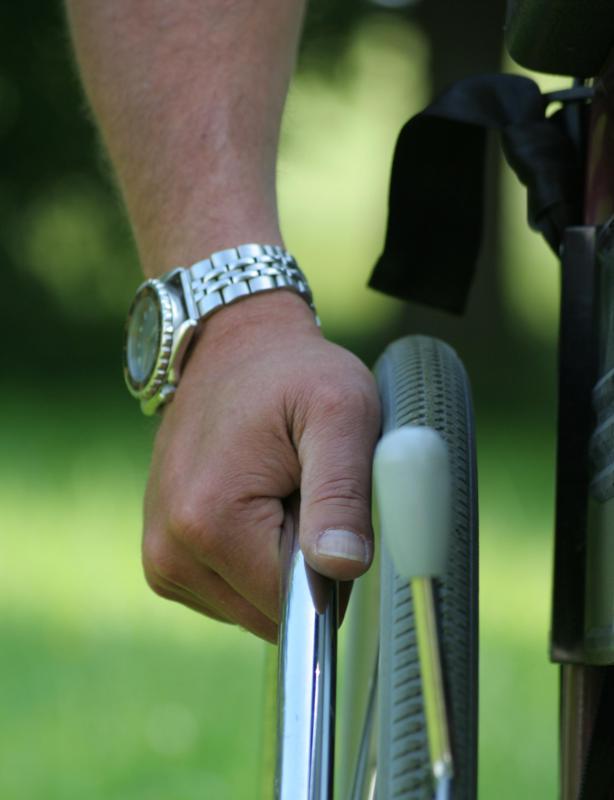
![Wearing a watch too tightly may cause radial nerve pain.]() By: Conny HagenWearing a watch too tightly may cause radial nerve pain.
By: Conny HagenWearing a watch too tightly may cause radial nerve pain. -
![Numbness and tingling in the arm and hand are common symptoms of radial nerve damage.]() By: mady70Numbness and tingling in the arm and hand are common symptoms of radial nerve damage.
By: mady70Numbness and tingling in the arm and hand are common symptoms of radial nerve damage. -
![The radial nerve is found in the arm and helps to control muscle movement.]() By: 7activestudioThe radial nerve is found in the arm and helps to control muscle movement.
By: 7activestudioThe radial nerve is found in the arm and helps to control muscle movement. -
![Sleep positions may contribute to radial nerve damage.]() By: vgstudioSleep positions may contribute to radial nerve damage.
By: vgstudioSleep positions may contribute to radial nerve damage.




Discuss this Article
Post your comments