
At DelightedCooking, we're committed to delivering accurate, trustworthy information. Our expert-authored content is rigorously fact-checked and sourced from credible authorities. Discover how we uphold the highest standards in providing you with reliable knowledge.
What is Quince?
 Tricia Christensen
Tricia Christensen
Tricia Christensen
A quince is a fruit resembling a pear that was first cultivated in the Middle East. In fact, the proverbial apple offered to Adam by Eve may actually be more accurately translated as a quince. This fruit cannot be eaten like pears or apples, with the exception of the less cultivated pineapple variety, but need to be baked or frozen to eliminate their acidity.
Once ripened, the yellowish fruit still has a hard exterior, much like a winter squash. If one is not using them immediately, cooking guides recommend storing them in the refrigerator for up to two weeks. The seeds can be poisonous in large quantities, so many people discard them. The core of the quince is very hard, but using a sharp paring knife will divest it of both the unusable core and the seeds.

Though the interior of the quince is white when raw, cooking will turn it a deep red. Like apples, this fruit contains a lot of pectin, so it is frequently used for jams and jellies. Modern American recipes also suggest replacing one third of the apples in an apple pie with quince slices to add a bit of tartness and interest to the traditional pie.

In the Middle East and the Mediterranean, traditional recipes over a thousand years old call for stewing quince with pork, lamb or goat. Cultivation of the fruit moved westward with the expanding Roman Empire, and countries like England and France made jams and fruit paste with it. In the Middle Ages, England's first marmalade was made not with oranges, but quinces.

The French developed a fruit preserve with the fruit in the Middle Ages called Contignac d'Orleans, and one legend states a gift of it was given to Joan of Arc when she ended the siege of Orleans. Germany makes a fruit juice from quinces that is said to blend well with sweeter juices.
Colonists brought the fruit to the Americas, but it was vulnerable to fireblight, which can destroy a whole orchard in one season. There are now few orchards in North America. They fared better in South America, and the fruit is abundant in Uruguay and Argentina.

In Western cultures, quinces fell out of popularity in the 19th century, when tropical fruits had become more readily available and were preferred. The fruit is making a comeback, however, and fine chefs are using the it again to create varied and interesting recipes, or reviving usage based on Middle Eastern cuisine.
Quinces are seasonal and can be found in autumn to early winter. Since they are not frequent ingredients in most American cooking, a shopper may have to look for them in Middle Eastern or Hispanic food markets. One reward of a bit of extra shopping, however, is the pleasant release of a perfume-like aroma as the fruit ripens. Women in ancient Rome were said to take a bite of one before their first kiss with their husbands.
Distinct from the fruit-bearing plant is the ornamental quince, a herald of spring for many in the US. These hedges bloom in mid January and have deep pink petals, which are a pleasing contrast to the dark, bare wood. The ornamental plant bears no fruit, and survives well in North American climates. In contrast, fruit-bearing varieties have white or light pink petals, and when in bloom, as either hedge or short tree, they are both lovely to view and functional for the fruit they provide.
Tricia Christensen
Tricia has a Literature degree from Sonoma State University and has been a frequent DelightedCooking contributor for many years. She is especially passionate about reading and writing, although her other interests include medicine, art, film, history, politics, ethics, and religion. Tricia lives in Northern California and is currently working on her first novel.
Learn more...
Tricia Christensen
Tricia has a Literature degree from Sonoma State University and has been a frequent DelightedCooking contributor for many years. She is especially passionate about reading and writing, although her other interests include medicine, art, film, history, politics, ethics, and religion. Tricia lives in Northern California and is currently working on her first novel.
Learn more...AS FEATURED ON:
AS FEATURED ON:


-
![Quince resembles a pear and has a yellowish hard exterior when ripened.]() By: Anna KucherovaQuince resembles a pear and has a yellowish hard exterior when ripened.
By: Anna KucherovaQuince resembles a pear and has a yellowish hard exterior when ripened. -
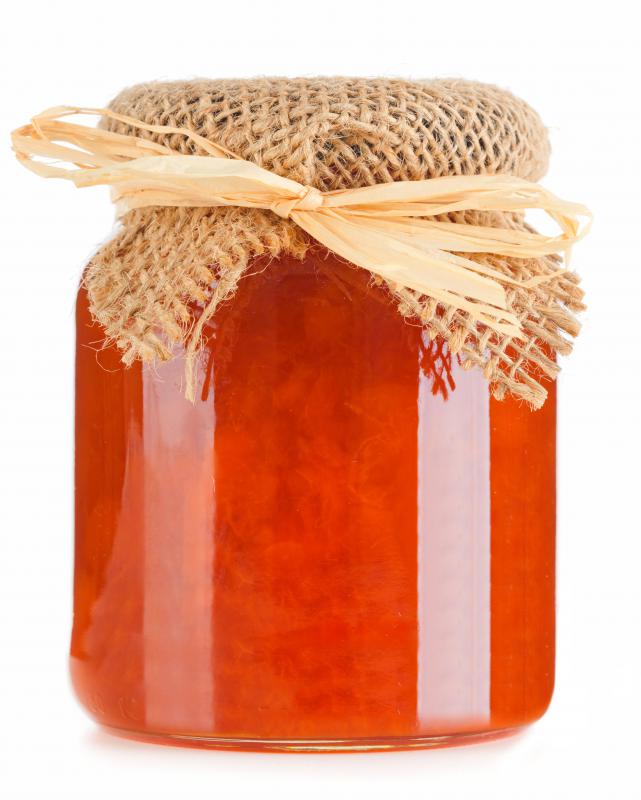
![Quince turns a a deep red when cooked and is often used to make jams and jellies.]() By: Antonio GravanteQuince turns a a deep red when cooked and is often used to make jams and jellies.
By: Antonio GravanteQuince turns a a deep red when cooked and is often used to make jams and jellies. -
![Quince were first cultivated in the Middle East.]() By: www.doglikehorse.comQuince were first cultivated in the Middle East.
By: www.doglikehorse.comQuince were first cultivated in the Middle East. -
![Germany uses quince to make a fruit juice that blends well with other sweet juices.]() By: benkenogyGermany uses quince to make a fruit juice that blends well with other sweet juices.
By: benkenogyGermany uses quince to make a fruit juice that blends well with other sweet juices.



Discussion Comments
I make quince jam every year with my two trees. I harvest when the fruit turns yellow and the fuzz falls off. I use the seeds for a gel for your hair.
This fruit is the best ever tasting! I sell these at the farmers market and people come every year and want my quince. I also use the leaves to make tea.
I am eating quince paste right now. The irony...
I have been eating quince every year in raw form. I just add lemon, salt and chili powder. It is delicious. People say you have to cook it, but it is up to the person eating it.
My quince fruit has a bright orange fuzz on it. Is this normal?
Does anybody know for sure if the several seeds I have planted will make it to trees in Orlando, Florida?
Out of more than 50 seeds, at least 20 are already showing up. I am not pretending to do any business, I just love the fruit I got used to when in Peru. Here in Orlando I have to pay $1.80 apiece when it rarely is available. Any ideas or suggestions?
@googlefanz-- Quince is a winter fruit. It's eaten between December and January as far as I know. Just wait for the fruits to grow and turn a light yellow color. Don't worry if it's tough, it will become softer as it waits, so you can pick them once the color looks good.
I don't like having quince as a fruit, it's too hard and not very tasty. You can make quince preserve though. Grind up the quince and cook it with sugar on the stove. Include the quince seeds in the pot because it will give the preserve a nice pinkish color. You can also add a few cloves in it while it boils for a unique flavor. It will turn jelly like and will have a nice texture when it's done.
It's absolutely delish! I love having it on toast in the morning.
How can I tell if what I have is a quince shrub? I've got these flowering shrubs that have been growing outside of my house since before I moved in, but I'm not sure if they're quince or not.
I've looked up pictures of quince chaenomeles, but they don't really look like that -- can you tell me if there's another kind of quince shrub that I might have?
I have a quince tree in my backyard, but I'm always too lazy to go out and pick the fruit. It sure looks pretty though!
Maybe I'll get out to pick some this year -- does anybody know when the best time to pick quince is?
I love making quince preserves -- the flavor can take some getting used to, but it's kind of addictive. Once you start it's hard to stop!
I'm lucky enough to have flowering quince bushes outside my house so I don't have to try and find them in the grocery store -- those suckers can be hard to get a hold of!
Anyway, I would highly recommend people to try quince preserves if they can find them -- they have a really unique taste that shouldn't be missed.
Not one of the fruits you have to have. You can have a bite or two, but you can not really eat it as you would and apple for instance. After you take a bite and swallow it just falls so heavy on your stomach, like no other fruit I have eaten. Quincy is good to add to compote.
Post your comments