
At HomeQuestionsAnswered, we're committed to delivering accurate, trustworthy information. Our expert-authored content is rigorously fact-checked and sourced from credible authorities. Discover how we uphold the highest standards in providing you with reliable knowledge.
What is Quilling?
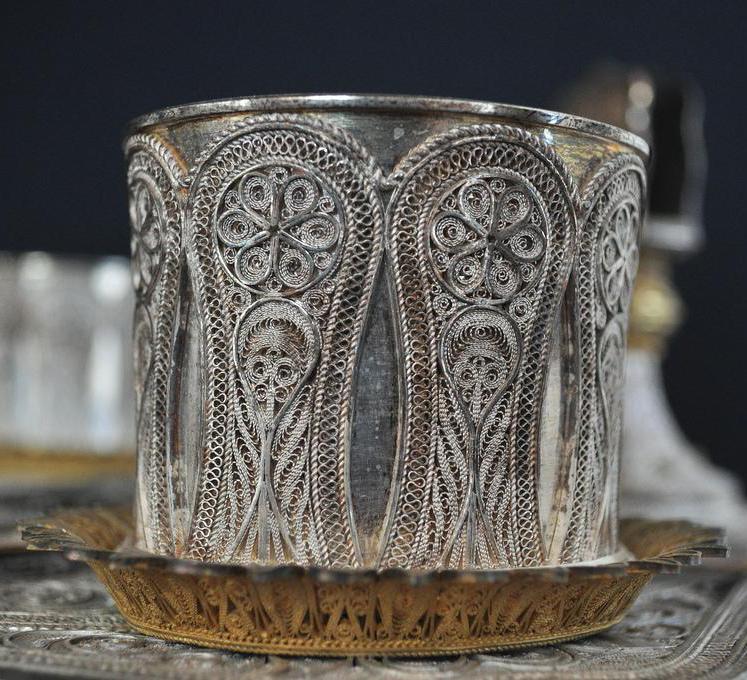
Quilling, or filigree paper work, is an art that involves rolling or coiling thin strips of paper into intricate designs and shapes. Most sources agree that it is an ancient art form, possibly first practiced with paper by monks and nuns to decorate religious objects. The art itself is likely named because originally the tiny strips of paper were rolled over goose quills. Prior to the invention of paper, other societies curled thin metal wire in a similar decorative fashion.
Now that it is not necessary to use feather quills to wind the paper, other items such as toothpicks, needles and specially designed slotted tools are used. Modern conveniences also mean that the paper strips no longer must be cut by hand; a paper shredder will work. To quill, quillers wrap the paper tightly around a stick-like tool until you reach the end of the strip.

Once removed from the stick, it is possible to maintain this tight shape and glue it to paper as is or let got of the tight circle and create a looser circle or other shapes by pinching. Leaves and other shapes are formed through pinching. The tight circles are perfect for flower centers. Other shapes include teardrop, marquise, half-circle, scrolls, and fringed flowers.

The resulting paper masterpieces form floral and animal pictures, scenes, crosses, birth announcements, delicate fans, and more. Other artists create three-dimensional figures, castles, panoramas and shadow box miniatures using the quill method. Stationery, cards and boxes are frequently decorated with filigree paper work also. As the art has regained popularity, many creations are quite contemporary in design.
The art of quilling is popular for several reasons other than its obvious historical significance. It is inexpensive; the supplies do not take up a lot of space, and it’s easy to learn. Supplies are readily available at craft stores. Quilling can also be combined with other crafts, such as scrap booking, to create unique page designs.
Quilling was very popular along with needlework in England in the 18th century. The pieces decorated by filigree paper work during this time period included urns, wine coasters, tea caddies and more. In American history, quilling decorated trays, boxes and candle sconces, and even combined with twisted wire, shells, or wax flowers. Due to the delicate nature of the quill work, only few pieces remain from the 1700s & 1800s, mostly in museums in the New England area.
Though quillers have been meeting for centuries, quilling guilds are relatively new. The Quilling Guild, a registered charity in the UK, formed in 1983, and the North American Quilling Guild also formed in 2000 to promote the art and dedicate themselves to passing on this skill to future generations. Both organizations have a Web site and an annual guild for those who are enthusiasts of this unique art.
AS FEATURED ON:
AS FEATURED ON:


-
![Quilling is also known as filigree.]()
Quilling is also known as filigree. -
![A gridded cutting mat makes it easy to cut uniform strips for paper quilling.]() By: Theo MalingsA gridded cutting mat makes it easy to cut uniform strips for paper quilling.
By: Theo MalingsA gridded cutting mat makes it easy to cut uniform strips for paper quilling.

Discuss this Article
Post your comments