
At AllThingsNature, we're committed to delivering accurate, trustworthy information. Our expert-authored content is rigorously fact-checked and sourced from credible authorities. Discover how we uphold the highest standards in providing you with reliable knowledge.
What is Quartz?
 Mary McMahon
Mary McMahon
Mary McMahon
Quartz is a hard crystalline mineral which is found abundantly all over the Earth in a variety of forms. It is the most common mineral on Earth, making up 12% of the Earth's crust by volume, and is used in a wide variety of applications including jewelry, scientific research, manufacturing, and building. Because of its many uses, quartz is also a very important mineral, and some rare varieties are considered to be quite valuable. It can also be quite beautiful, especially when cut and polished by a jeweler who appreciates its properties. It is often used as a cheaper substitute for fancier gems, and when handled well, it can be difficult to distinguish from more expensive counterparts.
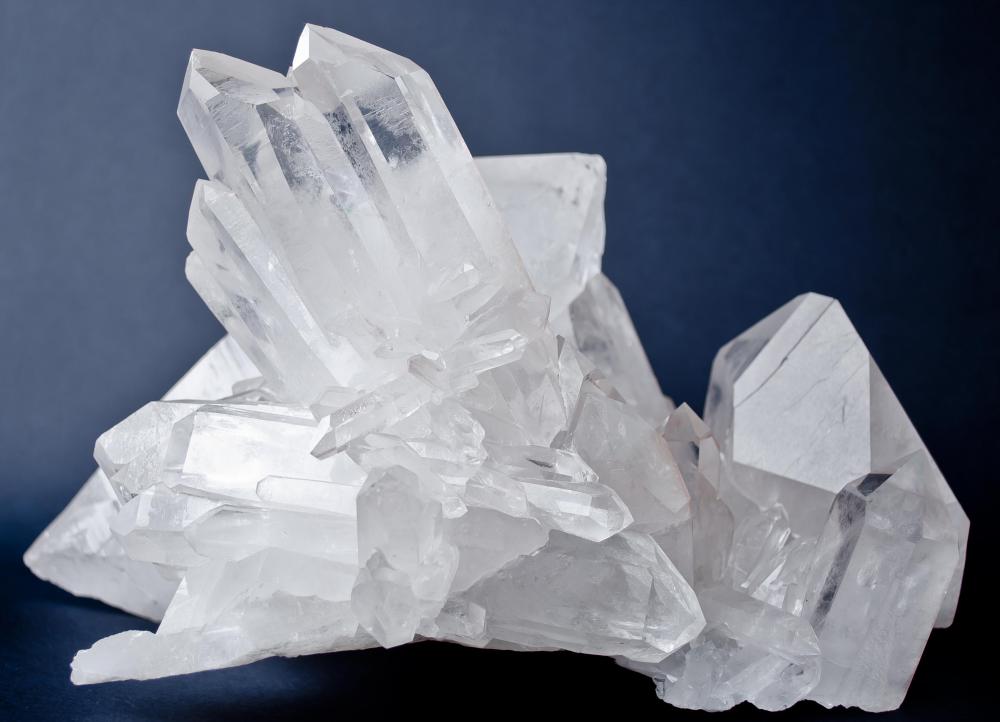
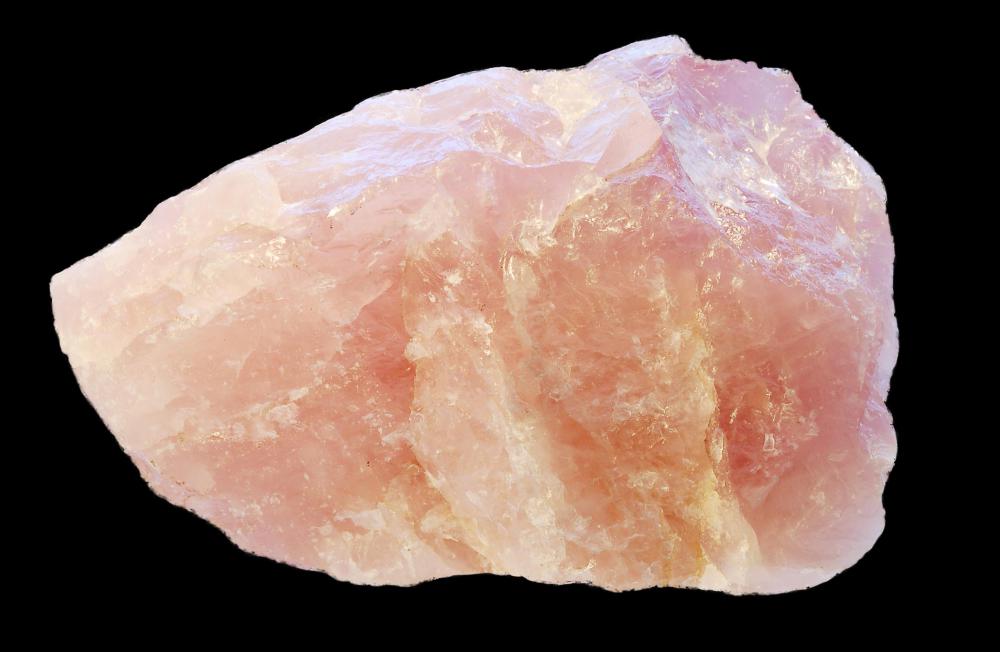
Silicon dioxide is the proper chemical name for quartz, which acquires different colors and properties depending on how it was formed. Commonly, this mineral takes on impurities that cause it to be colored, as is the case with the forms amethyst, citrine, and rose quartz. In these instances, the crystalline structure of the mineral is readily visible, and the stone can sometimes form very large clusters of distinctive crystals. These quartzes also tend to be clear, although they may have small inclusions or areas of fracture.

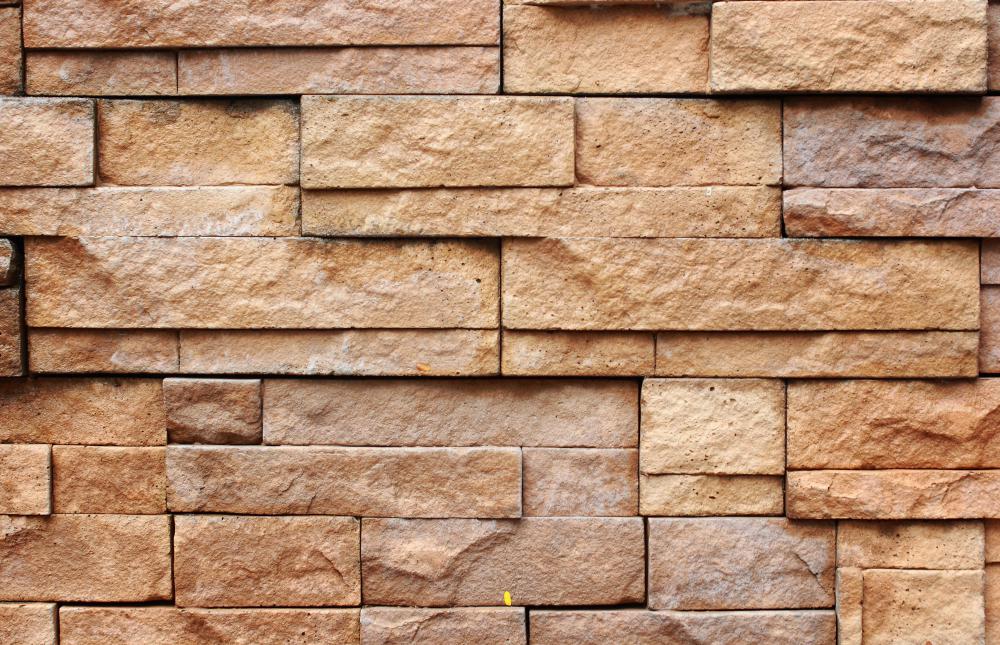
In other instances, the crystals are too small to see with the naked eye. This form is opaque, and sometimes called milky quartz or chalcedony. Chalcedony forms through deposits of layers of colored material, such as agate, jasper, and carnelian. Quartz can also appear mixed in with other geologic material, as is the case with granite and sandstone. Because the mineral does not dissolve readily in water, concentrations of it tend to increase as other rocks wear away, leaving mixed rocks with a high percentage of quartz in their composition.

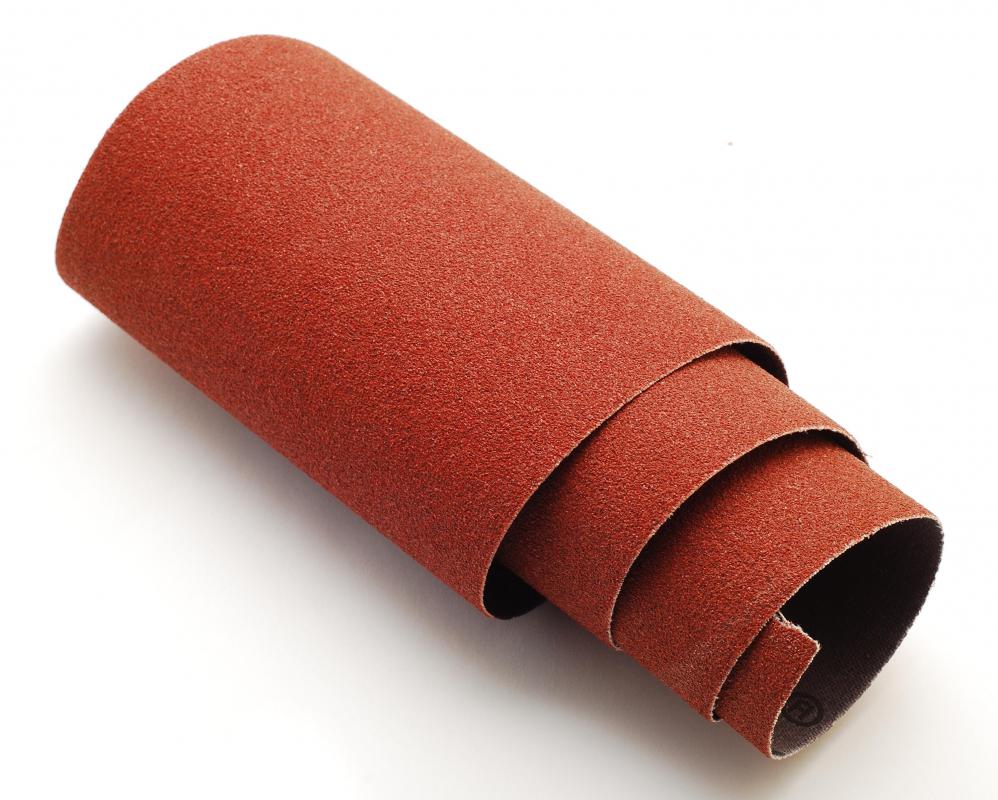
In jewelry, quartz in many forms is abundantly used. Chalcedony can be used to make beads, cameos, and distinctive rings, while clear crystalline varieties is often cut into faceted gemstones to ornament necklaces, rings, and bracelets. More rare forms can command a high price when used in jewelry. In manufacturing, it is used as an electrical component, to manufacture specialized tools for the lab, lenses, specialized glass, and ground for use in sandpaper. Sandstone is used in building, as is granite, and most people interact with something containing quartz at least once a day, since the mineral is so prevalent in daily life.
Frequently Asked Questions
What exactly is quartz?

Quartz is a hard, crystalline mineral composed of silicon and oxygen atoms. It's the second most abundant mineral in Earth's continental crust, with a chemical formula of SiO2. Quartz is renowned for its durability and resistance to weathering, making it a prevalent mineral found in a variety of geological environments.
How is quartz formed?
Quartz forms when silicon and oxygen combine under high temperatures and pressures, typically in a process called hydrothermal circulation. This occurs when mineral-rich water moves through cracks in the Earth's crust, cooling and depositing quartz along the way. It can also form in cooling magma bodies or in sedimentary rocks.
What are the different types of quartz?

Quartz comes in various forms and colors, including clear rock crystal, purple amethyst, white or translucent milky quartz, pink rose quartz, and yellow citrine. The color variations are due to impurities or exposure to natural radiation. Additionally, there are cryptocrystalline varieties like agate, jasper, and chalcedony, which have microscopically small crystals.
Can quartz be used in jewelry?

Yes, quartz is widely used in jewelry due to its beauty and hardness. Varieties like amethyst, citrine, and rose quartz are popular as gemstones. Quartz rates a 7 on the Mohs scale of hardness, making it durable enough for everyday wear. Its abundance also makes it an affordable option for many jewelry enthusiasts.
Is quartz used in technology?
Quartz is essential in technology, particularly in electronics, due to its piezoelectric properties—meaning it can convert mechanical pressure into electrical energy and vice versa. High-purity quartz is used to make silicon chips for computers, smartphones, and other devices. It's also used in timekeeping instruments like watches and clocks.
How can you tell if a mineral is quartz?
To identify quartz, look for a mineral with a glass-like luster and a hardness that can scratch glass but is resistant to being scratched by a steel knife. Quartz typically forms hexagonal prisms with pointed ends and does not exhibit cleavage, which means it doesn't break along flat planes like some other minerals.
Mary McMahon
Ever since she began contributing to the site several years ago, Mary has embraced the exciting challenge of being a AllThingsNature researcher and writer. Mary has a liberal arts degree from Goddard College and spends her free time reading, cooking, and exploring the great outdoors.
Learn more...
Mary McMahon
Ever since she began contributing to the site several years ago, Mary has embraced the exciting challenge of being a AllThingsNature researcher and writer. Mary has a liberal arts degree from Goddard College and spends her free time reading, cooking, and exploring the great outdoors.
Learn more...AS FEATURED ON:
AS FEATURED ON:









-
![Quartz in the most abundant mineral found on Earth.]() By: theartofphotoQuartz in the most abundant mineral found on Earth.
By: theartofphotoQuartz in the most abundant mineral found on Earth. -
![Rose quartz is often used in jewelry.]() By: Aleksandras NaryshkiRose quartz is often used in jewelry.
By: Aleksandras NaryshkiRose quartz is often used in jewelry. -
![Sandstone contains quartz and can be used for building decorative walls.]() By: ThitiSandstone contains quartz and can be used for building decorative walls.
By: ThitiSandstone contains quartz and can be used for building decorative walls. -
![Sandpaper can be made with quartz.]() By: Ionescu BogdanSandpaper can be made with quartz.
By: Ionescu BogdanSandpaper can be made with quartz. -
![Amethyst is a colored type of quartz.]() By: florin1961Amethyst is a colored type of quartz.
By: florin1961Amethyst is a colored type of quartz.

Discussion Comments
I have seen chunks of clear quartz embedded in a rock before. The quartz crystals jutted out a few inches in every direction, and they resembled three-dimensional swords.
I read a book when I was little about a unicorn without a horn. The pictures in the book depicted pieces of transparent quartz shooting up through the ground where he grazed, and he simply touched his forehead to one of those and it became a horn.
It's easy to see why this type of quartz inspired the author to think of unicorn horns. It does look rather magical.
@Oceana – I don't know if that is possible. However, since natural amethyst can be exposed to heat to make it turn a deeper purple, perhaps heating it would work.
All I know for sure is that sunlight will fade amethyst. If you wear the ring out in the sun, then that is likely why it has lost its hue. Even leaving it in a spot where sunlight falls on it through a window can fade it.
Amethyst is a beautiful form of quartz jewelry. I love the clear purple color, but I've had some issues with my amethyst ring.
Over the last three years, it has faded from a bright purple to a grayish color with just a hint of purple. I feel like it has lost what made it so special, and I don't know how to get that color back. Is there a way to make it purple again?
I have quartz countertops in my kitchen. They are non-porous, so bacteria can't seep into them, and I feel good about this fact.
They are also scratch resistant. This is important, because I get in a rush in the kitchen and I wind up scraping utensils and pots across the surface.
When I was picking out my countertops, there were so many colors available. With quartz, you aren't limited to two or three like you might be with other materials.
Of course it is able to be sold, mostly if it is in the form of crystals. Some very beautiful quartz crystals are available online and Ebay.
citrine and amethyst are quartz, so yeah, it's valuable.
Arkansas has one of the largest quartz mines. You can ask them how to mine it. They sell their quartz and allow visitors to keep what they find for a fee. Also, quartz is valuable and can be sold just like anything else. No, it's not diamond but it's not zirconia either.
i am a coal miner in wv. and have found quartz in several colours, from clear to a brownish color and sizes range from as small as needle point to soft ball size. they are found in cracks in the roof or bottom of the mine.
quartz is found in the mountain not in your back yard and quartz is formed by 93 percent quartz and 7 percent reins, any other question, please feel free to ask. no they're not able to be sold. it's not gold. guys.
I'm doing a science project on minerals and i chose quartz as one of mine. i was wondering how exactly does quarts form?
I have several big chunks of quartz on my property. Is it valuable and if it is where do you sell it.
is it mined? how do you get it out of the ground?
But what is quartz classified as??????/ ex. silicate, nosilicate, halide, ETC.
Post your comments