
At TheHealthBoard, we're committed to delivering accurate, trustworthy information. Our expert-authored content is rigorously fact-checked and sourced from credible authorities. Discover how we uphold the highest standards in providing you with reliable knowledge.
What is Propylene Glycol Alginate?
Propylene glycol alginate (PGA) is an additive used mainly as a thickening agent in certain types of food. It is made from the kelp plant or from certain kinds of algae, which is processed and transformed into a yellowish, grainy chemical powder. The powder is then added to foods that require thickening. It has been used for many years as a food preservative, and many food manufacturing companies use it in common items.
There are three primary reasons for using propylene glycol alginate. First, it thickens liquid but it also stabilizes it. For example, the foam in beer can be stabilized by using this chemical as can fruit juices or foamy dairy products. It is also considered an emulsifier, which means that it keeps foods fresher because it acts as a preservative. Certain foods have a tendency to change color or consistency over a period of time, for example, and this chemical helps to slow down that process.
Most types of gel-like foods, including yogurt, jellies and jams, ice cream, and salad dressing, contain this additive. Certain condiments and chewing gum also contain it, as do some kinds of cosmetics.

Although it is considered a safe additive, there have been reports of negative side effects. It can produce stomach upset and nausea, whether it's ingested or used on the skin as a cosmetic. When it is only used cosmetically, it can cause allergic reactions that include hair loss, rashes, and eye irritations. Cosmetic use is the most common cause of side effects. Other skin-related allergies can occur when household cleaners that contains this ingredient are used.

It is unclear if this chemical additive should be used by expectant mothers because it is thought to be a teratogen, which means that it might cause birth defects. Because it is easily absorbed into the skin, it is thought that exposure can cause damage to the kidneys as well as the liver. High doses can cause seizures in children. Despite these potential problems, propylene glycol alginate is one of the most commonly used chemical additives.
AS FEATURED ON:
AS FEATURED ON:


-
![Propylene glycol alginate is often used in commercial jams and jellies.]() By: Roman IvaschenkoPropylene glycol alginate is often used in commercial jams and jellies.
By: Roman IvaschenkoPropylene glycol alginate is often used in commercial jams and jellies. -
![When used cosmetically, propylene glycol alginate can cause allergic reactions such as eye irritation.]() By: Kasi LodrigueWhen used cosmetically, propylene glycol alginate can cause allergic reactions such as eye irritation.
By: Kasi LodrigueWhen used cosmetically, propylene glycol alginate can cause allergic reactions such as eye irritation. -
![Side effects of propylene glycol alginate may include stomach upset.]() By: Photographee.euSide effects of propylene glycol alginate may include stomach upset.
By: Photographee.euSide effects of propylene glycol alginate may include stomach upset. -
![Propylene glycol alginate is commonly found in some brands of toothpaste.]() By: Monkey BusinessPropylene glycol alginate is commonly found in some brands of toothpaste.
By: Monkey BusinessPropylene glycol alginate is commonly found in some brands of toothpaste. -
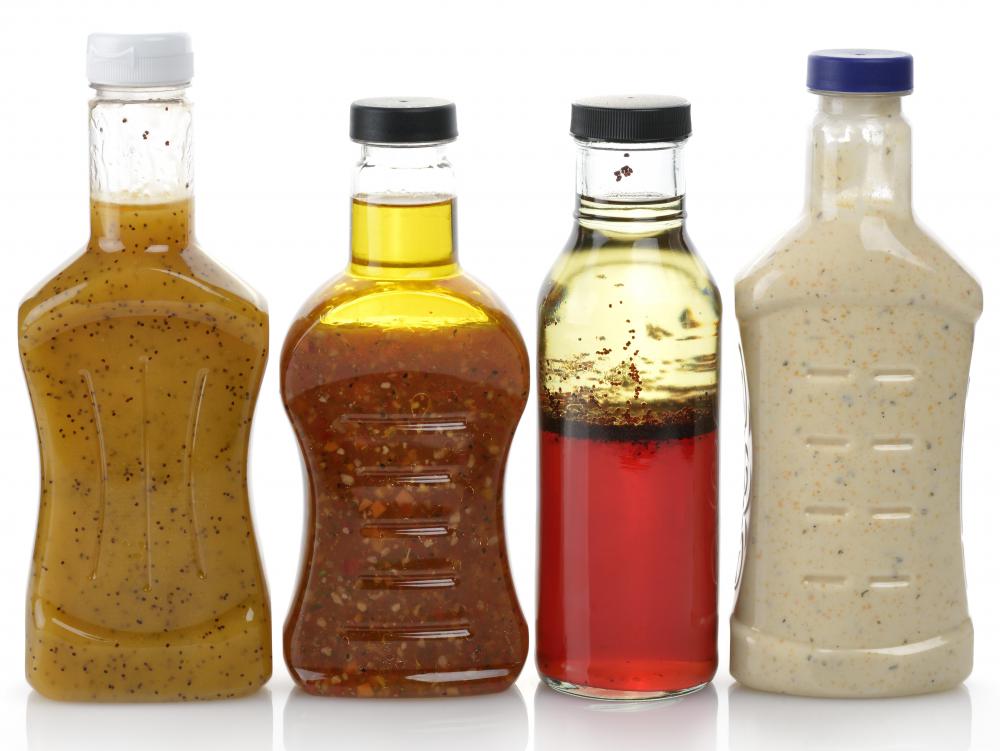
![Some commercial salad dressings contain propylene glycol alginate.]() By: SunnySSome commercial salad dressings contain propylene glycol alginate.
By: SunnySSome commercial salad dressings contain propylene glycol alginate. -
![PGA may cause birth defects.]() By: Subbotina AnnaPGA may cause birth defects.
By: Subbotina AnnaPGA may cause birth defects.





Discussion Comments
Beware of Alginate! I have severe allergic reaction to algin in all of it's various forms: Sodium Alginate, Alginic Acid, etc. Basically if any product begins with "algin", it makes me ill. In 4-6 hours after consuming it, I have extreme gastrointestinal discomfort, followed by diarrhea and vomiting until my entire system is cleaned out. It's true that it does cause weight loss, but I can think of a lot better ways to lose weight since I feel ill for several days afterward! Some people can also have hives from it. It only takes a very small amount. One time I got sick from it being in salad dressing (less than a tablespoon of dressing).
Although it sounds like it should be safe since it is made from seaweed and that's in sushi, right? Turns out that the Japanese never use brown kelp in sushi. Could that be why?
This is a food additive made from kelp and this is only one thing you can do with kelp. Kelp is a type of large seaweed. There are around thirty different types of kelp and it is called a weed because it grows so quickly.
Kelp grows underwater and can be found in kelp forests. Just like a forest of trees on land you have large groupings of these plants and it does have a resemblance to tree forests.
Kelp is a good food source and some countries use it as a staple. This makes it a renewable food source.
There are scientists working on kelp as a renewable fuel source. The methane produced from decaying kelp can be harvested and the sugars in kelp can be converted into ethanol.
Post your comments