
At TheHealthBoard, we're committed to delivering accurate, trustworthy information. Our expert-authored content is rigorously fact-checked and sourced from credible authorities. Discover how we uphold the highest standards in providing you with reliable knowledge.
What is Proprioception?
 Michael Anissimov
Michael Anissimov
Michael Anissimov
Proprioception — from Latin proprius, meaning "one's own," and perception — is one of the human senses. There are between nine and 21 in all, depending on which sense researcher you ask. Rather than sensing external reality, it is the sense of the orientation of one's limbs in space. This is distinct from the sense of balance, which derives from the fluids in the inner ear, and is called equilibrioception. Without proprioception, we'd need to consciously watch our feet to make sure that we stay upright while walking.
Proprioception doesn't come from any specific organ, but from the nervous system as a whole. Its input comes from sensory receptors distinct from tactile receptors — nerves from inside the body rather than on the surface. Proprioceptive ability can be trained, as can any motor activity.

Without proprioception, drivers would be unable to keep their eyes on the road while driving, as they would need to pay attention to the position of their arms and legs while working the pedals and steering wheel. And I would not be able to type this article without staring at the keys. If you happen to be snacking while reading this article, you would be unable to put food into your mouth without taking breaks to judge the position and orientation of your hands.

Learning any new motor skill involves training our proprioceptive sense. Anything that involves moving our arms or legs in a precise way without looking at them invokes it — baseball, basketball, painting, you name it. Proprioception is often overlooked as one of the senses because it is so automatic that our conscious mind barely notices it. It is one of the oldest senses, probably even more evolutionarily ancient than smell.

Among other reasons, proprioception is known to be a distinct sense because there are cases in which the proprioceptive ability is absent in a patient. This means that it uses dedicated brainware. Proprioception-disabled patients can only walk by paying attention to where they put their legs. Thankfully, this condition is extremely rare.
Michael Anissimov
Michael is a longtime TheHealthBoard contributor who specializes in topics relating to paleontology, physics, biology, astronomy, chemistry, and futurism. In addition to being an avid blogger, Michael is particularly passionate about stem cell research, regenerative medicine, and life extension therapies. He has also worked for the Methuselah Foundation, the Singularity Institute for Artificial Intelligence, and the Lifeboat Foundation.
Learn more...
Michael Anissimov
Michael is a longtime TheHealthBoard contributor who specializes in topics relating to paleontology, physics, biology, astronomy, chemistry, and futurism. In addition to being an avid blogger, Michael is particularly passionate about stem cell research, regenerative medicine, and life extension therapies. He has also worked for the Methuselah Foundation, the Singularity Institute for Artificial Intelligence, and the Lifeboat Foundation.
Learn more...AS FEATURED ON:
AS FEATURED ON:


-
![Drivers can steer and shift with their eyes on the road thanks to proprioception.]() By: Minerva StudioDrivers can steer and shift with their eyes on the road thanks to proprioception.
By: Minerva StudioDrivers can steer and shift with their eyes on the road thanks to proprioception. -
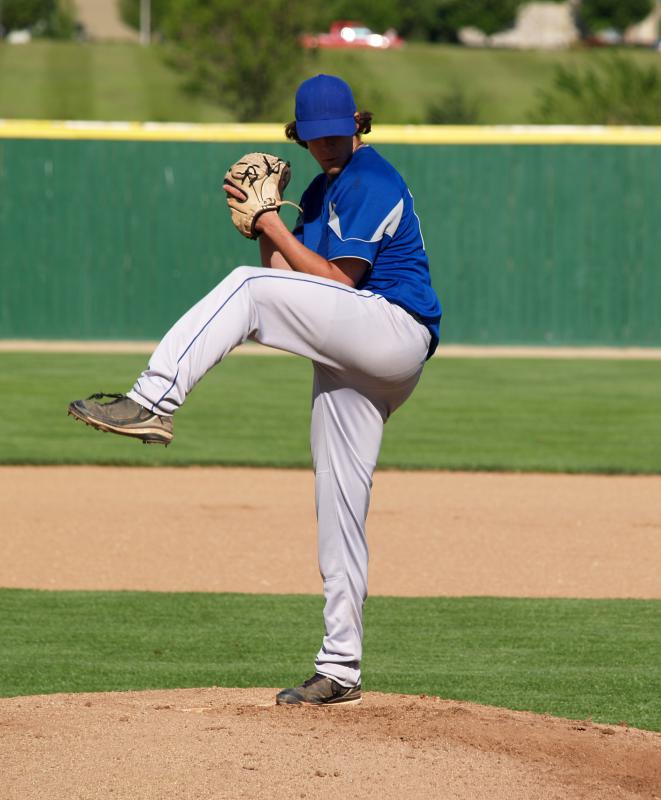
![A baseball pitcher must have good proprioception to throw the ball effectively.]() By: cfarmerA baseball pitcher must have good proprioception to throw the ball effectively.
By: cfarmerA baseball pitcher must have good proprioception to throw the ball effectively. -
![The game of basketball requires proprioception.]() By: -- a-n-k-i --The game of basketball requires proprioception.
By: -- a-n-k-i --The game of basketball requires proprioception. -
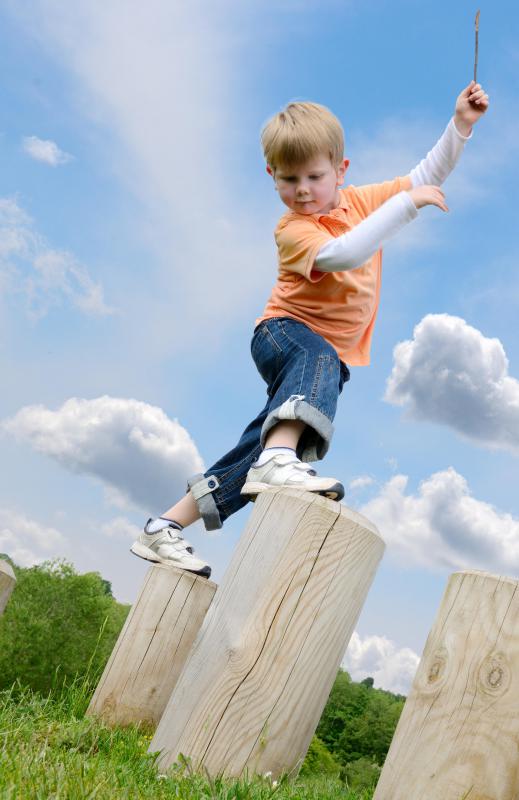
![Proprioception is the sense of the orientation of one's limbs in space.]() By: Rob hyronsProprioception is the sense of the orientation of one's limbs in space.
By: Rob hyronsProprioception is the sense of the orientation of one's limbs in space. -
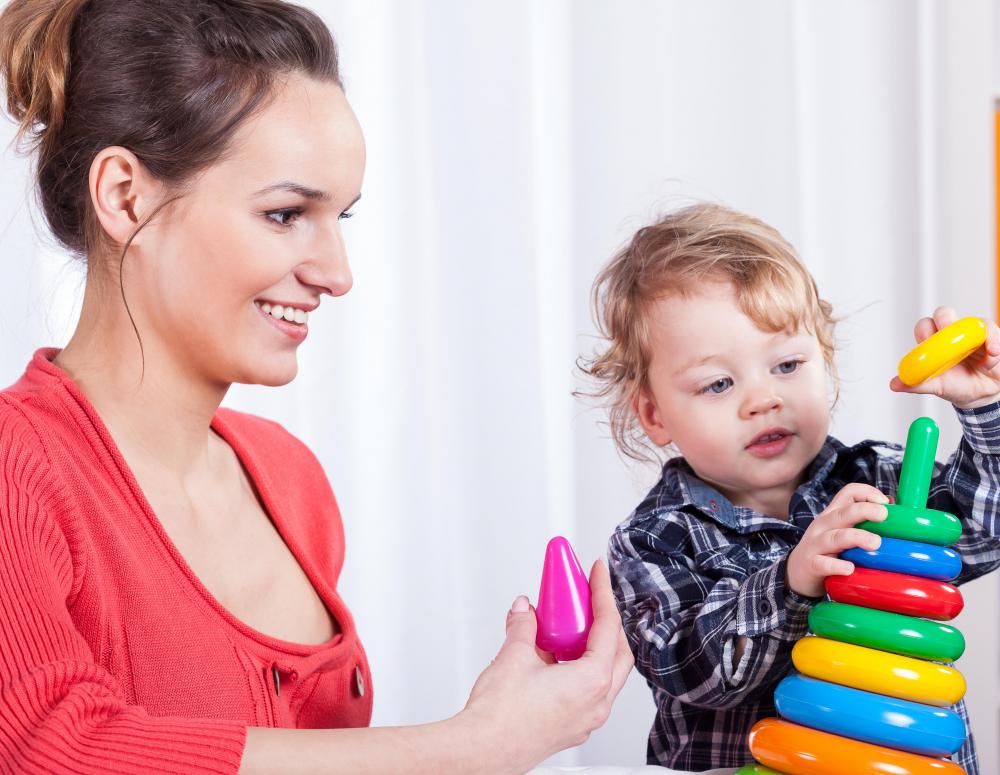
![Babies and toddlers often train their proprioceptive senses through learning toys.]() By: Photographee.euBabies and toddlers often train their proprioceptive senses through learning toys.
By: Photographee.euBabies and toddlers often train their proprioceptive senses through learning toys.


Discussion Comments
I’ve read several comments here referring to MS. I have had Transverse Myelitis, a similar condition, since 2007. I Had a longitudinally extensive lesion on my spinal cord and now have permanent nerve damage from T1 down through the Cauda.
Initially I was paralyzed from the chest down. Within the first 3 months I regained about 70% of function and movement, but was left with neuropathic pain especially from the chest down. During that 3 month period, I began to feel tingling and mixed sensation in my legs, as well as recovering the ability to stand & control movement of my legs. I still was not able to walk without aids such as a walker or crutches. Eventually I could move my legs to take steps, but only when looking at my feet, as if my brain didn’t know where my feet were unless I looked at them.
Through physical therapy I was introduced to Computerized Dynamic Posturography for Postural Control. It uses a machine and computer imagery to retrain your brain and equilibrium to restore the ability to sense where your body parts are located and move them without looking. It was a miracle therapy for me. Now, in 2021, I still have issues with neuropathic pain and balance, but am able to walk normally most of the time. If you have had any type of neurological condition that causes Proprioception, ask your doctor if this type of physical therapy might help you recover your ability to function in this area.
Would love to improve my balance, as Tai Chi is supposed to do. Unfortunately, like many my balance is not the best, plus Tai Chi involves standing. This means Tai Chi hurts me. Other solutions?
I have Sensory Processing Disorder so I have trouble with proprioception. I'll never to drive or play sports.
No exercise or pet hobby anyone has will change the fact that my gamma motor neurons are destroyed, thanks to MS, and I won't be able to handle stairs like a normal person, ever again. That is why I can't feel my feet anymore -- not because I'm lazy or stupid, as some health nut freaks seem to imply.
As someone who will never have normal proprioception again without some huge leaps in medical neurological treatments, I find the peddling of Tai Chi and other pet hobbies to combat that to be offensive. I need something that fixes my neurons, not that wastes my time with some idiotic exercise. Doing something like that can (and usually does) hurt me. Thanks a lot. People need to use their brains before jumping to conclusions. Sheesh.
I lost my propioception due to a benign tumor and two cysts in my spinal cord, C-2 through C-7.This was in 1988 when I was 30. I was able to learn to walk again,regaining my propioception to a large extent. Although, I never know when it is going to short out. Not much is known about this condition or how to get it back.After reading the comments on yoga helping, I'm going to look into it. You never know what you've got until it's gone! You just can't give up!
When I turned 70, I was feeling frustrated with little clumsy mishaps. So, I enrolled in a class to become a personal trainer and that was the first time I heard of proprioception, BOSU Balls, Swiss Balls, etc. Now, it's a daily part of my life, along with pumping iron, and I feel almost as good as I did when I was a dancer over 45 years ago. No, no miracles, but now I look forward to every day.
I had a cyst on the left side of the brain a few months ago in the arachnoid cavity. I lost significant use of the right hand to where I could not make a fist or write. The right hand is about 75 percent back now, but part of the problem is that I had a loss of proprioception. This is preventing me from typing, i.e., feeling the keys when I type on the computer with the right hand. Anyone want to comment?
I also have significant weakness in the right side which is affecting my walking. The doctor said to do my P.T. and walk as best I can each day and hopefully it will improve in time.
my friend was electrocuted and now has no proprioception. he also lost one eye and has a lens problem in the other eye that has left him blind. how do you learn to walk if you have no proprioception and you can't see?
The really interesting thing about Tai-Chi is that rather than directly improving your balance, which can improve over time, it actively improves your awareness of what your body can and cannot do; how far you can step comfortably while keeping your weight on your supporting leg, how well you can balance on one foot and transfer weight to the other without losing balance.
As this is learned, the chances of falling decrease since you are aware of your limitations. We tend to think that we fall less because we have better balance, but this is not necessarily the case. This is especially useful as we age or deal with various diseases that impair our proprioception.
Tai-Chi is a wonderful, non-impact activity that may help you deal with these issues of awareness.
As people get older they do get decreased proprioception. An elderly lady gave me a good tip. Whenever you step over something, be aware of the second foot you lift. Usually the first one, for most people it will be the right foot, is lifted high enough, however, the one that follows, in most cases it will be the left one, does not get lifted to the same height.
So be conscious of what you are doing when stepping over something.
I did not use to trip and fall, but would hit my foot, particularly toes.
Something that is done naturally, without any thinking when young, becomes an awareness exercise when older.
Honestly if you truly want to strengthen your proprioception, there is no better book to buy than ProBodX. it is out if print but you can still find it on amazon. The entire method of training is based on proprioception and training and awakening the nervous system and proprioceptors. Please try it if you really are suffering.
I have pernicious anemia and have to constantly watch where I'm stepping so I fall over or stumble, even if there's nothing to fall or stumble over. Very frustrating, especially since I'm a fitness professional and triathlete and overall, rather fit. Running without knowing what your leg is doing is a bit of a challenge.
Watching my shadow helps, as well as consciously focusing on lifting my knee with each stride. Unfortunately, to date, no amount of strength work, stretching or pilates has helped me, but I'm going to try the barefoot runners and see if they work. Thanks for the tip.
The same problem with Multiple Sclerosis. I definitely losing my motor control ability and also I sense a big lack of memory ability. As a sport lover and a student I am suffering. Any ideas please?
My lack of proprioception came from taxotere, which also stripped some of my nerves. The taxotere got rid of my breast cancer, for which I'm grateful. Just wondered if anyone else out there had the same results from this med.
most important thing is to learn listening to your body, that's proprioception about, and all physical activities focused on that (feeling your body and moving it with control) makes a good work. Thai chi and most martial arts, Yoga, Pilates. Search your own activity and start understanding your body.
JM_Personal trainer
I have stiffening episodes where, like the other day, from the bottom of my ribs everything started tightening and wanting to stretch as I was walking.
I use crutches so I stopped and that stiffening went right down the rest of my back and both legs to the bottom of my feet. I could not move and the only part of me I felt was where the stiffening started. I had no clue I had legs. I could see them but not feel them. I was sort of laid back into a wheelchair, not being able to bend at the waist.
I had my eyes closed and the next thing I heard my foot hit the floor. I never knew someone had picked up my leg and just dropped it. It is a very weird feeling. It lasted about a half an hour or so.
I'm on crutches due to foot drop. After breaking my foot on my last fall, I was told to stay on crutches. That was six years ago. Meantime I've had three surgeries on my right foot with a fourth coming up soon. I have muscle weakness in both legs - can't imagine why!
Another good strategy for improving proprioception is to spend more time going barefoot.
I live and teach martial arts on an island here in Thailand. Since most students are focused on the beach life, they also put away the clunky shoes and opt for flip flops, which leads to more time on your feet the way you were intended to walk. We teach all our martial art classes outside and barefoot on the grass which also helps one to develop proprioception, as we are teaching very specific skills that require more than just walking.
You also might want to try shoes that are closer to just going barefoot and many runners are now converting to what are called barefoot running shoes, which have been documented to aid in strengthening the feet and legs as well as alleviate back pack and decreasing chance of injury. R. Tew
I have been trying to explain this condition to doctors for years, as I keep falling over anything that gets in the way of me picking up my right foot and stepping over it.
This started after I severely shattered my right foot and have had 12 surgeries in 10 years on it. I also have very severe lower back and bilateral leg pains.
If my little dog walks in front of me, instead of stepping over him like a normal person would, I think I am going to step over him but then my leg doesn't come up and I end up falling over him. Now I can put a name to this condition and have the docs check it out! Thank God for these internet sites!
I keep falling and doctors have not been able to pinpoint why. I have had MRIs and other tests but nothing is evident. I feel like my left foot drops slightly and my left leg seems weaker. But doctors seem to think I am imagining things. It is making me quite depressed.
Cerebral palsy/spacity seems to affect our sense of proprioception. Soft stretching exercises seem to help in regaining this sense.
My proprioception is on the fritz due to M.S. Did Tai Chi in the past so will try again.
As with other senses, hearing, seeing and others, we slowly start losing them as the years go by. However, good thing about proprioception is that we can work on slowing down the loss.
For instance tai chi is good to keep us aware and in control of our body, so does standing on one foot, sort of like a flamingo. These practices strengthen the muscle and keep us better able to control them.
Post your comments