
At HomeQuestionsAnswered, we're committed to delivering accurate, trustworthy information. Our expert-authored content is rigorously fact-checked and sourced from credible authorities. Discover how we uphold the highest standards in providing you with reliable knowledge.
What is Primer?
 Malcolm Tatum
Malcolm Tatum
Malcolm Tatum
Sometimes referred to as the base coat, primer is the first application of paint or a paint product to a surface. The main function of priming is to ensure that any successive layers of paint adhere to the surface properly. In addition, using a base before painting helps to provide additional coverage that often makes the application of multiple coats of paint unnecessary and provides protection for both the paint and underlying surface.
Primer products are often formulated to adhere securely to different types of surfaces. Some are manufactured to bond well with metal surfaces, while others are formulated to work specifically with masonry, such as concrete floors or brick walls. Choosing the right type can make a huge difference in how the final painting project turns out.

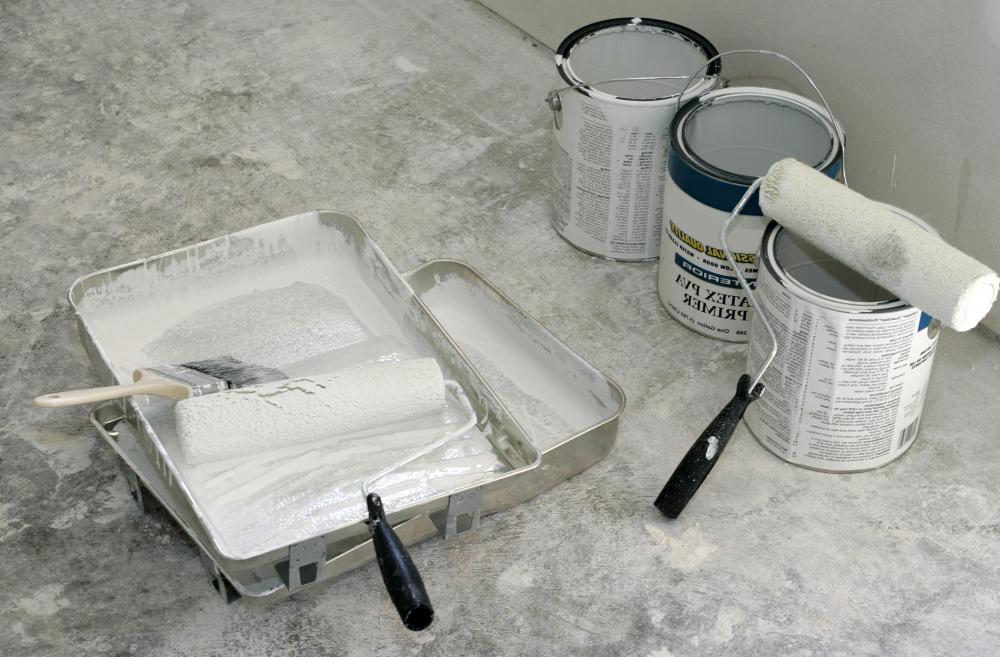
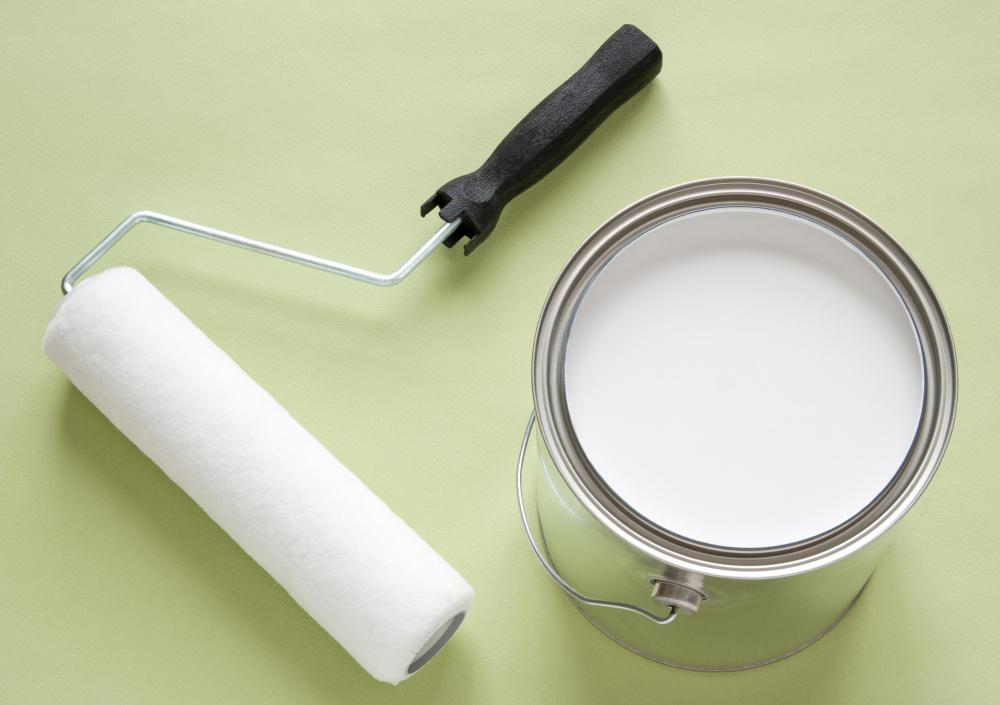
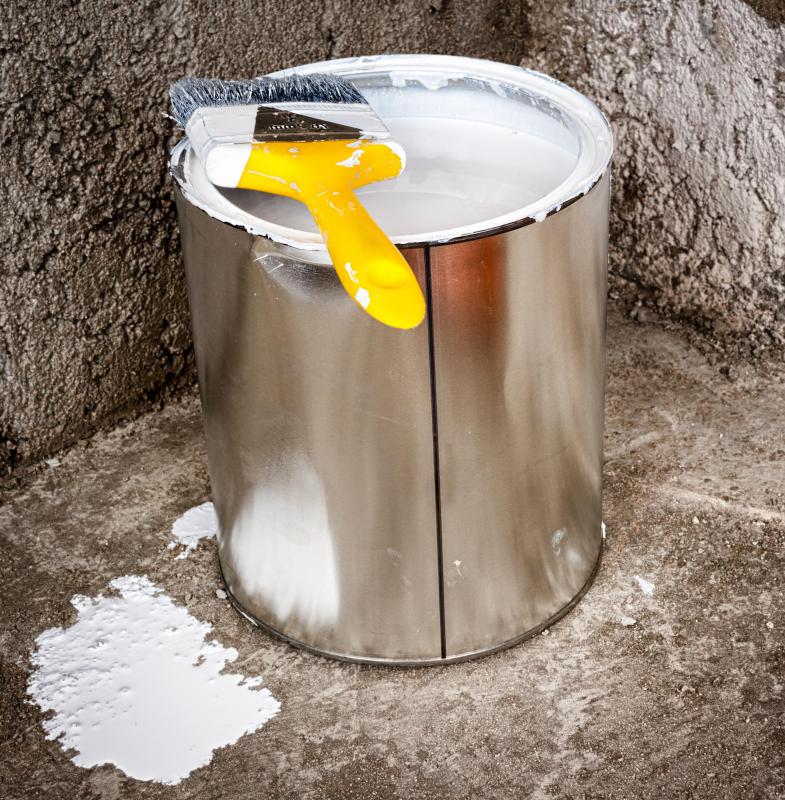
Most primers resemble paint that is white or off-white in color. It is applied using a brush or roller in most cases, although there are some primer products that can be applied using a paint gun. The idea is to completely cover the area that is to be painted. Because of the light coloring, the preparatory coating makes it possible to paint a dark surface with a lighter color with less potential for the darker shade to bleed through the newer and lighter coloring.

A common strategy in using primer is to mix a small amount of the paint into it before preparing to paint. This strategy can be especially helpful when the original color of the surface is darker than the newer color selected for the walls or other surface. Using a small amount of paint to color the primer means that there is an good chance of requiring fewer successive layers in order to create a uniform and attractive top coat.

Cleaning rollers and brushes used to apply primer require no more effort than cleaning brushes and rollers used for painting. Depending on the composition of the primer, water may be sufficient. In other cases, stronger cleaning agents may be required. Instructions for proper cleaning is usually found on the produce packaging.
Primer is relatively inexpensive and can be purchased at any store where paint products are sold. Discount retail stores often offer products that are ideal for interior walls composed of plaster or sheetrock, as well as brands that can be used to cover wood paneling. For primer that is formulated for use with bricks, metal, and masonry surfaces, paint stores and home stores will offer a wider range of options.
Malcolm Tatum
After many years in the teleconferencing industry, Michael decided to embrace his passion for trivia, research, and writing by becoming a full-time freelance writer. Since then, he has contributed articles to a variety of print and online publications, including HomeQuestionsAnswered, and his work has also appeared in poetry collections, devotional anthologies, and several newspapers. Malcolm’s other interests include collecting vinyl records, minor league baseball, and cycling.
Learn more...
Malcolm Tatum
After many years in the teleconferencing industry, Michael decided to embrace his passion for trivia, research, and writing by becoming a full-time freelance writer. Since then, he has contributed articles to a variety of print and online publications, including HomeQuestionsAnswered, and his work has also appeared in poetry collections, devotional anthologies, and several newspapers. Malcolm’s other interests include collecting vinyl records, minor league baseball, and cycling.
Learn more...AS FEATURED ON:
AS FEATURED ON:


-
![Primer is the first application of paint or paint product to a surface.]() By: topten22photoPrimer is the first application of paint or paint product to a surface.
By: topten22photoPrimer is the first application of paint or paint product to a surface. -
![Primer can be applied with paint brushes or rollers.]() By: Wendy KaveneyPrimer can be applied with paint brushes or rollers.
By: Wendy KaveneyPrimer can be applied with paint brushes or rollers. -
![Most primers are either white or off white in color.]() By: GoodMood PhotoMost primers are either white or off white in color.
By: GoodMood PhotoMost primers are either white or off white in color. -
![Primer should be applied to masonry surfaces before painting.]() By: kmiragayaPrimer should be applied to masonry surfaces before painting.
By: kmiragayaPrimer should be applied to masonry surfaces before painting. -
![Applying primer can be done with a roller.]() By: Syda ProductionsApplying primer can be done with a roller.
By: Syda ProductionsApplying primer can be done with a roller.


Discussion Comments
I've been trying to find out what primer actually is, not what it's used for, etc.
What does it actually consist of? what makes it different than flat white paint with a lot of solids, or is that it?
Nowhere on the internet can I find the actual answer to what primer is. I know that it adheres to things well, and that it covers, etc., but what the heck is it *made* of, without being too scientific.
@doppler/lmorales - I agree with both of you that primer is an essential tool when painting over color or prepping for new color. Kilz makes a great primer and stain blocker. Many people try to hide defects in the wall like water stains and stuff, but with certain primers or a primer-slash-stain blocker, you don't have to worry about it. I love primers because they make the actual paint color come out how it's really supposed to look and not end up lighter or darker when it dries.
@doppler - I'm assuming you are a designer or have massive experience buying houses with ugly paint. Even so, primer isn't just to paint over yucky colors, it can also be for prepping the wall in order to get vibrant and richer colors. Many paints nowadays come with the recommendation that you use a specific base for specific colors (like there is a pastel base for pastel colors).
Primer is an Interior Designer's best friend - seriously. There is a vast amount of clients who can't look past the fact that the previous homeowner painted a room red or (yes) even black, but there are great primers out there that will make that color disappear completely so you can start fresh!
Post your comments