
At Sports&Hobbies, we're committed to delivering accurate, trustworthy information. Our expert-authored content is rigorously fact-checked and sourced from credible authorities. Discover how we uphold the highest standards in providing you with reliable knowledge.
What is Potomac Horse Fever?
Neorickettsia risticii (N. risticii), also known as equine monocytic ehrlichiosis, is a bacteria that causes Potomac horse fever when ingested. It attacks the gastrointestinal tract and causes a wide range of symptoms — specifically, high fever, sweating, projectile diarrhea, acute colic, colitis (inflammation), dehydration, loss of appetite, and depression. In the worst cases, laminitis and founder of all four hooves has been reported. Pregnant mares have also been known to abort. Edemas (swellings) of legs and body have been reported due to a protein imbalance that occurs.
Potomac horse fever gained national attention in the US during a sudden outbreak in the summer of 1979. This initial outbreak was in the Potomac River basin, northwest of Washington, DC, and of the nearly 100 horses that fell ill, a third of them died. The illness was quickly recognized in at least 32 other states. Considerable research was done, but it wasn’t until 1984 that the first breakthrough was made and the N. risticii bacterium was isolated in the blood of an infected pony. Researchers next focused on the vector of the disease, and after eliminating several insects, such as ticks, it was suspected that birds, bats, and flying insects were the carriers.

In 1998, the chief vectors were established as caddisflies, mayflies, dragonflies, damselflies, and stoneflies. These flies are recognizable for their moth or butterfly shapes and transparent wings. It also became apparent that horses at higher risk of the disease were those located near rivers, lakes, or large bodies of water. Through various stages of development, a flatworm called trematode carries the N. risticii organism through fresh water snails, insect larvae, and adult aquatic insects.
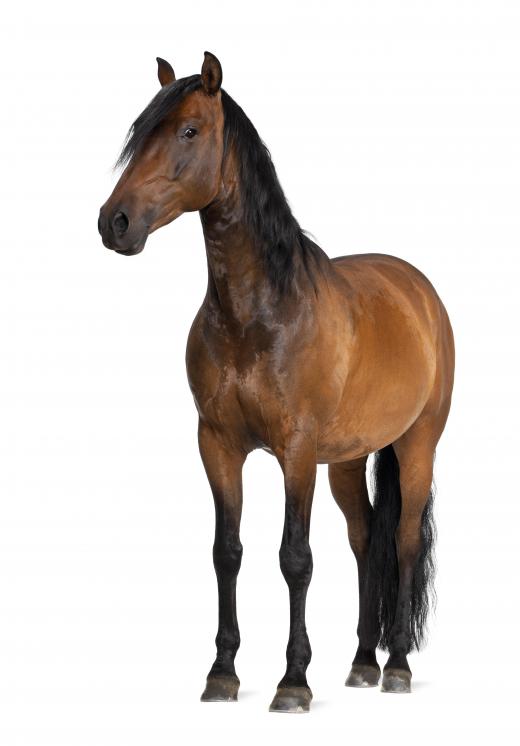
Horses can become infected by drinking directly from infected water or by ingesting adult flying insects. Horses who ingest as few as five infected insects, live or dead, can contract the bacteria. The sheer numbers of mayflies during the late summer and early fall months could easily allow for accidental ingestion in their forage or grain.
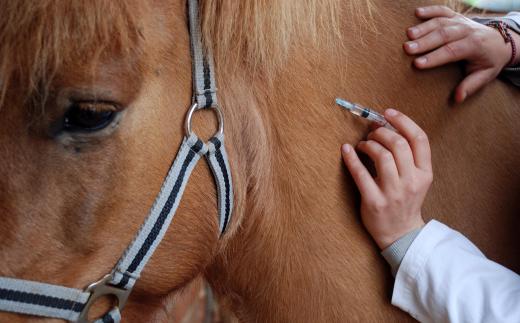
The first vaccine for this illness was approved in 1988, but it has not been found to be very effective in preventing the disease. It does, however, reduce the severity of the symptoms. It is important for horse owners and caretakers to follow up the first vaccination by a repeat booster within two to four weeks. Then an annual vaccination is a worthwhile safeguard for horses living in regions near water.

Diagnostic testing of Potomac horse fever takes two to three days. Samples for blood or fecal testing must be gathered before antibiotics are given. Vaccine antibodies can also interfere with the test results. People who suspect that a horse might be infected should isolate the animal immediately. Electrolytes can be given to help with the dehydration that can occur quickly.
There are a number of preventative measures that will help keep thid disease from infecting a barn. The most important is to prevent horses from drinking from natural water sources like ponds and streams. Water buckets must be kept clean and free from dead insects. Night lighting attracts mayflies and other vector insects, so lights should not be left on, especially during July and August evenings when aquatic insects are more common. It is also best for riders not to ride in outdoor arenas at night during this period. All hay and grain that is exposed to lighted areas should be covered, and it should be inspected before being fed to any horse.
Potomac horse fever is most contagious in late summer through early fall when the mayflies and other species are at their peak. The most successful treatement seems to be a combination of tetracycline and banamine, given intravenously for three days. This disease is not a diagnosis to be taken lightly; however, it no longer carries the high risk of fatality that it once did.
AS FEATURED ON:
AS FEATURED ON:


-
![Hay should be inspected before being fed to your horse.]() By: Stefano NeriHay should be inspected before being fed to your horse.
By: Stefano NeriHay should be inspected before being fed to your horse. -
![Potomac horse fever is typically treated with oxytetracycline.]() By: Eric IsseléePotomac horse fever is typically treated with oxytetracycline.
By: Eric IsseléePotomac horse fever is typically treated with oxytetracycline. -
![Symptoms of potomac horse fever may include a high fever.]() By: Photographee.euSymptoms of potomac horse fever may include a high fever.
By: Photographee.euSymptoms of potomac horse fever may include a high fever. -
![Vaccines for Potomac horse fever are not always effective.]() By: pholiditoVaccines for Potomac horse fever are not always effective.
By: pholiditoVaccines for Potomac horse fever are not always effective.


Discussion Comments
My horse had PHF (apparently) and was hospitalized fo three days, given IV oxytetracycline, and survived. They put her legs in ice packs to help prevent founder and laminitis. It was a very close call, but as far as we can tell, she recovered fully. I do not think she would have survived without hospitalization.
Right now we our fighting this PHF and it is not fun. We are going into our sixth day of this horrible thing with our yearling filly and we still don't know if she's going to make it. Please say prayers!
If you have any doubt about your horse, call your vet. Thankfully ours has been with us the whole way and we hope we have turned a corner with her, but to anyone who has had this, did your horse have swelling of the leg?
My horse was diagnosed with PHF in the early 90's. His symptoms included diarrhea, high temp, listless, off feed, etc. Thankfully our vet had us admitted at the Marion duPont Equine Medical Clinic that same day. He was immediately given support care to help prevent laminitis and dehydration. He was monitored 24/7 and continually given support care.
He finally returned to his old self and was discharged with strict orders to take it easy for a couple weeks. That following season he was back to competing in eventing! I am so thankful that we had access to such a competent and caring group of veterinarians.
I had to have my horse put down late last summer after she was diagnosed with PHF. She had been vaccinated for it for years but from what I have been reading the vaccine isn't very effective. She foundered and couldn't recuperate from that. She was about 25 years old and had a good life but we miss her.
First off I'm so so sorry to all that have lost their horse to this horrific disease, I know nothing will ever replace your friend.
Mine and my daughter's horse Puddin had slight signs on Friday night. At first I thought she was tired and stressed from bringing in a new horse and moving over her buddy. I also took several pictures of her and my daughter with their heads pressed up against each other thinking how absolutely sweet. The nest morning the horses were in the pasture chasing us around for grass but Puddin, a 12 year old mare wasn't running around for the fresh grass. Instead she stood and watched.
Later that day she picked at her food and left some grain, and that is very odd for Puddin. We stayed up all night with her, worried to death.
As 6:00 rolled around she looked pretty bad, and had not touched her grain or hay. I immediately called our vet. We took her out in the meantime and walked her till he arrived. He took her temp and it was 104 and she was having diarrhea and practically collapsed while walking while I was screaming and crying. He arrived and gave her the oxicteticlyle, a muscle relaxer and an IV of antibodies (I love my vet). Puddin did well for a short while and her temp dropped later that night to 102.1 and she laid down often and stretched her head and feet out, making me more then nervous. she also wasn't eating or really drinking.
Well last night she improved dramatically, her fever down to 100.2, and she was drinking, eating hay and grazing. (oh he told me no stall. leave her out in the riding arena as it is still grass). He told me to break the grain up to four times instead of two and add plenty of water to it as well.
This morning, wow! She is a new horse. She is my Puddin again, fever down to 100.1 this morning, eating all her grain, drinking lots of water and loving her grain (she is even back to pawing at her belly in excitement.) We just took her temp again 98.5! Yay! She is walking everywhere grazing and calling for her friends.
This pony, well big pony, 14.3/4 1000 pound pony, is my love and my life and my daughter's best friend. I prayed and prayed for God not to take her from us. told him it wasn't her time, she is our sweetheart and we love her so much.
I'll keep you all updated on her condition as our vet is coming every 24 hours to administer her antibiotics.
If I can think of anything he told me to do that will help anyone else I'll sure tell everyone. So far I consider her my miracle pony.
Please keep us in your thoughts and prayers.
Oh I have to tell you all as a side note. For nine years I have been crying for my horse Teekee, wondering what happened to her. Well two days ago I found her. She is only 20 minutes from me now and for sale. Teekee was my National Show horse that pulled me through hell. she was my angel and I finally can bring her home!
What a day! My new boy a Canadian Sport/Hanoverian/TB was scared of our Quarter horse and ran through our wood fence today. Yes, it sure has been a challenging week.
We have a three year old mare that we noticed was not acting like herself. She was laying down a lot, but not demonstrating normal colic behavior. She then developed really bad diarrhea but only had slight temperature. She was still eating but very lethargic.
We called our vet and in the time it took him to come out she had started dehydrating and had developed a slight toxic line in her gums. our vet said he thought it was Potomac horse fever and we needed to get her to University of Illinois immediately or have her put down. She is there right now and still not responding as well as doctors would like to treatment. This was in a matter of just three days.
We don't live by any water so please do not think your horse can only contract due to those conditions. We are just continuing to wait and hope for the best. If your horse is not acting normal call your vet immediately!
Our horse died two days ago. He went off his feed Monday night we called the vet Tuesday after taking his vitals, which all seemed normal and he sent a shot of banamine out and some digestive aids.
Tuesday he developed fever and diarrhea so we called the vet again and he came and administered tetracycline to him and banamine treating PHF. Wednesday the horse looked awful and all vitals were bad he was dehydrated so the vet gave him IV treatment for dehydration and more tetracycline. Thursday no change. More IV fluids and tetracycline with plans to put him on permanent IV Friday if no further improvement.
After the Iv Thursday he walked into the pasture and ate well and I managed to get him to drink a bucket of water and things looked up. Then an hour later he showed serious signs of colic and we walked him, gave him bloated but he collapsed and died in major pain within two hours. The vet was on his way but didn't make it on time.
We are devastated he was my daughter's only and first horse we are all very upset over it. He was vaccinated for PHF as well.
I have a haflinger gelding and he was noticeably not himself on the Monday. On Tuesday morning, I took his temp. and he was about 102 degrees. Later in the afternoon, I took his temp. again and he was up to 102.7.
I went back just after supper and the temperature was at 103.6 so I called the vet right away and he arrived within 20 minutes. We administered tetracycline and banamine and he was examined all over. Nothing was obvious except for the fever.
To make a long story short, on Wednesday, his temperature was down to 102.8 and the vet was back and gave him another shot of banamine.
Thursday and Friday I checked his temperature and everything was back to normal. We suspected PHF but did not wait to pull blood, we just treated him for it and he seems to have bounced back. Thank goodness!
I will keep checking for the next several days, though. Hope this helps someone else.
My wife's horse presented with a high fever, 104, and just a little diarrhea. The vet immediately suspected PHF and started treating her accordingly, even before sending blood for a diagnosis. Side effects of the treatment are minimal, side effects of not treating PHF as soon as possible can be very serious. Erring on the side of caution is a good plan when PHF is a possibility. She's doing well two days into treatment.
my horse died last week. she became ill on a wednesday night with a fever of 102. i called the vet next day and she started her on tetracycline. she ran a fever of 101 to 105 for the next three days. On Saturday morning the vet came, gave her a shot and left. this was 9 a.m. i spent time with her until noon. i stepped out for two hours and came home to a dead horse in her stall.
the vet never took blood from the start. we did take blood after she died and sent it out, and the results were inconclusive (the vet says anyway). she said the horse died from anaplasma. at this point we will never know what happened.
it's so sad. i have not heard of a horse dying from this illness? has anyone else? my horse was my life and i miss her every day.
I had a horse that has we believe to have had Potomac Horse Fever. After three days we found her dead in her stall. I truly believe that she could have been saved if it were not for the horrible vet service that we had. If you even think that your horse has horse fever please, please, please get your horses tested for it and if that vet tells you it is not necessary, tell them it is. My horse was my life. I loved her like she was my child and I would have done anything to save her. Your horse can not talk so please for Lovely's scale (my horse that died from PHF) tell your vet to test them. And most importantly don't let a vet tell you what they think is best for your horse; you know your horse the best and you tell them every precaution is necessary.
Post your comments