
At WiseGEEK, we're committed to delivering accurate, trustworthy information. Our expert-authored content is rigorously fact-checked and sourced from credible authorities. Discover how we uphold the highest standards in providing you with reliable knowledge.
What is Post-Concussion Syndrome?
 Tricia Christensen
Tricia Christensen
Tricia Christensen
Post-concussion syndrome is an unusual syndrome that affects about 15% of people who get a concussion. A concussion is caused by a mild brain injury, usually as a result of a blow to the head. When a concussion is mild, most people recover from major symptoms, like nausea, dizziness, and headache within a week or two. What puzzles medical researchers is that some people continue to have symptoms that can last for weeks after healing has occurred. In rare cases, symptoms can persist for a year or more after a person has suffered a concussion.
Doctors and medical researchers are unclear why people develop post-concussion syndrome, since there doesn’t seem to be a correlation with it and the severity of the concussion. Some researchers believe that the condition may be entirely psychological, while others argue that there is medical cause, even if it remains unidentified. Researchers do see that the syndrome is more prevalent among people who are older, so one identifiable risk factor for the illness is age. Women are also more at risk for developing this problem than are men.
Symptoms of post-concussion syndrome are essentially the persistence of symptoms a person might have in the first few weeks after having a head injury:
- Dizziness
- Headaches
- Difficulty Sleeping
- Changes in Mood, particularly greater irritability
- Sensitivity to light or noise
- Tiredness
- Changes in memory

Treatment for this syndrome should begin with treatment for a concussion. If a person has injured his or her head enough to where it caused loss of consciousness, chances are that he or she has a concussion. When the symptoms don’t resolve within a few weeks, there aren’t any standard methods for treatment. Instead, healthcare professionals tend to treat the symptoms that remain. Both headaches and nausea can be treated with medications, although they may make a person feel more tired.

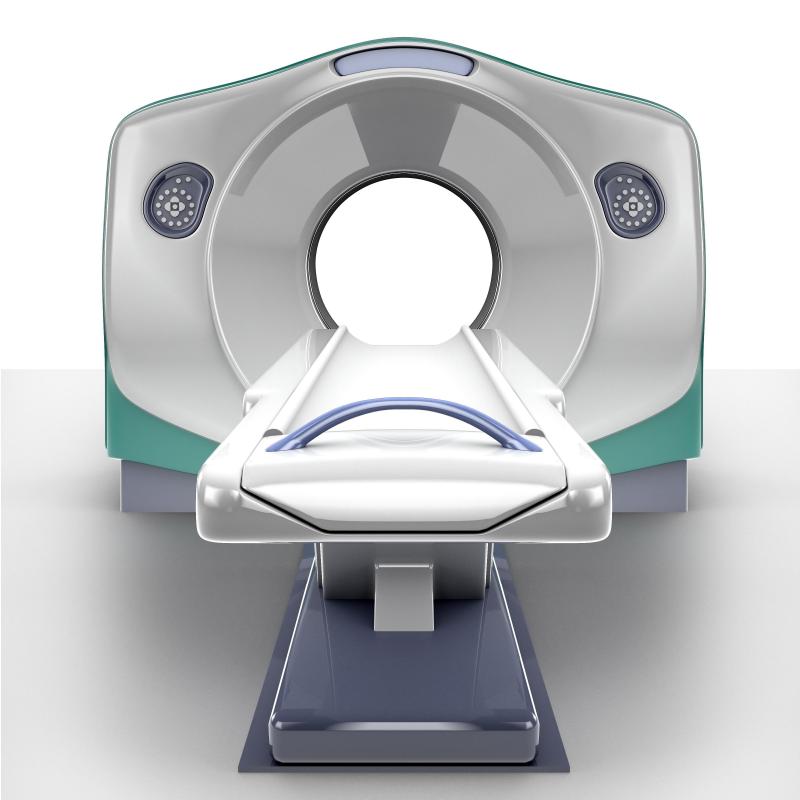
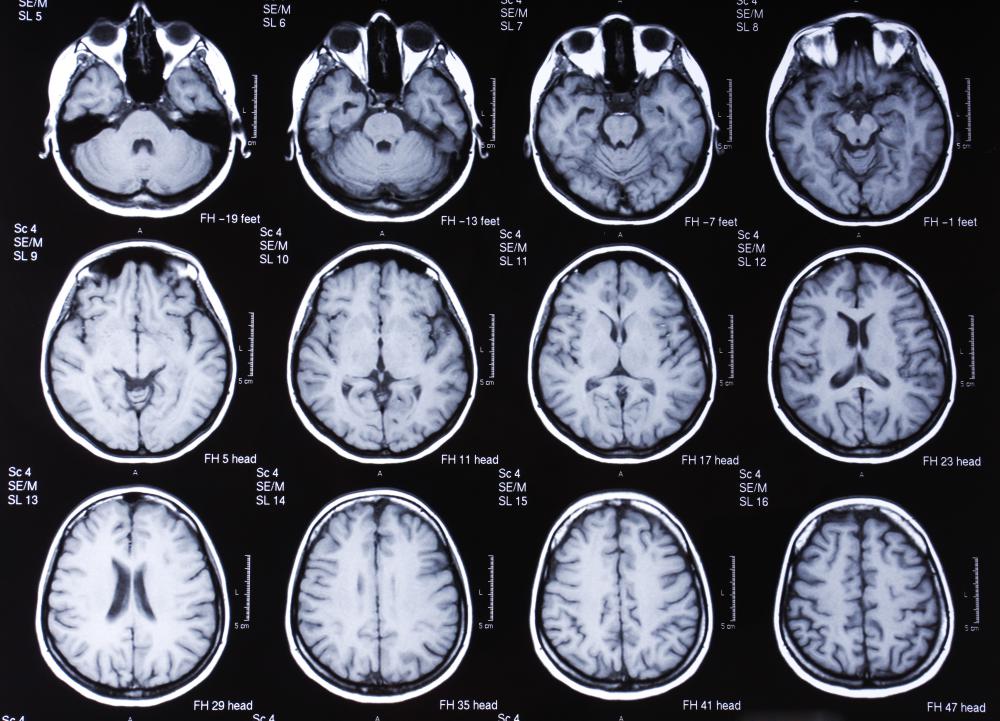
Some healthcare professional may also want to perform a magnetic resonance imaging test (MRI) to look for residual injury that has not healed. Sometimes, the extent of brain injury may be underestimated at first, and swelling or bruising can persist. When this is the case, the person isn’t really experiencing post-concussion syndrome but is recovering from a more severe brain injury than was previously thought. Occasionally, medication is prescribed to treat residual symptoms, or steroids like prednisone may be prescribed to help reduce inflammation.

It makes sense for individuals to see a medical professional if the symptoms of concussion haven’t resolved within a few weeks. Though there is no one treatment, and healthcare professionals haven’t quite figured out what causes it, treating symptoms can help a person feel more comfortable.
Tricia Christensen
Tricia has a Literature degree from Sonoma State University and has been a frequent WiseGEEK contributor for many years. She is especially passionate about reading and writing, although her other interests include medicine, art, film, history, politics, ethics, and religion. Tricia lives in Northern California and is currently working on her first novel.
Learn more...
Tricia Christensen
Tricia has a Literature degree from Sonoma State University and has been a frequent WiseGEEK contributor for many years. She is especially passionate about reading and writing, although her other interests include medicine, art, film, history, politics, ethics, and religion. Tricia lives in Northern California and is currently working on her first novel.
Learn more...AS FEATURED ON:
AS FEATURED ON:









-
![Headaches, tiredness, and dizziness are common symptoms of Post-Concussion Syndrome.]()
Headaches, tiredness, and dizziness are common symptoms of Post-Concussion Syndrome. -
![MRIs are a way for medical professionals to search for a residual head injury that hasn't healed, which could cause Post-Concussion Syndrome.]() By: Andrey NavrotskiyMRIs are a way for medical professionals to search for a residual head injury that hasn't healed, which could cause Post-Concussion Syndrome.
By: Andrey NavrotskiyMRIs are a way for medical professionals to search for a residual head injury that hasn't healed, which could cause Post-Concussion Syndrome. -
![An MRI scan of the brain may be used to help determine if a concussion has not healed.]() By: Marcin SadlowskiAn MRI scan of the brain may be used to help determine if a concussion has not healed.
By: Marcin SadlowskiAn MRI scan of the brain may be used to help determine if a concussion has not healed. -
![Nausea is one result of a concussion that may linger after a person has healed.]() By: jedi-masterNausea is one result of a concussion that may linger after a person has healed.
By: jedi-masterNausea is one result of a concussion that may linger after a person has healed. -
![Steroids such as prednisone might be prescribed to help reduce inflammation.]() By: Thirteen Of ClubsSteroids such as prednisone might be prescribed to help reduce inflammation.
By: Thirteen Of ClubsSteroids such as prednisone might be prescribed to help reduce inflammation. -
![Even a minor concussion can lead to ongoing headaches and other symptoms in some people.]() By: seraphic06Even a minor concussion can lead to ongoing headaches and other symptoms in some people.
By: seraphic06Even a minor concussion can lead to ongoing headaches and other symptoms in some people. -
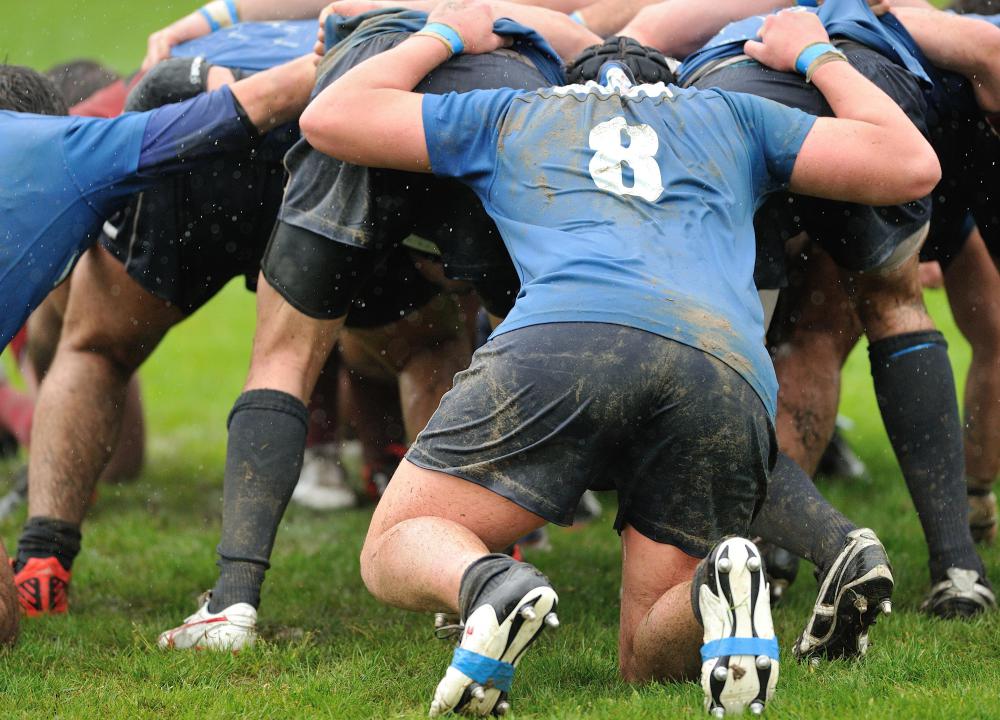
![Athletes often report post-concussion syndrome.]() By: Diego BarbieriAthletes often report post-concussion syndrome.
By: Diego BarbieriAthletes often report post-concussion syndrome. -
![Symptoms of post-concussion syndrome may include changes in memory and irritability.]() By: Barbara HelgasonSymptoms of post-concussion syndrome may include changes in memory and irritability.
By: Barbara HelgasonSymptoms of post-concussion syndrome may include changes in memory and irritability. -
![Athletes who suffer from post-concussion syndrome should avoid playing anymore games until they fully recover.]() By: John JohnsonAthletes who suffer from post-concussion syndrome should avoid playing anymore games until they fully recover.
By: John JohnsonAthletes who suffer from post-concussion syndrome should avoid playing anymore games until they fully recover.





Discussion Comments
I had a concussion over a year ago, when I was a passenger in a car accident. The Monday after the accident I insisted that I went back to school and I hated going to all the doctor's appointments. I just kept brushing everything off like it was nothing.
I haven't been the same since the accident happened. I'm always tired. I sleep whenever I can and I just can't seem to get enough. This whole time, but especially in the past few months, I am so irritable. I have had no motivation this whole time, and I have to drag myself out of bed every day. I don't enjoy doing things or seeing people like I used to, I have memory problems, I push all my friends away, my grades are dropping, I can't focus, and I just haven't felt the same. I don't know what to do about this. Will it go away? How do I make things better?
All the neurologists I've seen want to put me on medication but I don't really want medication. My whole life I was always a social butterfly, and now I just want to sit alone and do nothing and sleep all day. My friends are getting frustrated with the way I'm acting and I am as well. I don't know what to do. Could someone please help me?
I had a concussion March 2014. Neurologist prescribed corticosteroids, but the CRASH study in 2005 says this increases chance of death by 18 percent.
How long can brain swelling go on for after a head injury?
In December 2002 (I was in high school) I was in a sledding accident and went backward hitting my head on a tree. I had serious signs of a concussion, but no one around me knew the symptoms. My parents told me to go back to bed even though the signs were things like my body shaking, confusion, and more. I suffered for about four and a half years afterward.
I did go to the doctor and no one would listen to me that I believed my health issues were a result from hitting my head. I knew it all started then. How could it not be related? I was told it I had a physiological issue. Perhaps stress did make things worse, but I wasn't convinced it caused all of those issues.
In the winter of 2012 (about a year ago) I took my dog outside with slip on shoes. On the way back inside, somehow I slipped on the ice. All I remember is hitting and noticing the dog nudging me/licking my face. The back of my sweatshirt was pretty wet so my husband assumed I did pass out. Sadly I never went into the ER because I wasn't actually throwing up. So I suffered silently with confusion, memory loss, tiredness, weakness on my left side and other things. I was purely starting to think I am stupid and just can't keep up. All these years, I had no clue what concussion symptoms were for "after the fact". I still didn't connect the dots until this past week.
I was in the doctor's office for an unrelated issue and happened to bring up the frustration of forgetting things. She asked a profound question: "Did you ever hit your head? " I am finally able to move forward with life although it's very very hard right now.
I don't know how I'm going to recover as I still suffer from those issues, and I don't know how to process the fact that I spent four-ish years before suffering because my parents didn't take me into the ER. Please, please people, be aware of the signs of concussions and what comes after words with post concussion syndrome.
I was in a car accident a year and a half ago. It took me awhile to get diagnosed but I had a concussion and displayed: shaking, tiredness, not able to focus, change of memory, sensitivity to light, and change of moods. I was fortunate enough to get into a program of therapy at progressive rehabilitation association (PRA) in Portland Oregon, where they did a really great job of understanding what I was going through and also introducing coping methods for situations that came up often.
The therapy included tasks to strengthen my memory/speech (try luminosity they have a concussion training session), but most important for me let me know that fatigue was real and I should listen to my body.
It took me almost a year to get back to work full time but I made it. I couldn't recommend PRA more highly!
My son had a TBI almost four years ago. He had a piece of his frontal left lobe removed. Lately he has been having dizzy spells. I am worried. What should we do? And could there be a problem after this long a time?
I've had a concussion for six months now and it is still on. I don't what to do. My brain shakes 24 hours nonstop. What do I do now?
@anon135489: I just stumbled across this article so I don't know how long ago this was posted. I am a police officer in Missouri. I was in an on-duty vehicle accident last October where I was struck by a commercial motor vehicle. It was a low speed impact, but I sustained a concussion. A brain scan also revealed I sustained damage to the neurons in the right-frontal lobe of my brain.
It's now been almost eight months and I still don’t like bright lights or loud sounds. In fact, the strobes make me very agitated. I can listen to several conversations at once, which sounds like a talent, but it’s not, considering you can’t focus on your own task. I have constant floaters in my eyes and there are still times when I’m just “not home,” even though it's a lot better than before. I have constant headaches and still have some memory loss. I still have many issues with my memory recall. I have trouble with word finding and my speech is still slower than it ever was before. My speech is also affected and I talk slower because I have to think about what I am going to say. Most of all, the way I process everything is much slower for me than it was the day before the accident.
I’ve been to the doctor/physical therapy (including speech therapy) coming up on 90 visits since the accident.
Earlier this week, I found out the workers comp neurologist in charge of me is going to release me to return to "full-duty" in a month. He agrees that my most recent neuro-psych test and work hardening test show that my processing speed is slower than normal. Yet he said he can't "objectively" say that should stop me from working in my line of work.
That said, I want to work. However, as a police officer, processing speed could be the difference between life and death for me, my partner, a suspect or an innocent person. Why is it that a "slower processing speed" would not affect our job or most importantly, our safety? If he was really "there for me" like he says, then I would think he could be a little more open minded.
My personal doctor and the regular work comp doctor have said this entire time that slow processing doesn't work with my job. Also, since my first doctor's visit, I was told that I have to avoid "all combative situations" because any other blow to the head could be worse than before.
Sorry to vent, but I feel your pain when you feel like you're getting absolutely nowhere and yet there's nothing you can do about it. My choice is either quit my job, or go back to work and roll the dice.
I have been suffering from PCS for a while. The Neurologist is treating me with anti-seizure meds, pain meds, and sleeping aids. Unfortunately for me, my body is not tolerating the meds very well.
Every day is a nightmare from the dizziness, screaming ringing in the ears, irritability that becomes rage in .3 seconds over nothing, memory problems, and the depression that comes with it. The neurologist says that I will get better with time, but I have met people still experiencing issues five years after the incident.
Strange, after my head injury and PCS that I finally understand the book Dante's Inferno. Honestly, I have heard from a doctor that once you have a brain injury, the best modern medicine can do is try to manage the symptoms.
I was told by my neurologist I have post concussion syndrome. Shortly after that my hand shakes. What is that and how can that be treated? thank you
I would struggle to find a new neurologist and/or doctor to talk to discuss treatment. Frequently get an MRI and CT scan to confirm it's not a brain injury.
I endured a traumatic brain injury after a severe concussion on an airborne jump, but never visited the doctor or realized I even had a concussion or brain injury.
After I deployed to Iraq for combat duty, I finally ascertained from the doctor I had suffered a brain injury from the concussion, only because I never got it treated immediately. Anyway, visit the doctor or neurologist as often as possible.
I was struck an inch above my left temple with a ricochet .40 caliber bullet three years ago. I am still experiencing PCS symptoms.
I still have horrible headaches, bright lights kill my eyes, dizziness comes and goes, ringing in the ears, and trouble sleeping. I need a new neurologist to work with me. My current Dr. does not seem to be helping me treat the problems! I live in upstate NY and I am willing to travel to get some help.
Any information would be helpful. Is it common to have the ringing in your ears get worse as time go on? Also, how long will these symptoms last? I am a police officer currently placed on "light duty". Are there any Dr's who think it is safe for me to return to full duty?
Post your comments