
At DelightedCooking, we're committed to delivering accurate, trustworthy information. Our expert-authored content is rigorously fact-checked and sourced from credible authorities. Discover how we uphold the highest standards in providing you with reliable knowledge.
What Is Porridge?
 Tricia Christensen
Tricia Christensen
Tricia Christensen
Porridge refers to hot cereal grains or ground legumes boiled in water or milk, and often served as a breakfast food. Almost every culture has some variation of this dish, based on the most available grains in that area. It may be called hot mush, hot cereal, or hot meal, depending upon where it is served.
Traditional porridge in the UK is often made with oats. In Scotland, it may also be spelled as porage after a brand name of oats sold. Porridge is also used to make gruel, oft referred to in Victorian literature. Gruel, which is merely watered down porridge, could be prescribed for those with sensitive appetites and to treat a variety of ailments. English and American gruel is certainly not the only medicinal use of this dish. The Chinese use rice congee mixed with herbs to treat people recovering from illness.

In the United States, we have numerous variants of porridge. These include cereals made from wheat, ground corn, ground rice, and multi-grain cereals. Generally cooking time on these cereals directly correlates to the amount of processing of the grains used. Whole grains usually take the longest to cook, and finely flaked grains, like baby oats or small pieces of wheat can take a short time.

Many porridge varieties are “quick” varieties, which cut cooking time down to a minute or two. Other varieties are instant and merely require the application of boiling water to result in a hot cereal. Aficionados may turn up their noses at instant varieties, since they often lack the grainy or nutty taste of less processed grains.
One type of porridge that has not attained great popularity in the US is made of peasemeal, made from ground dried yellow peas. Peasemeal porridge is also known as peas porridge, peas pudding, or peas meal. As found in the nursery rhyme “Peas Porridge Hot,” it is popular in Northern England and has been compared in taste and texture to hummus. It may be served with bacon, and is frequently available in butcher’s shops.
The list of grains that can produce porridge is extensive. In addition to the most recognizable corn, oats, rice, and wheat, the following grains can make different variants: buckwheat, quinoa, rye, millet, sorghum and barley.

Toppings exhibit extraordinary variance. In the US and in the UK, porridge is often topped with brown sugar and butter. Sometimes, it makes a base for savory sauces like polenta topped with marinara or grits with gravy. Some people enjoy the dish topped with eggs, salt and pepper.
Tricia Christensen
Tricia has a Literature degree from Sonoma State University and has been a frequent DelightedCooking contributor for many years. She is especially passionate about reading and writing, although her other interests include medicine, art, film, history, politics, ethics, and religion. Tricia lives in Northern California and is currently working on her first novel.
Learn more...
Tricia Christensen
Tricia has a Literature degree from Sonoma State University and has been a frequent DelightedCooking contributor for many years. She is especially passionate about reading and writing, although her other interests include medicine, art, film, history, politics, ethics, and religion. Tricia lives in Northern California and is currently working on her first novel.
Learn more...AS FEATURED ON:
AS FEATURED ON:


-
![Some types of porridge are made with sorghum.]() By: j3rn3jSome types of porridge are made with sorghum.
By: j3rn3jSome types of porridge are made with sorghum. -
![Quinoa porridge.]()
Quinoa porridge. -
![Barley can be used to make porridge.]()
Barley can be used to make porridge. -
![Uncooked oats for porridge.]()
Uncooked oats for porridge. -
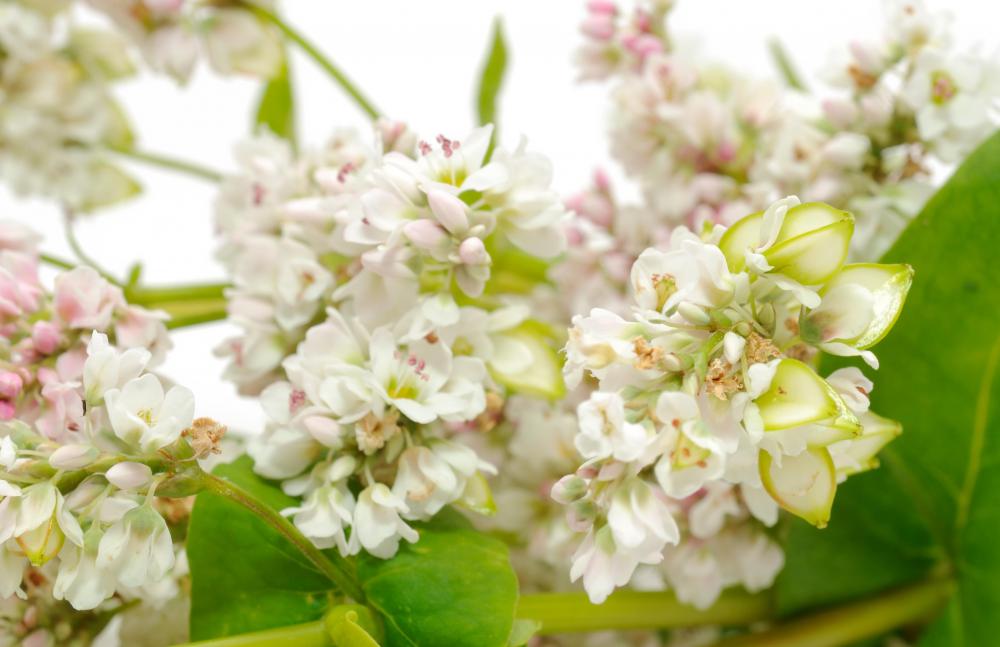
![Buckwheat is one variant that can be used to make porridge.]() By: VidadyBuckwheat is one variant that can be used to make porridge.
By: VidadyBuckwheat is one variant that can be used to make porridge. -
![Porridge made with whole oats is a popular breakfast choice in many places.]() By: minadezhdaPorridge made with whole oats is a popular breakfast choice in many places.
By: minadezhdaPorridge made with whole oats is a popular breakfast choice in many places.



Discussion Comments
No. It's
"Pease Porridge hot.
Pease Porridge cold,
Pease Porridge in the pot
Nine days old!"
I'm Jamaican and i love oats porridge,banana porridge, cornmeal porridge, rice porridge. i love them all.
If it was good enough for the Three Bears and Goldilocks, it is good enough for the rest of us - may we live as long as they have.
Scots eat porridge with salt. The English eat it with sugar.
I have always heard it as "Please porridge hot..."
in America at least - and its in the pot not the post in the variant I heard. In fact, it was explained to me as a child that it was like a pea soup (now I understand that it is a porridge not a soup) that was in the pot in the fireplace. Each day more stuff might be added to rejuvenate it. In this case this had been going on for 9 days - I assume there is some humor there.
Is post another term for "pot" or do some take this to mean that the porridge was mailed?
Scots do not spell porridge as 'porage.'
There is a brand of porridge oats available in the whole of the UK called 'Scott's Porage Oats,' but this has nothing to do with the way Scots themselves spell it.
Incidentally, it's pease pudding, not pease porridge, and the nursery rhyme is 'Pease pudding hot, pease pudding cold, pease pudding in the post, nine days old'.
Post your comments