
At HomeQuestionsAnswered, we're committed to delivering accurate, trustworthy information. Our expert-authored content is rigorously fact-checked and sourced from credible authorities. Discover how we uphold the highest standards in providing you with reliable knowledge.
What is Polyester?
 Mary McMahon
Mary McMahon
Mary McMahon
Polyester is a manufactured product, usually a textile, that is made from synthesized polymers. It tends to be very resilient, quick drying, resistant to biological damage such as mold and mildew, easy to wash and able to hold forms well. Although polyester is often maligned as a textile, it has many useful applications. It is, however, highly flammable, so care should be taken when wearing it. Many synthetic fabrics are subject to flammability because they are made from polymers.
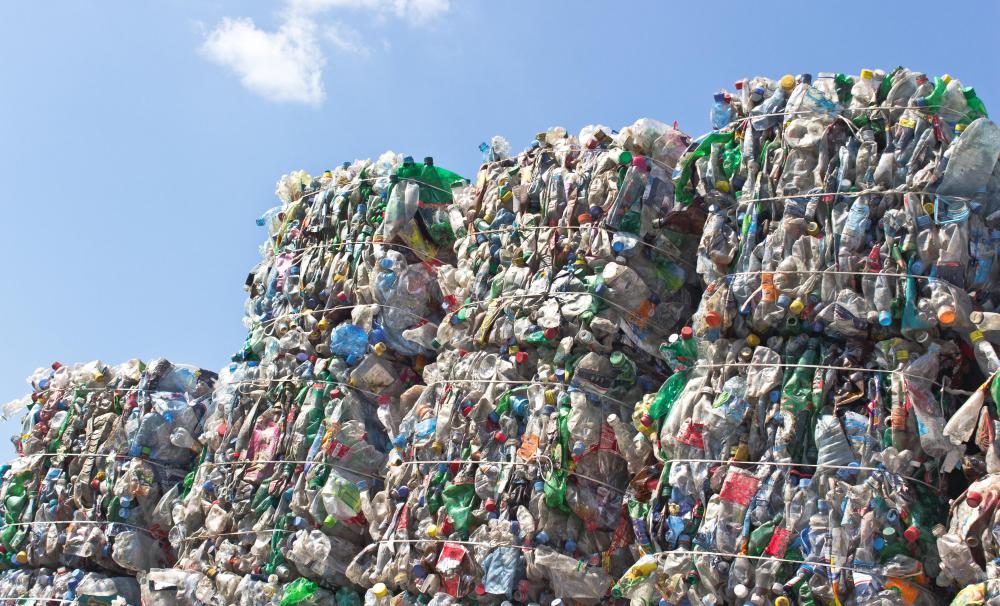
This substance is made from polyethylene terephthalate (PET), the same material that is used to make plastic drink bottles. Many drink bottles are recycled by being reheated and turned into polyester fibers, which, in addition to being an efficient use, also helps keep polymers out of landfills. Polyester is a plastic that was invented in Britain in the early 1940s. In the 1950s, it became popular as a textile because of its easy care, its drape and its versatility.
Chemical Process

To make polyester, ethylene glycol and dimethyl terephthalate are mixed together. The chemical reaction results in bisterephthalate. This substance is heated to 270 degrees Fahrenheit (132 degrees Celsius), and it reacts again to form polyethylene terephthalate. Like many chemical reactions that result in polymers, the polyester-making process results in unhealthy off-gassing, and protection should be worn by anyone who is making PET. After synthesizing the polymers, the manufacturer decides what to do with them.

PET can be formed into plastics that can later be recycled. It is a highly malleable material and appears in all sorts of applications, such as drink bottles, food trays and hoses. PET can also be used to make fibers that are used in products such as auto upholstery, quilt batting and clothing of all sorts.
To make polyester fiber, an extruder is used to produce very fine threads of PET. Polyester clothing tends to be slippery and silky in feel, although it can cause skin irritation for some wearers. This type of fibers used to make clothing can be knitted or woven, although most are knit, to maximize the flexibility of polyester. Some polyester is blended with other fabrics to provide more loft or stretch or to minimize skin irritation.
Mary McMahon
Ever since she began contributing to the site several years ago, Mary has embraced the exciting challenge of being a HomeQuestionsAnswered researcher and writer. Mary has a liberal arts degree from Goddard College and spends her free time reading, cooking, and exploring the great outdoors.
Learn more...
Mary McMahon
Ever since she began contributing to the site several years ago, Mary has embraced the exciting challenge of being a HomeQuestionsAnswered researcher and writer. Mary has a liberal arts degree from Goddard College and spends her free time reading, cooking, and exploring the great outdoors.
Learn more...AS FEATURED ON:
AS FEATURED ON:


-
![Polyester is frequently used in clothing as it is strong and holds its shape.]() By: Silvia CrismanPolyester is frequently used in clothing as it is strong and holds its shape.
By: Silvia CrismanPolyester is frequently used in clothing as it is strong and holds its shape. -
![Polyester is resistant to mold and mildew.]() By: philip kinseyPolyester is resistant to mold and mildew.
By: philip kinseyPolyester is resistant to mold and mildew. -
![Polyester should be hand washed.]() By: Africa StudioPolyester should be hand washed.
By: Africa StudioPolyester should be hand washed. -
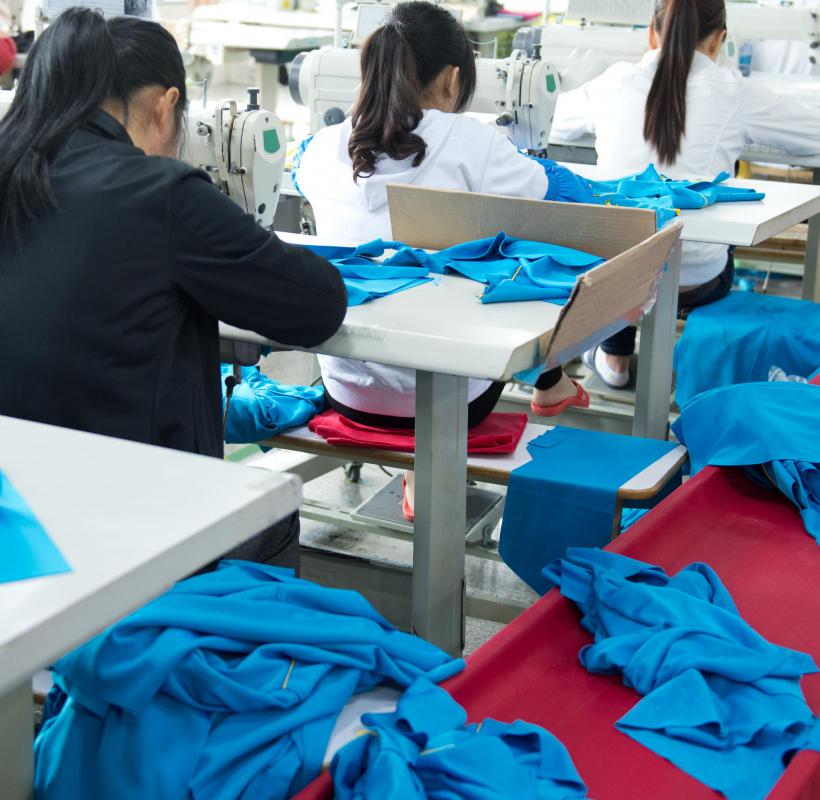
![Polyester is a popular commercial fabric due to its durability.]() By: xyPolyester is a popular commercial fabric due to its durability.
By: xyPolyester is a popular commercial fabric due to its durability. -
![Many drink bottles are recycled by being reheated and turned into polyester fibers.]() By: gavran333Many drink bottles are recycled by being reheated and turned into polyester fibers.
By: gavran333Many drink bottles are recycled by being reheated and turned into polyester fibers.


Discussion Comments
Is it waterproof or not?
Does dog hair stick to polyester?
Is polyester cloth stretchable?
Does anyone have any information on Polyester Plastics?
No you can't dye it.
When was polyester made and by whom?
Polyester should be easier to sew if you use a ballpoint needle on your sewing machine.
When I was in the Army, many years ago when almost everything was made from polyester, I worked at an Army airfield in Germany. The female pilots and crew chiefs had to order their bras and underwear from Sears - the only place they could get all cotton undergarments. The reason was due to the possibility of a flash fire in the helicopters. The polyester under garments could melt and cause severe burns, whereas the cotton was not affected by the flash fire.
Is polyester waterproof?
I have just bought a Kuny 16" large Bolso bigmouth tool bag! I thought it would be great as a knitting bag. It has a great design and 25 pockets! Now I do not know if it would be a good idea. Is it safe? Being made of polyethylene foam, polyethylene vinyl acetate and acrylic fibers. It does have a "shop smell" of sorts!
Yes, polyester is a man-made fabric.
I wear a 100 percent polyester tunic and I do physical work at my job and get hot. Is this fabric suitable?
Where is polyester made?
Is polyester a good material for a reusable shopping bag?
Why do I get hives as big as my head when I am touching polyester for more than five minutes? If I were to try on something that was polyester that entire area would be covered in hives!
Polyester fiberfill stings my skin! It feels just like fiberglass or stinging nettle!
Is it possible to melt polyester? I heard that when it melts, it goes all gooey and smells of tipex! How random!
I am investigating the components or substances (additives, solvents, dye, etc) used in the fabrication of the polyester film of the mobile resistive cell phones' touch screen. It has been very difficult to find tax information. could you help me please?
Polyester is a strong and durable synthetic fabric. Polyester dries quickly and can be washable or dry clean only, so check your tags. Polyester is often used as a blend with other fabrics to lend wrinkle resistance. It is not the easiest fabric to remove stains from, and doesn't breathe as well as other fabrics may.
Polyester itself is not anti-bacterial unless you apply the agents needed to make it anti-bacterial.
Look for polyester's flash point to find the heat of reaction.
This explains the process for the different methods that polyester is made. For those asking if it's poisonous, a product made from raw oil, used in combination with glycol would appear to be only slightly poisonous to me but it's apparently used to make soft drinks. However, the idea that they are using such a chemical to make soft drinks is a little concerning. If the sugar doesn't kill you, then something else in the soft drink may.
Recently bought a pair of sock liners made from 'Tactel' (100 percent Polyamide) and experienced severe reaction (hot red blotches) to the ankle region when first worn and again after washing. Rest of foot unaffected. Is this a known problem?
polyester melts into a sticky substance while cotton burns. nylon burns faster then cotton. i hope that cleared things up.
is polyester harmful for the environment?
Thanks for the information!
what is the strength of polyester?
I'm an electrician with a polyester uniform of 65 percent. My assumption is that this is a bad idea due to possible arch flash. Do you agree?
Is it safe to use as the inner in a modern cloth nappy, to wick moisture away from baby's bum?
I am making a caftan with polyester fabric at the moment.
The fabric is devilish. The only needle i am able to use to get a stitch is number 16/100 which is for thick fabrics..
This fabric is light weight but does not want to be penetrated by the sewing machine needle.
I wonder if the fabric has been treated in some way.
does polyester viscose burn faster than polyester by itself?
which fabric burns faster: polyester or cotton?
Is polyester antibacterial?
To answer, yes it is man made and I'm not sure about strenuous activity since pajama pants can be made of polyester.
is polyester good for strenuous activity?
Rayon is derived from wood pulp and polyester is derived from oil.
i don't know.
Is Polyester fabric Man Made?
How is rayon viscose different from polyester lycra fabric?
Are all forms of polyester fabrics washable? I have a cushion cover that states on the label it is 100 percent polyester yet also says dry clean only?
Is polyester a nylon?
Is nylon a polyester?
What is the relationship (if any) between the two?
Is there any info about polyester chips???
The author stated that polyester is made into thread by the process of, "an extruder is used to produce very fine threads."
These threads would be woven or spun together with other fabrics to make a textile. Polyester can either be dyed after production or tinted by adding coloring agents during production.
Most clothing is of a polyester blend.
I hope you find this answer helpful.
-BP
Is polyester capable of producing Static Electricity?
Way to go S.E. Smith! (writer)
Is polyester water proof?
It is a Science Fair Question. Why does a fiber reactive dye produce a deeper color with a natural fabric than it does with a synthetic fabric?
What about it being made into fabric??
could i have some more info on how the polyester is made into a textile as well please??
is polyester like nylon?
How is polyester is made into a textile?
Is polyester Eco Friendly?
what are the properties of polyester, like its density, youngs modulus, etc?
what can I use to glue a polyester shower curtain?
is polyester inherently anti-bacterial?
what is the burning rate for polyester?
Is it possible to dye a polyester product? For example, can you dye something from white to black?
could i have some more info on how the polyester is made into a textile?
Post your comments