
At TheHealthBoard, we're committed to delivering accurate, trustworthy information. Our expert-authored content is rigorously fact-checked and sourced from credible authorities. Discover how we uphold the highest standards in providing you with reliable knowledge.
What is Pneumonia?
 Michael Pollick
Michael Pollick
Michael Pollick
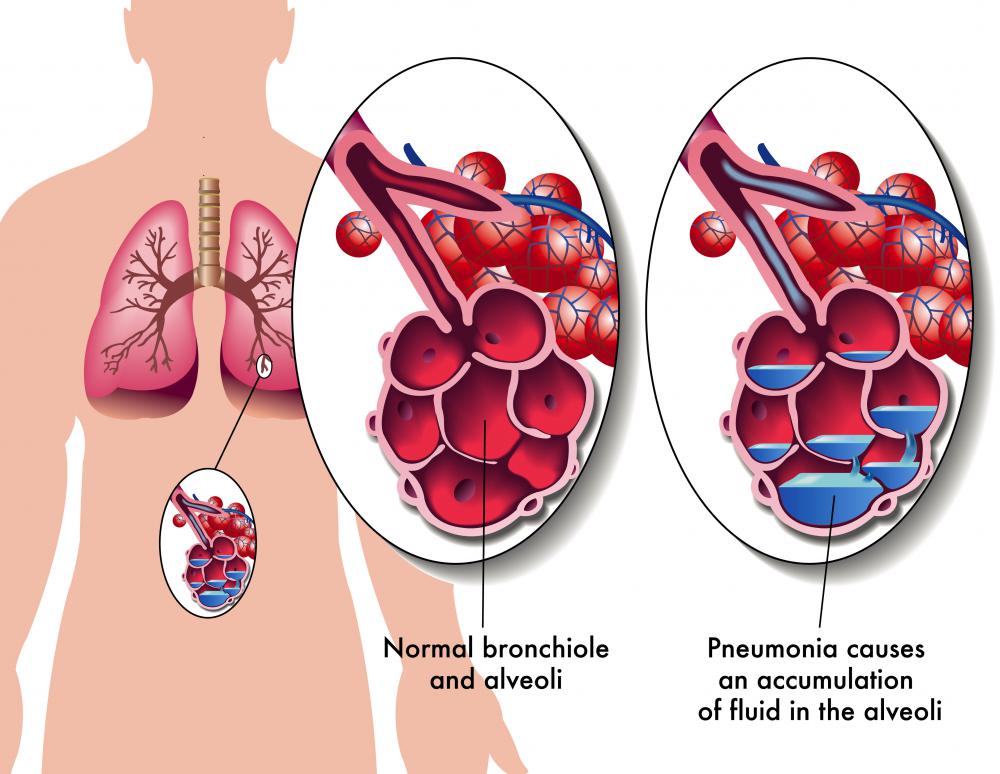
The medical term pneumonia actually covers over 50 respiratory illnesses which concern the function of the lung's air sacs, or alveoli. There are a number of irritants which can cause it to develop, including bacteria, viruses, mycoplasm, fungi and chemicals. Once one of these irritants manages to bypass the body's natural defenses, an infection forms in the deepest part of the lungs. As the body releases white blood cells to fight off this infection, fluids fill up the alveoli and bronchi. It is this fluid build-up and subsequent illness that many of us consider pneumonia.
Viral pneumonia is the most common form, although ironically it doesn't always produce the worst symptoms. Many people contract this illness shortly after another upper respiratory disease has already formed. Viruses expelled from the lungs through coughing may be re-aspirated into the air sacs and form a new infection. Patients with this form may notice a gradual increase in symptoms, starting with a persistent cough and leading to high fever and nausea. Severe cases may require hospital treatment, but many doctors suggest allowing the infection to run its course over a few weeks.

Some people develop this illness after exposure to bacteria, quite often in a hospital setting or around public areas during winter months. Bacterial pneumonia has a much more rapid onset, with sudden fever and painful breathing noted during the first few hours. Early treatments usually involve oral antibiotics, but many strains of bacteria have become resistant in recent years. This type may account for only 25% of all cases, but it is often the deadliest form to contract. The elderly and the very young are especially vulnerable. Some patients on ventilator systems develop bacterial pneumonia due to the machines' bypassing of the natural defense systems.

There is also a form of pneumonia caused by a small organism called mycoplasm. This particular form of the disease is not quite as debilitating as its viral or bacterial cousins, hence the common name walking pneumonia. Those diagnosed with this condition can usually function without medical intervention, although over-the-counter medications are generally prescribed for pain and other symptoms.

Another possible cause is the inhalation of chemicals or other foreign irritants. Some people may contract the condition after a session of vomiting. Once the foreign agent reaches the alveoli, an irritation forms and the acidity of the material may continue to destroy lung tissue. This is called chemical pneumonia, and may cause permanent damage if the area cannot be irrigated completely. Those who work around hazardous powdered chemicals or are exposed to acidic fumes are especially vulnerable to this condition.

Severe cases can be fatal. A number of patients who suffer from chronic diseases such as AIDS or heart disease may actually expire from an opportunistic form of pneumonia, not from their primary conditions. Although the condition itself is not especially contagious, the surrounding viruses and bacteria can still infect caregivers and others in close contact. It pays to wash your hands frequently and avoid crowds while treating a patient with this illness.
Michael Pollick
A regular TheHealthBoard contributor, Michael enjoys doing research in order to satisfy his wide-ranging curiosity about a variety of arcane topics. Before becoming a professional writer, Michael worked as an English tutor, poet, voice-over artist, and DJ.
Learn more...
Michael Pollick
A regular TheHealthBoard contributor, Michael enjoys doing research in order to satisfy his wide-ranging curiosity about a variety of arcane topics. Before becoming a professional writer, Michael worked as an English tutor, poet, voice-over artist, and DJ.
Learn more...AS FEATURED ON:
AS FEATURED ON:


-
![Pneumonia is the accumulation of fluid in the lungs.]() By: pixelcaosPneumonia is the accumulation of fluid in the lungs.
By: pixelcaosPneumonia is the accumulation of fluid in the lungs. -
![Viral pneumonia's symptoms include nausea.]() By: ftlaudgirlViral pneumonia's symptoms include nausea.
By: ftlaudgirlViral pneumonia's symptoms include nausea. -
![A persistent cough is one symptom of pneumonia.]() By: Lisa F. YoungA persistent cough is one symptom of pneumonia.
By: Lisa F. YoungA persistent cough is one symptom of pneumonia. -
![Ventilator-associated pneumonia is a severe lung infection in a patient who has been on a ventilator for more than 48 hours.]() By: sudok1Ventilator-associated pneumonia is a severe lung infection in a patient who has been on a ventilator for more than 48 hours.
By: sudok1Ventilator-associated pneumonia is a severe lung infection in a patient who has been on a ventilator for more than 48 hours. -
![Patients with pneumonia often experience cough, shortness of breath and chest pain.]() By: vbalehaPatients with pneumonia often experience cough, shortness of breath and chest pain.
By: vbalehaPatients with pneumonia often experience cough, shortness of breath and chest pain. -
![Pneumonia causes the alveoli, the tiny air sacs in the lungs, to become inflamed.]() By: rob3000Pneumonia causes the alveoli, the tiny air sacs in the lungs, to become inflamed.
By: rob3000Pneumonia causes the alveoli, the tiny air sacs in the lungs, to become inflamed. -
![Children experiencing inflamed nasal and throat passages may be more susceptible to developing a secondary condition, such as pneumonia.]() By: julaszkaChildren experiencing inflamed nasal and throat passages may be more susceptible to developing a secondary condition, such as pneumonia.
By: julaszkaChildren experiencing inflamed nasal and throat passages may be more susceptible to developing a secondary condition, such as pneumonia. -
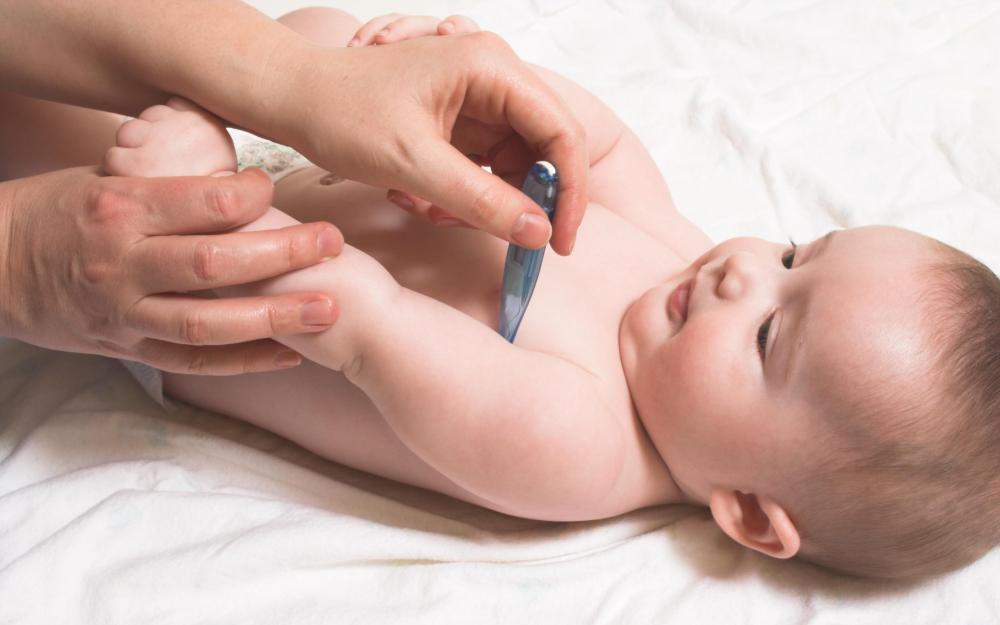
![The presence of pneumonia may cause fever in infants.]() By: fred goldsteinThe presence of pneumonia may cause fever in infants.
By: fred goldsteinThe presence of pneumonia may cause fever in infants.



Discussion Comments
The word for "pneumonia" comes from Greek "pneumon" which means "lung." This is related to the Greek word "pneuma" which means breath of life or soul. Also, the Spanish word for "lung" is "pulmon," which has a similar root.
@Qohe1et
I think you forgot to mention that this shooting was accidental. It is sad and ironic that this is the fate he suffered, being such a noble general. This kind of "opportunistic pneumonia" seems common.
Stonewall Jackson was shot by his troops and fell into the mud. He was not fatally wounded by the gunshots, but he contracted pneumonia from being in the cold wet mud, and died.
My brother had pneumonia at a young age and was made to drink a lot of water and orange juice in order to survive it well. Today, he still experiences breathing problems from time to time, and needs to constantly stay in good physical condition.
Post your comments