
At WiseGEEK, we're committed to delivering accurate, trustworthy information. Our expert-authored content is rigorously fact-checked and sourced from credible authorities. Discover how we uphold the highest standards in providing you with reliable knowledge.
What is Pisco?
Pisco is a hard alcohol, or liquor, made from distilled grapes. These kinds of liquors are often called brandies. The word ‘pisco’ is said to be derived from the word pisqu, meaning “little bird” in Quecha, the language of the ancient Inca. Most pisco is produced in Chile and Peru, and is a very popular drink in these countries. It is also popular in Bolivia.
Pisco was first produced strictly from the Quebranta grape, which means “broken” in Spanish. Since the early production days, other grape varietals have been used as well. In particular, Muscat grapes have become particularly common. The grape used varies depending on the region, and many producers use more than one grape when making a batch.

According to some records, pisco was made as early as the 1500s. In the centuries that followed, it was exported more and more to places like Spain. Perhaps due to its popularity among sailors who traveled between South America and Europe, it spread beyond Chile and Peru. By the 18th and 19th centuries, it was consumed not only by Chileans, Peruvians, and Spaniards, but also by North Americans. Some accounts credit Chilean miners working in the Gold Rush in California with bringing pisco to San Francisco, where it enjoyed popularity for a short time.

Whether the origins of pisco can be claimed by Chile or Peru remains a point of dispute. That is to say, differing opinions exist as to whether Peruvian pisco or Chilean pisco is the ‘real’ pisco. What is certain, however, is that there are distinguishing characteristics depending on where it was produced. Both countries have established regulations for how it may be produced, usually for the purpose of classifying the many styles of pisco, which can differ greatly depending on the grape used, and other aspects of production.

In Peru, most types of pisco belong to one of the four following categories: Pure, Aromatic, Green Must, and Acholado. Pure pisco is made from a single grape variety, usually the traditional Quebranta grape. Aromatic pisco is made from Muscat, or similar strains of grape, such as Torontel and Italia, which are closely related to Muscat. Production of Green Must pisco incorporates the use of partially fermented must. Acholado pisco, also known as Half-breed pisco, is blended from more than one grape varietal. Other restrictions placed on Peruvian pisco include a minimum of three months of aging, and abstaining from the use of any additives that could alter its taste, odor, or appearance.

In Chile, Muscat grapes are the most common grape used, although the Torontel and Pedro Jiménez varietals may also be used. Delineation of different types of pisco in Chile seems to be based more on its strength. "Regular" pisco is 60 to 70 proof, "Special" is 70 to 80 proof, "Reserve" is 80 to 86 proof, and anything higher than 86 proof is called "Great."
Traditionally, people drink pisco "straight up" but today, there are many mixed drink options. These include the Pisco Sour, made from pisco, lemon juice, frothed egg whites, sugar water, and bitters. Another popular mixed drink is the Piscola, a polular Chilean cocktail that mixes pisco with Coke®. In Peru, this same combination is called a Perú Libre. Others include the pisco-punch, the pisco-Collins, the Serena Libre, made from pisco and papaya juice.
AS FEATURED ON:
AS FEATURED ON:









-
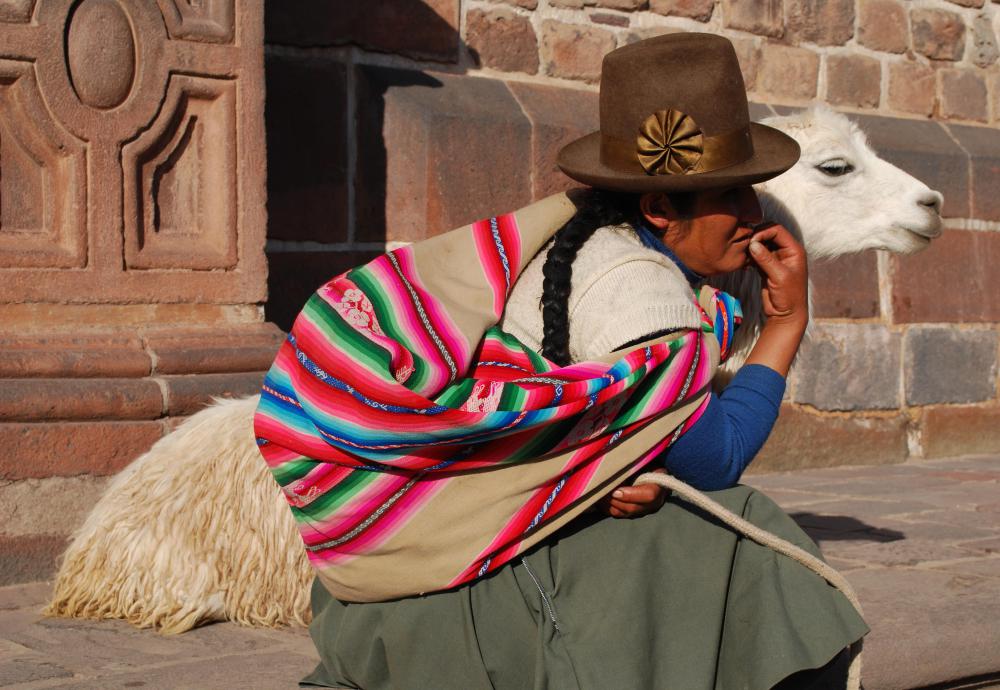
![The word 'pisco' derives from the Quecha term for little birds.]() By: Ariane CitronThe word 'pisco' derives from the Quecha term for little birds.
By: Ariane CitronThe word 'pisco' derives from the Quecha term for little birds. -
![Pisco is a type of Latin American brandy.]() By: Artem FurmanPisco is a type of Latin American brandy.
By: Artem FurmanPisco is a type of Latin American brandy. -
![Pisco is a popular liquor in South America, particularly in Bolivia, Chile and Peru.]() By: Iryna VolinaPisco is a popular liquor in South America, particularly in Bolivia, Chile and Peru.
By: Iryna VolinaPisco is a popular liquor in South America, particularly in Bolivia, Chile and Peru. -
![The Serena Libre is made from pisco and papaya juice.]() By: tashka2000The Serena Libre is made from pisco and papaya juice.
By: tashka2000The Serena Libre is made from pisco and papaya juice.


Discuss this Article
Post your comments