
At DelightedCooking, we're committed to delivering accurate, trustworthy information. Our expert-authored content is rigorously fact-checked and sourced from credible authorities. Discover how we uphold the highest standards in providing you with reliable knowledge.
What is Pinot Noir?
Pinot Noir is often considered to be one of the noblest grapes, at the top of that pantheon shared by Cabernet Sauvignon, Chardonnay, and Merlot. It is the major grape in the great wines of Burgundy, velvet and slender, full of nuance that at its best is rarely matched by other grapes. Unlike the more steady Cabernet Sauvignon, however, Pinot Noir is notoriously fickle, so while Bordeaux has a well-earned reputation for producing consistent wines one may reasonably expect to offer the same level of quality year after year, Burgundies are a wild card in virtually every bottle.
This grape ripens early, requiring a relatively cool climate to make use of the short growing season. It seems overly sensitive to virtually every aspect of viticulture, from pruning, to soil composition, to the amount of sun it receives on a daily basis. The grape has been called the scourge of the winemaker and a “minx of a vine.” Even with all this, however, Pinot Noir is one of the most popular grape varieties in the world. This should come as no surprise, for even with its myriad problems, when it all comes together and works, the wines it produces are almost magical in their depth and character.

Pinot Noir is sweeter than its Cabernet Sauvignon cousin, holding much less tannin, and with scent upon scent gently perfuming it. The wine is fairly light in color as a result of the grapes' thinner skins. It will age well for some time, but a good wine may also be enjoyed young. In its more youthful stages, Pinot Noir contains juicy, decadent fruit, particularly berries. As it ages, it tastes more of vegetation, though fruit remains throughout.

A number of clones of Pinot Noir have reached a fairly high level of success in their own right. The Pinot Meunier used in Champagne is a hardier clone of the grape, and both Pinot Gris and Pinot Blanc are other popular clones. Aside from being used in Burgundies and in many single-varietal wines, it is also the predominant grape in most sparkling wines. In Champagne, it is blended with Pinot Meunier and Chardonnay, and in other regions, it may be blended with Chardonnay and another rougher grape.

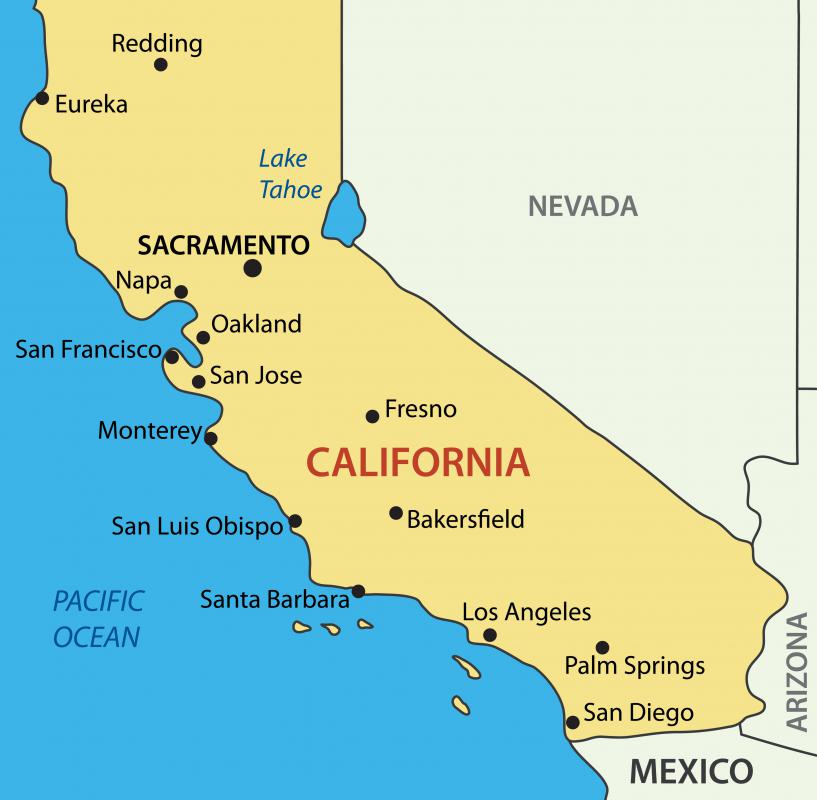
In the United States, Pinot Noir is very popular as a single-varietal wine. While California has produced many exceptional wines made from this grape, particularly in the fog-cooled coastal range of northern California, it is in Oregon that the grape has come into its own. A number of Oregon Pinot Noirs are held up as likely contenders to divest Burgundy of its crown.
AS FEATURED ON:
AS FEATURED ON:


-
![The fog-cool coastal region of northern California produces good wine.]() By: jodaThe fog-cool coastal region of northern California produces good wine.
By: jodaThe fog-cool coastal region of northern California produces good wine. -
![Pinot Noir is a red wine that is considered sweeter than Cabernet Sauvignon.]() By: Artem FurmanPinot Noir is a red wine that is considered sweeter than Cabernet Sauvignon.
By: Artem FurmanPinot Noir is a red wine that is considered sweeter than Cabernet Sauvignon. -
![Aside from being used in Burgundies and in many single-varietal wines, pinot noir is also the predominant grape in most sparkling wines.]() By: ncoyotAside from being used in Burgundies and in many single-varietal wines, pinot noir is also the predominant grape in most sparkling wines.
By: ncoyotAside from being used in Burgundies and in many single-varietal wines, pinot noir is also the predominant grape in most sparkling wines. -
![Some pinot noirs from Oregon are considered to be excellent wines.]() By: Irina RedkoSome pinot noirs from Oregon are considered to be excellent wines.
By: Irina RedkoSome pinot noirs from Oregon are considered to be excellent wines. -
![The Napa Valley is a winemaking region in California.]() By: pavalenaThe Napa Valley is a winemaking region in California.
By: pavalenaThe Napa Valley is a winemaking region in California. -
![Burgundy, in east-central France, is known for its pinot noir grapes.]() By: polesnoyBurgundy, in east-central France, is known for its pinot noir grapes.
By: polesnoyBurgundy, in east-central France, is known for its pinot noir grapes.





Discussion Comments
A 5 oz. glass of Pinot Noir typically has about 125 calories.
Pinot Noir is a popular choice for red wine drinkers and may have some added health benefits. Red wines are rich in antioxidants that reduce cholesterol and blood pressure. Some studies show that women who drink a glass or two of red wine a day are 30 percent less likely to be overweight than nondrinkers.
Research shows that digesting red wine triggers the body to burn calories, particularly in women. Wine may also incinerate calories because alcohol raises the body's temperature, causing the body to burn calories as it creates heat.
Not only does the wine come from the well known wine countries of Europe, or from the west coast of United States like California, but fine varieties of Pinot Noir come from places like New Zealand, Australia and Chile.
There are many varieties of Pinot Noir, depending on the growing region.
Some varieties will have more acidity than others, and also different fruity flavors.
The wine will pair well with salmon and lamb among other foods.
Post your comments