
At HomeQuestionsAnswered, we're committed to delivering accurate, trustworthy information. Our expert-authored content is rigorously fact-checked and sourced from credible authorities. Discover how we uphold the highest standards in providing you with reliable knowledge.
What is Pima Cotton?
 Tricia Christensen
Tricia Christensen
Tricia Christensen
Pima cotton, also called extra long staple (ELS), is a type of cotton grown primarily in Peru, the southwestern United States and Australia. It is considered to be one of the superior blends of cotton and is extremely durable and absorbent. This type of cotton is named after the Pima, a group of American Indians who first cultivated the plant in the U.S., but the cotton's origins are its cultivation in Peru. Unlike the more common upland cotton, which is of the species Gossypium hirsutum, pima cotton is of the Gossypium barbadense species.
Similar to Egyptian Cotton

This type of cotton bears some similarity to many forms of Egyptian cotton, which is frequently used in towels and sheets. Egyptian cotton has a much more extensive weave than other types of cotton. Towels made from Egyptian cotton are particularly desirable because they are very soft and help absorb water quickly. Growers in the southwestern U.S., where the climate is somewhat similar to that of Egypt, began growing a type of cotton that was a mix of Egyptian and other types of cotton. Pima cotton is a little shorter than Egyptian cotton but still yields a thread that can be woven multiple times into a piece of fabric to create a dense, soft fabric.
Cultivation of Pima cotton became especially popular in the early 20th century. Pima cotton has long threads, similar to Egyptian cotton, which make it a desirable choice for many products. It is used in towels, sheets and clothing.
Uses in Clothing
Pima cotton in clothing is most often used in shirts for both men and women. Woven sweaters made with this type of cotton also are quite popular. They are light to wear yet provide superior warmth.

Men's socks can be made with pima cotton, but the socks often include some elastic to keep the socks from slipping down the leg. Men often prefer these socks above others because of their softness and density. Additionally, they tend not to wear out quickly.
Advantages and Disadvantages
One of the advantages of pima cotton is that the thickness of the cloth it weaves creates a very durable fabric. Marketers of this cotton claim that their products can last as much as 50 percent longer than fabrics made from other forms of cotton. One of the disadvantages of this type of cotton is that its greater absorbency means that stains are more readily formed. Some retailers who use pima in clothing coat the cloth with a stain guard to prevent this from happening.
Tricia Christensen
Tricia has a Literature degree from Sonoma State University and has been a frequent HomeQuestionsAnswered contributor for many years. She is especially passionate about reading and writing, although her other interests include medicine, art, film, history, politics, ethics, and religion. Tricia lives in Northern California and is currently working on her first novel.
Learn more...
Tricia Christensen
Tricia has a Literature degree from Sonoma State University and has been a frequent HomeQuestionsAnswered contributor for many years. She is especially passionate about reading and writing, although her other interests include medicine, art, film, history, politics, ethics, and religion. Tricia lives in Northern California and is currently working on her first novel.
Learn more...AS FEATURED ON:
AS FEATURED ON:


-
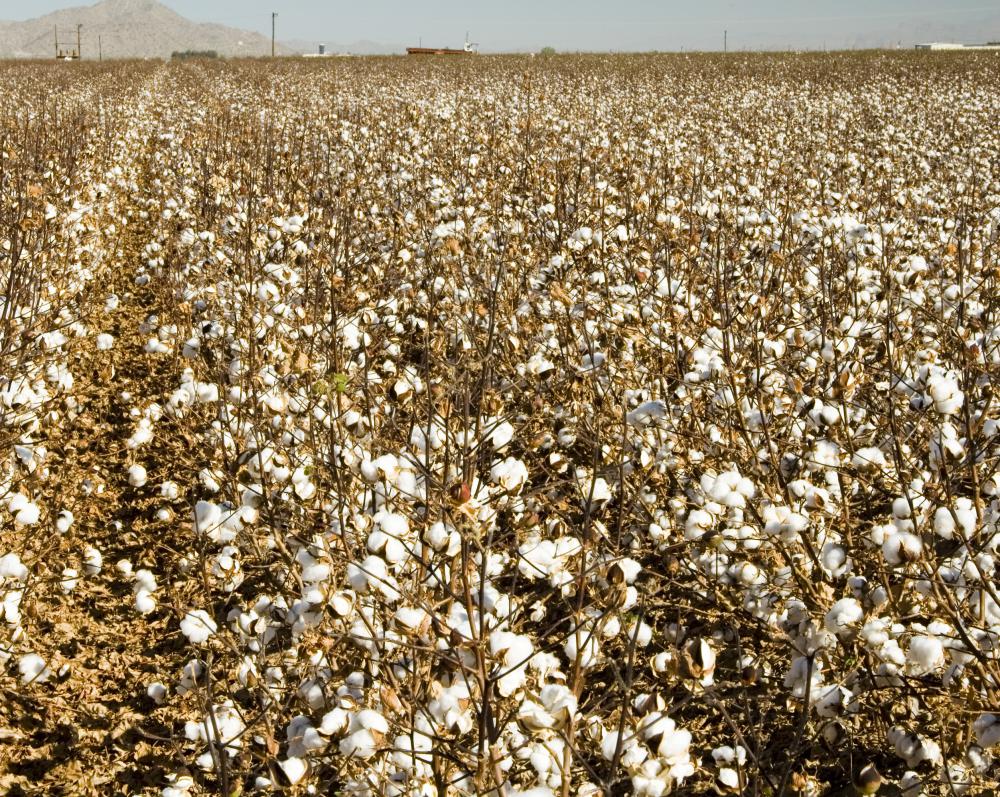
![Cotton field ready to be harvested.]()
Cotton field ready to be harvested. -
![Cotton bolls on a branch.]()
Cotton bolls on a branch. -
![A T-shirt made with pima cotton.]() By: Kayros StudioA T-shirt made with pima cotton.
By: Kayros StudioA T-shirt made with pima cotton. -
![Pima cotton is considered to be a superior blend of cotton.]() By: rodjulianPima cotton is considered to be a superior blend of cotton.
By: rodjulianPima cotton is considered to be a superior blend of cotton. -
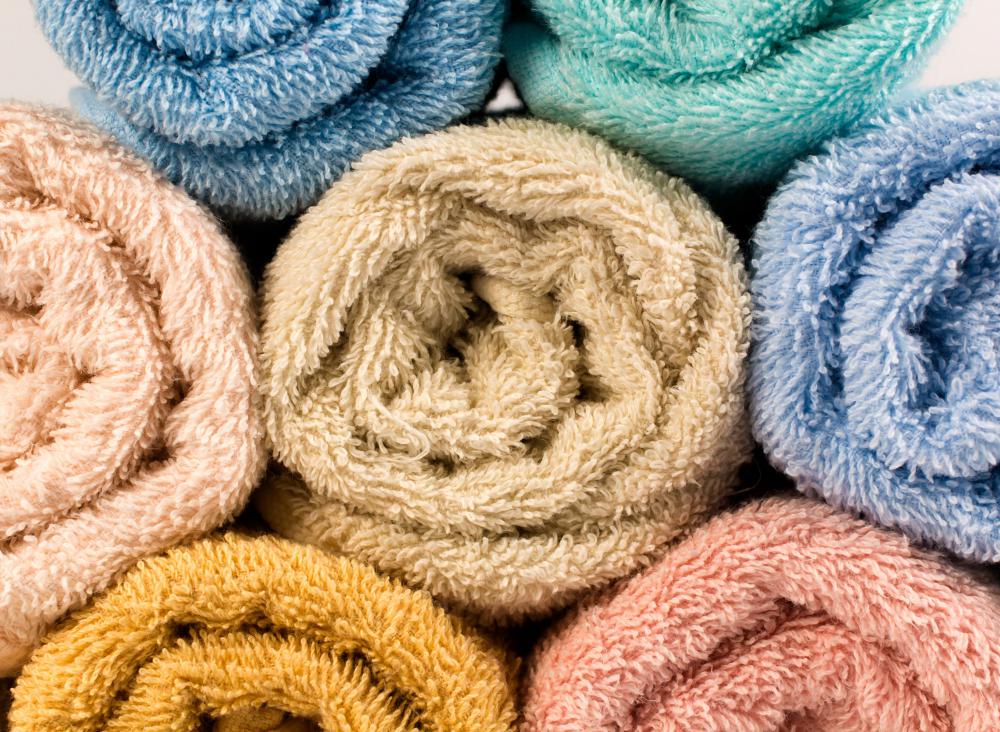
![Pima cotton is used in the making of towels.]() By: chonlawitPima cotton is used in the making of towels.
By: chonlawitPima cotton is used in the making of towels.



Discussion Comments
Can we use pima cotton directly for t-shirts manufacturing?
I have found them very cool. They do not retain body heat at all to the point that they are very uncomfortable unless you are in a very warm climate.
I was looking for information on Pima Cotton, what it is and so on. I found this page with lots of info. I just want to say thank you, and I also found some sites I can look into with your advertisements.
What is the staple length of pima cotton?
@cdonaldmorri: Like any other natural fiber, it will shrink, but it's much more durable than regular cotton.
@anon6074: Yes they are.
Where can I find a manufacturing company that can make pima cotton and make my organic baby clothing line?
I have fairly new pima sheets that are starting to look dingy. Any suggestions on how to brighten them? Instructions say to use only non-clorine bleach which I have not found to whiten anything.
If a shirt is made of 100 percent peruvian cotton, does it need to be ironed?
what about pima cotton pillows?
I would not wash dark colors in hot water, ever, but I have pastel colored pima cotton sheets that I always wash in hot water. I have a lot of sets of sheets, but some of them are 15 years old and still holding up well. I started commenting on this forum because I love pima cotton. Hope this answers your question.
What is the hottest water temp a blouse made of 100 percent pima cotton can tolerate?
I bought a Ralph Lauren Vancouver Olympics jacket made of pima cotton. It's incredibly warm and light weight.
I have not experienced any extraordinary shrinkage of pima cotton sheets. If you get a high thread count, there is very little room for shrinkage. When the thread count is low, the threads are farther apart and so, in the dryer, they will pull closer together as they dry and thus, "shrink." To answer another question, they do seem very cool to sleep on. Hope this helps.
would also like to know if pima cotton shrinks?
just bought Pima Cotton 500TC from Bloomingdales. brand is "Sky". They are delicious.
From what I can tell, the "greek" part refers to sorority and fraternity shirts/clothes made of pima cotton--not that it comes from Greece. I could be wrong, but I did some research and that is my conclusion.
can any one tell me what is greek pima? what is its price?
Pima cotton is the best cotton to buy. Pima cotton is to peru like coca cola is to usa. My brother is married to a peruvian and boy, they always give me clothes made of this superior cotton. Just love it!
I'm looking for absolute durability and softness. What cotton sheets do I need?
I just bought CharterClub pima cotton sheets. It says iron free.
The pima cotton is original grown in Republic of Peru and still is one of the primary resourses of this country. Please give the credits
Where can I find a U.S. manufacturer that produces pima cotton sheets?
I checked out the two sets that I prefer in my small collection. The two sets of sheets that I use repeatedly are made from pima votton, and the sheets sadly like everything else during this gilded age are made outside of the U.S., these in India. I prefer this fabric because it is not only very soft, it is very cool. These two sets were bought years ago when I belonged to Costco. They were sold under their Kirkland brand, At the time of purchase, they were $50 for a queen set.
Pima cotton sheets get softer and softer with each washing. They are wonderfully soft and they last a very long time. I have not found them to be very wrinkly at all and I have a lot of sets of pima cotton sheets. I don't like to sleep on anything but pima or Egyptian and Egyptian are quite a bit more expensive. Pima (or Supima) is worth every penny.
Where can you find pima cotton? Is pima cotton exported?
The best quality percale cotton sheets will wrinkle. If your sheets wrinkle out the dryer you probably have a high quality sheet. Simply take them straight from the dryer to the bed.
I would cringe to think that non-wrinkle or blend sheets would replace the luxurious cotton percale sheets which are the standard of the industry.
what is the difference between ordinary cotton & pima cotton?
Pima cotton originates from the Gossypium Barbadense plant which is native to Peru where it was first produced so not by natives of the USA. It was then later introduced to Egypt.
Is it true that sheets advertised as being made of 100 percent cotton (with no synthetic content such as polyester or rayon), are a bad purchase due to a tendency to wrinkle terribly when washed...therefore requiring ironing? I had always thought all cotton sheets were the ones to strive for. Now I'm not sure since I read something the other day about cotton sheets coming out of the wash stiff and badly wrinkled. Also, what can you tell me about percale? Desirable for sheets/pillowcases? Pros, cons? I actually am learning a lot of new things about bed linens that I never knew before. I guess I have been stuck behind the times, since it seems that today, every consumer product we need offers a multitude of choices and variations. It makes your head spin (making a purchasing decision used to be a lot less complicated).
Does Pima cotton shrink?
are pima pillow cases cool to sleep on?
Post your comments