
At TheHealthBoard, we're committed to delivering accurate, trustworthy information. Our expert-authored content is rigorously fact-checked and sourced from credible authorities. Discover how we uphold the highest standards in providing you with reliable knowledge.
What is Physical Therapy?
 Michael Pollick
Michael Pollick
Michael Pollick
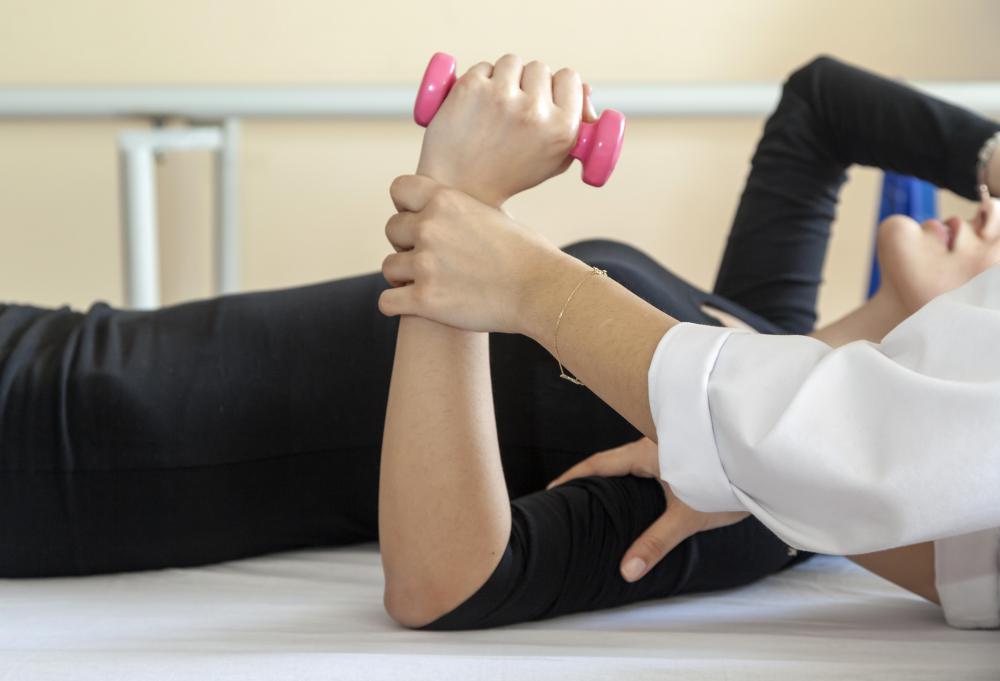
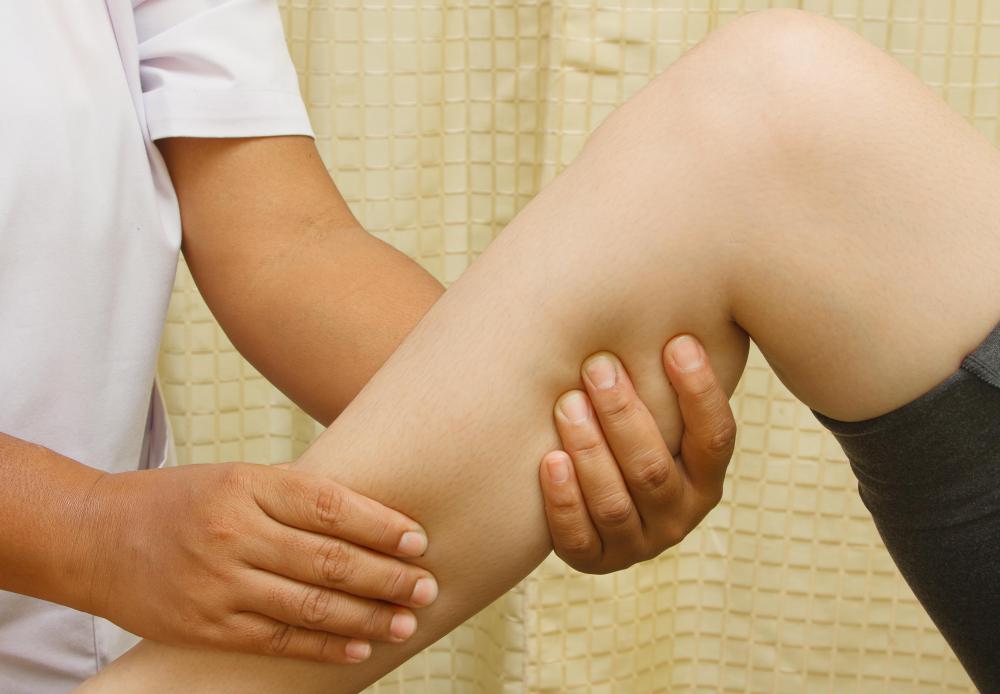
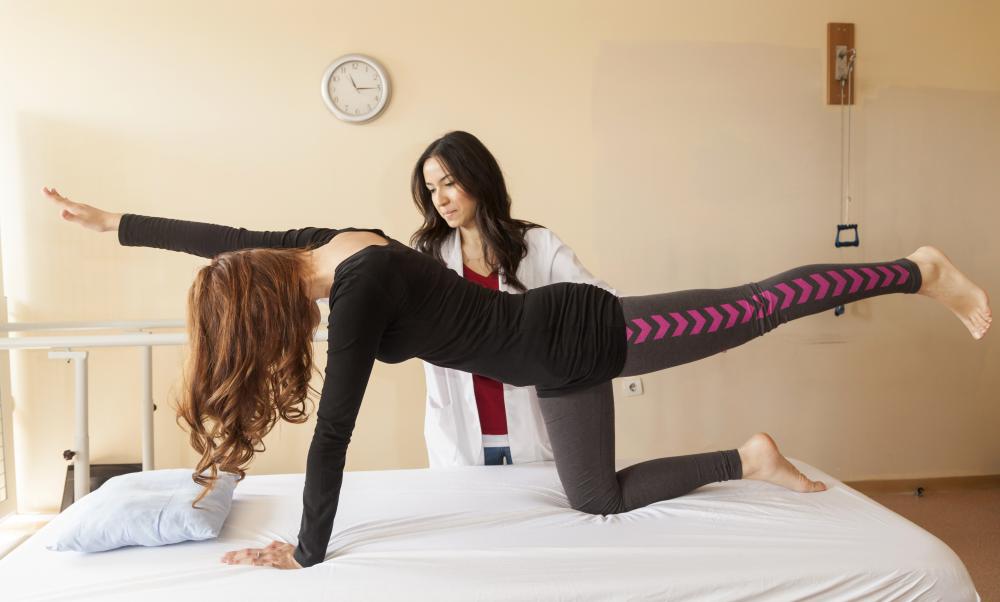
A surgeon might be able to reattach a limb or repair a broken bone, but it often takes physical therapy to restore a patient's function. Physical therapy, broadly speaking, involves direct manipulation of muscles, joints and other parts of the body affected by an injury or chronic illness. It often involves strength training, heat treatments, massage and supervised exercises. Individual regimens often depend on the type of injury or condition, the patient's age and specialized treatments prescribed by a medical professional.
Sometimes, physical therapy is used to address the injury itself and other times it is used to help the patient compensate for the loss of use. Physical therapists may use strength training, for example, to make life on a walker or in a wheelchair more bearable. Other forms of therapy may actually improve the patient's range of motion or realignment of the affected area. Patients may have to learn how to use their non-dominant hand or develop a new walking style to accommodate a prosthesis.

Physical therapy may also involve the use of braces, walkers or other mobility aids. Patients may be encouraged to exercise the injured areas while wearing supportive devices. Water therapy may also be used to reduce the amount of weight placed on an injured limb. Therapy sessions may also duplicate the conditions patients may face at work or home during a typical day.

The field, much like other medical-related occupations, continues to grow in demand. Professional physical therapists go through at least four years of college-level training, with a heavy emphasis on human physiology and biology. Most candidates also spend years working directly with experienced therapists before seeking their own licenses to practice. There are many different jobs available for someone with a degree in this field, including at nursing homes, rehabilitation centers, professional sports teams and hospitals. Many people continue their training and become supervisors or private practitioners for home health care needs.
Michael Pollick
A regular TheHealthBoard contributor, Michael enjoys doing research in order to satisfy his wide-ranging curiosity about a variety of arcane topics. Before becoming a professional writer, Michael worked as an English tutor, poet, voice-over artist, and DJ.
Learn more...
Michael Pollick
A regular TheHealthBoard contributor, Michael enjoys doing research in order to satisfy his wide-ranging curiosity about a variety of arcane topics. Before becoming a professional writer, Michael worked as an English tutor, poet, voice-over artist, and DJ.
Learn more...AS FEATURED ON:
AS FEATURED ON:


-
![Physical therapy is used to restore a patient's function.]() By: aykuterdPhysical therapy is used to restore a patient's function.
By: aykuterdPhysical therapy is used to restore a patient's function. -
![Physical therapists often work with people who have trouble walking to help strengthen their legs.]() By: praisaengPhysical therapists often work with people who have trouble walking to help strengthen their legs.
By: praisaengPhysical therapists often work with people who have trouble walking to help strengthen their legs. -
![Physical therapy usually works to help people become more mobile.]() By: Lisa F. YoungPhysical therapy usually works to help people become more mobile.
By: Lisa F. YoungPhysical therapy usually works to help people become more mobile. -
![A career in physical therapy demands a high level of commitment to one's own personal fitness.]() By: iceteastockA career in physical therapy demands a high level of commitment to one's own personal fitness.
By: iceteastockA career in physical therapy demands a high level of commitment to one's own personal fitness. -
![Hand physiotherapy may involve splinting to support the hand.]() By: Julián RovagnatiHand physiotherapy may involve splinting to support the hand.
By: Julián RovagnatiHand physiotherapy may involve splinting to support the hand. -
![Some physical therapists specialize in working with athletes who have incurred a sports-related injury.]() By: aykuterdSome physical therapists specialize in working with athletes who have incurred a sports-related injury.
By: aykuterdSome physical therapists specialize in working with athletes who have incurred a sports-related injury. -
![Some physical therapy regimens are designed to reduce inflammation and promote greater agility.]() By: AmbrophotoSome physical therapy regimens are designed to reduce inflammation and promote greater agility.
By: AmbrophotoSome physical therapy regimens are designed to reduce inflammation and promote greater agility. -
![Physical therapists often study gait in order to detect bones problems in patients.]() By: eAlisaPhysical therapists often study gait in order to detect bones problems in patients.
By: eAlisaPhysical therapists often study gait in order to detect bones problems in patients.





Discussion Comments
what are the exercises to be done for lumbar spondylosis?
In the USA there are options such as PTA (physical therapist assistant) which do not require a masters. To become a practicing physical therapist it now requires a doctorate degree.
It must be noted that physiotherapists are not allied health professional in other countries nor are therapist or technicians, but are doctors that are trained in physiotherapy. their services range from acute care to rehabilitation, that is why in countries like south africa, the category of medicine called physiatrist has being stopped.
answering article 1, it depends on which country are you referring to, but studies range from bachelors degree to professional doctorate, that is why in other countries physiotherapist are regarded as doctors.
thanks.
what is the best way to approach adiagnoisis of lumber spondylosis with occational pains on my right lower limb ?
Is it true that you are not able to work in anything of the physical therapy field until you have received your masters degree?
Post your comments