
At TheHealthBoard, we're committed to delivering accurate, trustworthy information. Our expert-authored content is rigorously fact-checked and sourced from credible authorities. Discover how we uphold the highest standards in providing you with reliable knowledge.
What is Persistent Genital Arousal Disorder?
 Nicole Madison
Nicole Madison
Nicole Madison
Persistent genital arousal disorder is a condition in which a woman suffers persistent, and usually unwanted, sexual arousal. Women with this disorder typically become aroused without any provocation or physical touch. Interestingly, sex and orgasms don’t seem to relieve the arousal, and some women with the condition say it only makes matters worse. Many of these women report that the near-constant sexual arousal is distracting and interferes with their daily routines. Others report that they have spontaneous orgasms that prove embarrassing or disturbing.
While it doesn’t occur in all women with persistent genital arousal disorder, some women with this disorder have uncontrollable orgasms. This may be caused by the disorder or related to another condition the woman has at the same time. When this symptom occurs, a woman may orgasm even though she has not been stimulated and is not thinking about sex. For example, some women report experiencing uncontrollable orgasms while brushing their teeth or hugging relatives. This is usually a source of embarrassment and distress.

Scientists are unsure of what causes this condition, but some suspect that the disorder is related to anxiety a woman may experience. Others theorize that it is related to a sufferer's fear that episodes of pain may reoccur. There is even some evidence to suggest that the problem may even be related to seizures in some women.
People are often unsure of how to treat persistent genital arousal disorder. In some cases, masturbation may provide temporary relief, but the arousal seems to return rather quickly. In fact, some women with the condition state that the arousal is more intense after they have an orgasm by other methods. Others report that it becomes progressively more difficult for them to have orgasms that are not caused by the disorder. These women theorize that their genitals become somewhat desensitized to touch as a result of the disorder and frequent masturbation.

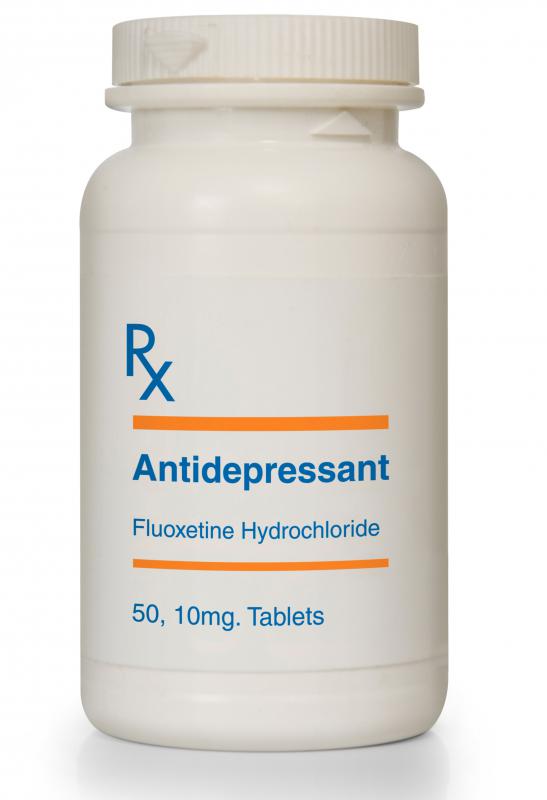
Some sufferers may respond to treatment with selective serotonin reuptake inhibitors, which are usually prescribed as antidepressants. They work by interfering with re-absorption of a brain chemical called serotonin. This helps to alter the receiving and sending of chemical messages in the brain. Additionally, the disorder spontaneously resolves in some women.

In some cases, women do report that they like the feelings of arousal caused by the disorder, and they may not see a need for treatment. The persistent arousal is typically only considered a disorder or syndrome when it is unwanted or interferes with normal relationships and events.
Nicole Madison
Nicole’s thirst for knowledge inspired her to become a TheHealthBoard writer, and she focuses primarily on topics such as homeschooling, parenting, health, science, and business. When not writing or spending time with her four children, Nicole enjoys reading, camping, and going to the beach.
Learn more...
Nicole Madison
Nicole’s thirst for knowledge inspired her to become a TheHealthBoard writer, and she focuses primarily on topics such as homeschooling, parenting, health, science, and business. When not writing or spending time with her four children, Nicole enjoys reading, camping, and going to the beach.
Learn more...AS FEATURED ON:
AS FEATURED ON:


-
![Some sufferers of persistent genital arousal disorder may respond to treatment with selective serotonin reuptake inhibitors.]() By: snyggg.deSome sufferers of persistent genital arousal disorder may respond to treatment with selective serotonin reuptake inhibitors.
By: snyggg.deSome sufferers of persistent genital arousal disorder may respond to treatment with selective serotonin reuptake inhibitors. -
![Persistent genital arousal disorder applies to woman who suffer persistent, and usually unwanted, sexual arousal.]() By: Ivan MonteroPersistent genital arousal disorder applies to woman who suffer persistent, and usually unwanted, sexual arousal.
By: Ivan MonteroPersistent genital arousal disorder applies to woman who suffer persistent, and usually unwanted, sexual arousal. -
![Antidepressants may be prescribed for persistent genital arousal disorder.]() By: James SteidlAntidepressants may be prescribed for persistent genital arousal disorder.
By: James SteidlAntidepressants may be prescribed for persistent genital arousal disorder. -
![Women with persistent genital arousal disorder may experience uncontrollable orgasms.]() By: Andrey KiselevWomen with persistent genital arousal disorder may experience uncontrollable orgasms.
By: Andrey KiselevWomen with persistent genital arousal disorder may experience uncontrollable orgasms.



Discuss this Article
Post your comments