
At AllThingsNature, we're committed to delivering accurate, trustworthy information. Our expert-authored content is rigorously fact-checked and sourced from credible authorities. Discover how we uphold the highest standards in providing you with reliable knowledge.
What is Permineralization?
 Mary McMahon
Mary McMahon
Mary McMahon
Permineralization is one of the ways in which a plant or animal can be turned into a fossil. During this process, mineral rich water seeps into the void spaces of an organism, leaving deposits of minerals behind that slowly build up, creating a cast of the organism. In some cases, the entire plant or animal may be turned to stone this way, in which case the resulting fossil is said to be petrified. Many museums have examples of fossils that have been preserved through this method, and people can sometimes find such fossils for sale at rock shops and hobbyist stores as well.
This process is very uncommon. Billions of organisms have died on Earth over the course of geologic history, and only a fraction of these organisms have been fossilized because nature has evolved a very elegant and efficient system for recycling dead plants and animals. For permineralization to occur, an organism must be rapidly covered in sediment shortly after death. Many petrified fossils are marine organisms that fell to the bottom of the ocean and were covered in sediment.

The permineralization process is very slow. It happens as water seeps through the sediment that covers an organism; the sediment helps keep the organism intact, and the mineralized water slowly works its way into the remains. Depending on the type of minerals involved and the conditions, petrification may result in incredibly detailed preservation, allowing people to differentiate individual cells in the organism, or it may create a more rough cast.

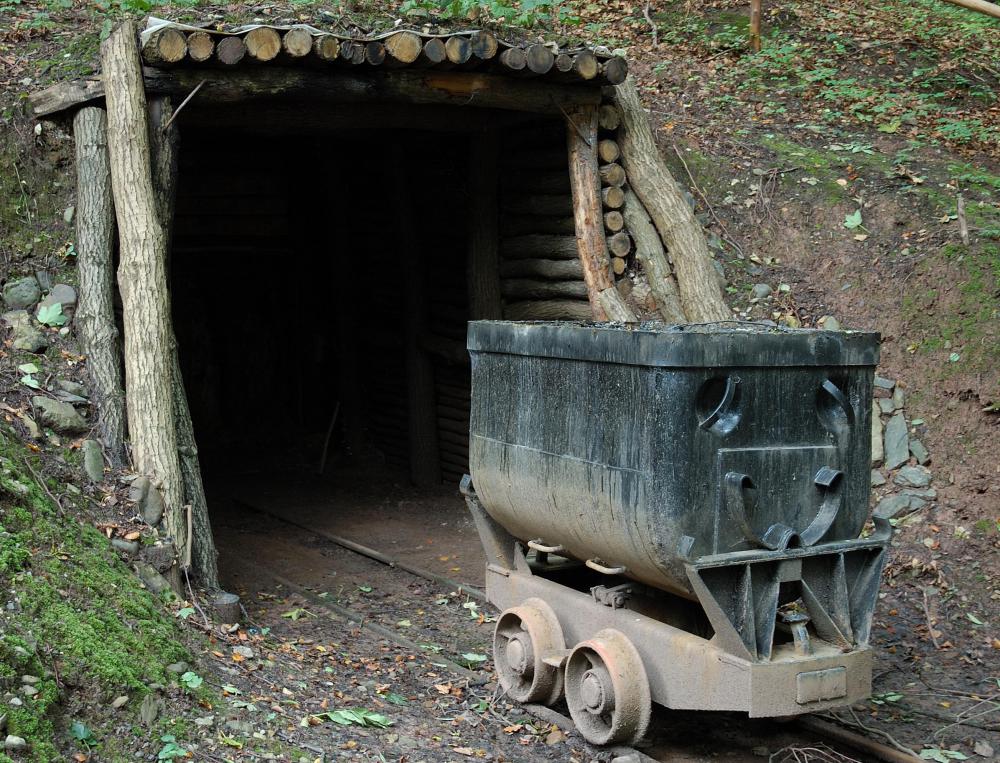
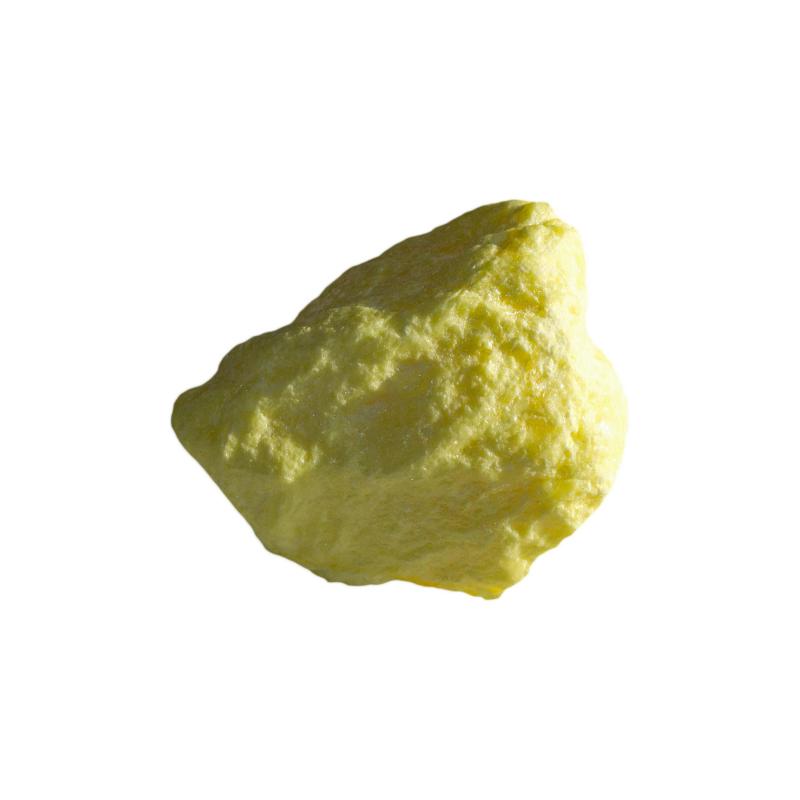
When petrified fossils contain primarily silica, archaeologists say that they have undergone silicification. Silicification is an excellent preservation technique that sometimes retains immense detail. When sulfur is involved, the process is called pyritization. Pyritization happens most commonly to marine organisms. It is also possible to find some excellent examples of carbonate mineralization in places like coal mines.

In many cases, permineralization only preserves the mineral tissue in the organism, like bones, teeth, and shells. In other instances, it fills a void left behind in sediment by an organism which has since rotted; this commonly happens with fossilized leaves. In very rare cases, part or all of the soft tissue is preserved, allowing people to get a glimpse into a body that may be millions of years old to learn more about how it worked.
Frequently Asked Questions
What is permineralization and how does it occur?

Permineralization is a geological process where minerals carried by water fill the pores and spaces in organic material, such as bone or wood. Over time, these minerals crystallize, hardening the structure and preserving the original organic material's shape. This process typically occurs when organisms are buried under sediment, protecting them from decay and allowing mineral-rich water to permeate.
What types of materials are most commonly permineralized?
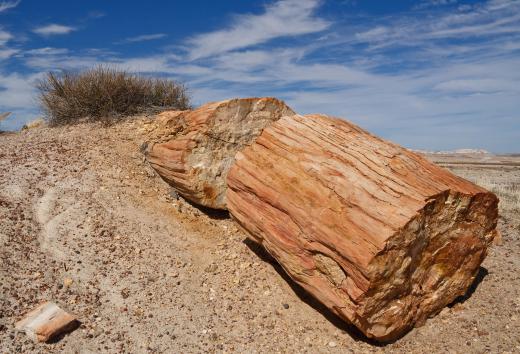
Organic materials with porous structures, like bones, wood, and plants, are most commonly permineralized. These materials have spaces that can be filled with minerals. According to paleontological research, dinosaur bones and ancient trees like those from the Carboniferous period are classic examples of permineralized fossils, providing a wealth of information about past life on Earth.
How long does permineralization take to occur?
The permineralization process can vary greatly in duration, depending on factors such as the size of the specimen, the mineral concentration in the water, and environmental conditions. It can take thousands to millions of years. For instance, some dinosaur fossils have undergone permineralization over tens of millions of years since the Mesozoic era.
Can permineralization occur in any type of environment?
Permineralization typically occurs in environments where sediment buries organic material quickly, such as river deltas, lakes, and swamps. These environments must also have mineral-rich water that can flow through the buried material. However, it is less likely to occur in arid or extremely cold environments where the necessary water flow is limited.
What is the difference between permineralization and petrification?
Permineralization involves the filling of pores in organic material with minerals, while petrification, or petrifaction, includes both permineralization and replacement. In petrification, the organic material's structure is not only filled with minerals but also replaced at the cellular level, often resulting in a more detailed and stone-like fossil.
Why is permineralization important for understanding Earth's history?
Permineralization preserves the fine details of organisms, allowing scientists to study the morphology and internal structures of ancient life forms. This process provides critical evidence for understanding evolutionary biology, paleoecology, and Earth's geological history. Permineralized fossils, for example, have been instrumental in reconstructing the appearance and behavior of extinct species, such as dinosaurs and ancient plants.
Mary McMahon
Ever since she began contributing to the site several years ago, Mary has embraced the exciting challenge of being a AllThingsNature researcher and writer. Mary has a liberal arts degree from Goddard College and spends her free time reading, cooking, and exploring the great outdoors.
Learn more...
Mary McMahon
Ever since she began contributing to the site several years ago, Mary has embraced the exciting challenge of being a AllThingsNature researcher and writer. Mary has a liberal arts degree from Goddard College and spends her free time reading, cooking, and exploring the great outdoors.
Learn more...AS FEATURED ON:
AS FEATURED ON:









-
![Permineralization is one way a plant or animal may be fossilized.]() By: markrhigginsPermineralization is one way a plant or animal may be fossilized.
By: markrhigginsPermineralization is one way a plant or animal may be fossilized. -
![Fossils are the result of permineralization.]() By: oscarcardenasFossils are the result of permineralization.
By: oscarcardenasFossils are the result of permineralization. -
![Examples of permineralization can be found in coal mines.]() By: MajusC00LExamples of permineralization can be found in coal mines.
By: MajusC00LExamples of permineralization can be found in coal mines. -
![When permineralization involves sulfur, it is called pyritization.]() By: wlad074When permineralization involves sulfur, it is called pyritization.
By: wlad074When permineralization involves sulfur, it is called pyritization. -
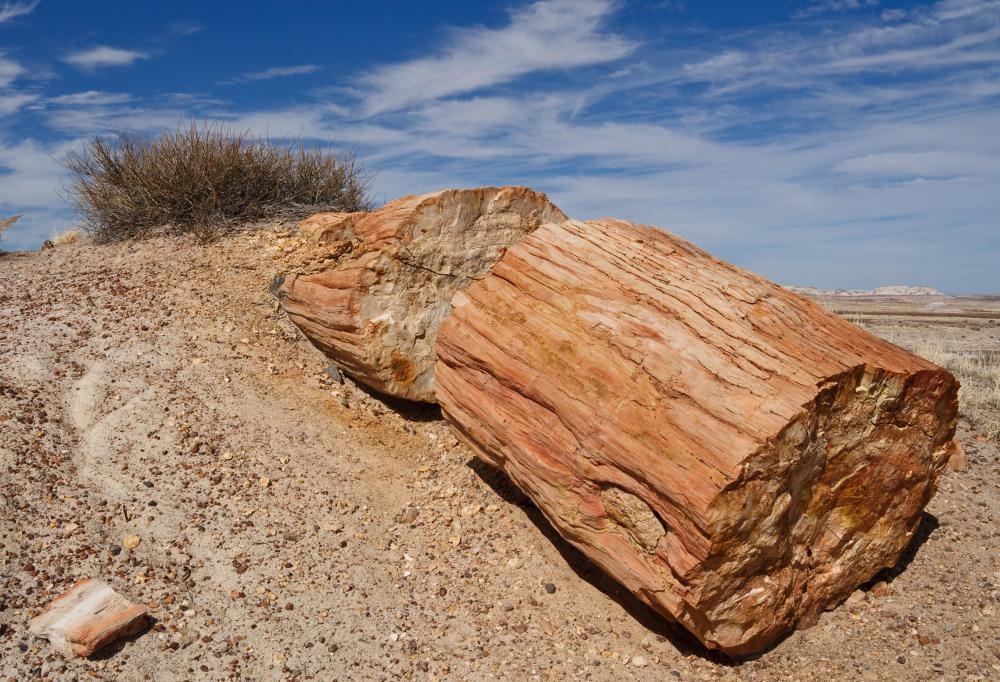
![During wood petrification, cellulose and living tissue are replaced by minerals.]() By: Patrick PoendlDuring wood petrification, cellulose and living tissue are replaced by minerals.
By: Patrick PoendlDuring wood petrification, cellulose and living tissue are replaced by minerals.


Discussion Comments
The permineralization process is not slow (over millions of years. We have never observed millions of years of time ). Miners hats and teddy bears have been found fossilized. All you need are the right conditions: heat, pressure, rapid covering in mud or sand with water (sediment) and the right chemical process (like with fast setting concrete). Bristol University has experimented to make fast fossil in a day. Robert Martill in 1989 observed intricate delicate features preserved in fish gills in Brazil. Soft things like animal tracks, dinosaur poo, leaves, jellyfish, raindrops perhaps require rapid hardening of the sediment and burial or as this article says the soft parts rot away leaving an impression.
Fossils are buried in gigantic slabs of sediments across continents- evidence of a world wide flood. The Tapeats sandstone for example covers all of North America. A 7ft high layer of millions of nautiloids stretches 100 miles along the grand canyon- evidence of a mass kill event in sediment. Long age geologists propose 5-7 mass kill events to make the fossil record in water and sediment. Short age geologists propose God's flood in the time of Noah as recorded in History (Biblical history and secular flood myths in so many cultures around the world).
Fossil tracks of animals and trilobites are often found below the actual bodies of the animals in the fossil record- evidence that the fossil record is not millions of years of history but days.
On this site is a picture of a tree squashed- the force to squash a tree is huge -- more evidence of pressure from huge layers of sediment in a flood.
In the laboratory, paleontologists have been able to fossilize lobster and shrimp eggs in just 2 – 8 weeks.
Permineralization is the least common of the big three preservation types. Your mushroom did not go Permineralization. This process only works in marine environments and requires the the matrix of said material be covered in sediment, as this along with the fact that fossilized mushrooms are unbelievably rare, possibly the rarest of all fossils, leads me to believe you found a dried out mushroom.
@anon265780: I am only 15 but you asked for a theory. Mushrooms won't grow on plain metal, and need a warm and moist place to grow, so this started in the summer. Due to over exposure of water on your air conditioner, the metal weakened and your little mushroom was formed, slowly growing. So your petrified mushroom probably grew in a matter of a few years.
I was looking for discussion on this. I would say it is not so rare and does not take so long for the petrified process. I wish I would have kept a petrified mushroom I found. I was cleaning out a standard air conditioner and behold a petrified mushroom formed inside the air-conditioner, in perfect condition. It grew good and tall and froze to stone. Any theories on that anyone? This must have happened very quickly!
The article says "The permineralization process is very slow." How slow? Can it take place within 1,000,000 years of death? Can it take place within 100,000 years? Under ideal conditions, what is the quickest it could take place?
Post your comments