
At DelightedCooking, we're committed to delivering accurate, trustworthy information. Our expert-authored content is rigorously fact-checked and sourced from credible authorities. Discover how we uphold the highest standards in providing you with reliable knowledge.
What is Peanut Oil?
 Tricia Christensen
Tricia Christensen
Tricia Christensen
Peanut oil, which may be called groundnut oil in the UK, is a highly desirable oil for deep-frying. It is made from the legumes called peanuts, and it is known for its high smoke point, the point at which the oil begins to give off smoke and start to burn. Refined oil, the type that people are most likely to buy in a grocery store, has a smoke point of 450°F (232.22°C). Other, comparable oils in this respect include ghee, sesame oil, refined safflower oil, extra light olive oil, and most versions of canola oil.
People can find peanut oil used quite a bit in the US, especially to fry French fries or make fried chicken, and most experts on deep frying turkey recommend it as the oil of choice. It also has many applications in Asian cooking. Authentic Asian cooking, especially in places like China, uses an oil that is less refined, retaining a little bit more of the protein of the peanut and producing a stronger flavor. Most US versions, unless they are sold as organic, tend to filter out much of the taste of the peanuts, and all of its protein.

This is good news for people who suffer from peanut allergies. In most cases, food prepared in filtered peanut oil does not provoke an allergic response, because the allergy to peanuts tends to be to proteins contained in them. People who have a strong allergic response to peanuts should check with a medical professional first, but in general, they may not have an allergic reaction to the oil. People who fry things in organic oil, or who are visiting a country that uses a less refined version, may have an allergic reaction, however.

When most people think of oils used in cooking, they want to know the calorie content and composition of the oil. A tablespoon (approximately 14.7 ml) of peanut oil has just under 120 calories. This amount provides 21% of the daily recommended intake of total fats, has 2.28 grams of saturated fat, 4.32 grams of polyunsaturated fat, and 6.24 grams of monounsaturated fat. The saturated fat in this serving size counts for 11% of the US Daily Value of saturated fat intake.

From a nutritional standpoint, many oils are considered superior to peanut, but this variety remains a popular choice. For people who are looking for a good substitute, the smoke points of canola and extra light olive oil are comparable, and from a health perspective they both are much higher in monounsaturated fat. There are a few other oils that make worthy substitutes.

Cooks who use this oil sparingly, especially unfiltered or organic types, can often get some of the rich taste of peanuts that is missing from other oils. In salad dressing, for instance, it can add an extra flavor. Though all oils should be used with caution, peanut oil is just as worthy as some, and better than others, and many love its taste and its ability to produce terrific fried foods.
Tricia Christensen
Tricia has a Literature degree from Sonoma State University and has been a frequent DelightedCooking contributor for many years. She is especially passionate about reading and writing, although her other interests include medicine, art, film, history, politics, ethics, and religion. Tricia lives in Northern California and is currently working on her first novel.
Learn more...
Tricia Christensen
Tricia has a Literature degree from Sonoma State University and has been a frequent DelightedCooking contributor for many years. She is especially passionate about reading and writing, although her other interests include medicine, art, film, history, politics, ethics, and religion. Tricia lives in Northern California and is currently working on her first novel.
Learn more...AS FEATURED ON:
AS FEATURED ON:


-
![Most foods prepared with peanut oil do not trigger an allergic reaction for individuals who are allergic to peanuts.]() By: WimLMost foods prepared with peanut oil do not trigger an allergic reaction for individuals who are allergic to peanuts.
By: WimLMost foods prepared with peanut oil do not trigger an allergic reaction for individuals who are allergic to peanuts. -
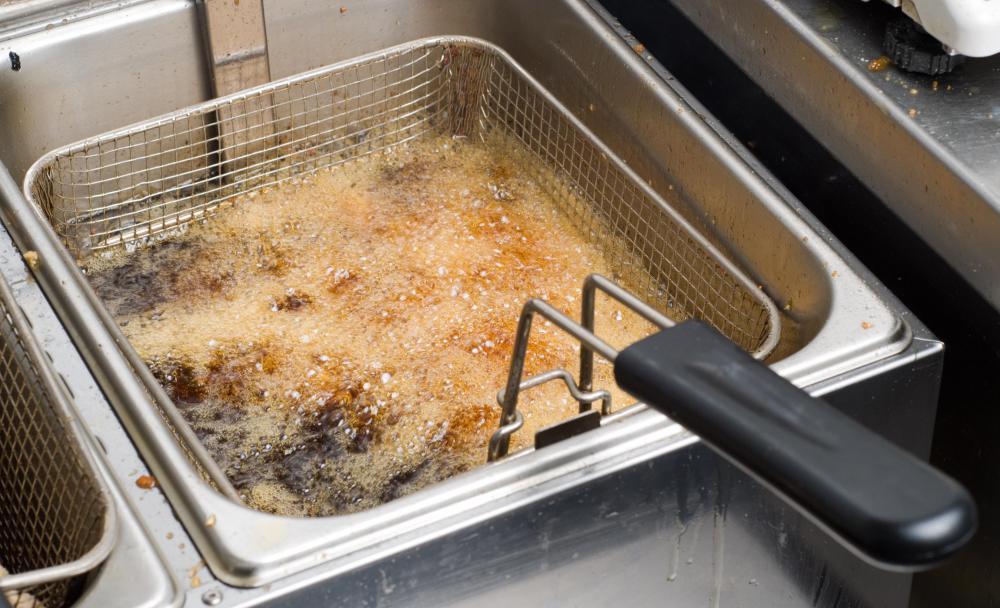
![Peanut oil is preferred for deep-frying.]() By: starushPeanut oil is preferred for deep-frying.
By: starushPeanut oil is preferred for deep-frying. -
![French fries cooked in peanut oil.]() By: Johanna GoodyearFrench fries cooked in peanut oil.
By: Johanna GoodyearFrench fries cooked in peanut oil. -
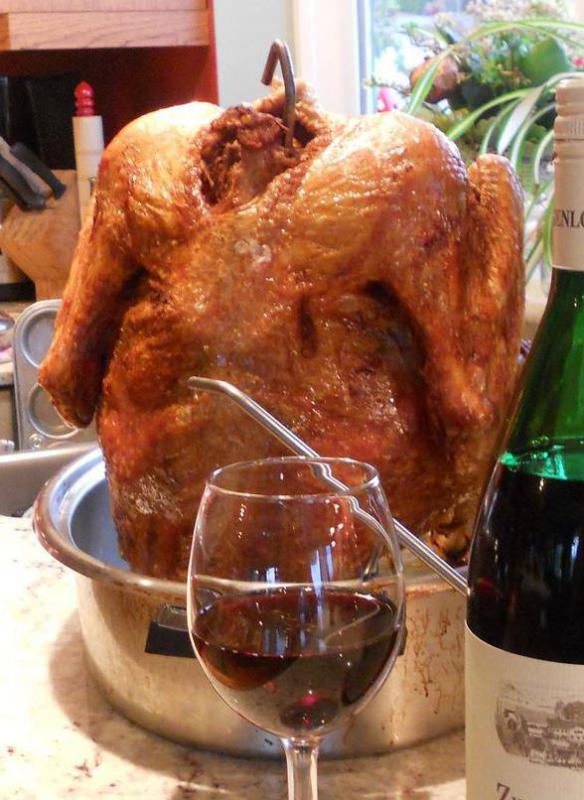
![Peanut oil is the best choice for frying a turkey.]()
Peanut oil is the best choice for frying a turkey. -
![Canola oil is a good substitute for peanut oil.]() By: danr13Canola oil is a good substitute for peanut oil.
By: danr13Canola oil is a good substitute for peanut oil.



Discussion Comments
This may just be my imagination, but it seems to me that when I'm heating up peanut oil for frying, it takes longer for it to reach the smoke point than some other oils. If I heat canola oil for too long while getting the meat ready, I start to smell the oil burning, and the house is filled with fumes, but I've never had this happen with peanut oil.
Peanut oil is my favorite cooking oil. It is so versatile. I can prepare chicken in it, and depending on what other ingredients I add, I can get a dish that is either American or Asian in flavor.
I love frying my chicken in peanut oil, because my favorite fast food place uses this oil for their chicken, and I can get a similar flavor by doing this. I put the fried chicken tender on a buttered bun, and it tastes eerily similar to the sandwich at this restaurant.
Alternatively, I can slice up some chicken really thin, toss it in peanut oil with some snow peas, red bell pepper, broccoli, and baby corn and get a dish with Asian flair. I always keep peanut oil in stock, because I know that whatever flavor I am in the mood for, I can achieve it with this oil.
@JackWhack – I wouldn't think that pure peanut oil would taste good as a dressing, either. One of my favorite salad dressings contains peanut oil, but there are a lot of other ingredients that contribute to the intense flavor.
In addition to peanut oil, the dressing contains ginger, garlic, soy sauce, and rice wine vinegar. All of these are ingredients commonly found in Asian sauces and stir-fry dishes, so this dressing gives the salad a distinctly Asian flavor.
I love putting it on top of a bed of spinach with tomatoes and cucumbers. The flavors all meld together, and it's so much like eating the house salad at my favorite Asian restaurant.
Does anyone here ever just buy peanut oil to use on your salads without adding anything else to it? That doesn't sound very appetizing to me. Are there any salad dressing recipes that use peanut oil and other ingredients to make the dressing more appealing?
Using peanut oil in cooking is for the most part safe as far as allergic reactions go.
Some oil production processes eliminate all allergens, but others do not. And since it might not be clear of hand which process was used in producing peanut oil, for those who are allergic to peanut oil would be wiser to stay away from it, and not risk a potentially dangerous situation.
@ChickenLover - I agree with you on the allergy thing. While it's usually the inclusion of the actual nut that makes most people have adverse reactions, I wouldn't put it past peanut oil to be any different. We stay away from it altogether in my house because of my son's allergy to peanuts.
Peanut oil really came on to the scene a few years ago when everyone began deep frying their turkeys for Thanksgiving. The article has merit, however, in that you should consult a doctor. I would say to always consult a doctor even if your allergy to peanuts is a mild one, but I just like to be safe.
@watson42 - You have to look at the labels of oils very carefully. In one instance I have found that there is literally -no- difference between Vegetable Oil and Olive Oil as far as calories, fats, and other aspects. Many people claim that Extra Virgin Olive Oil and Olive Oil are better for you, but the only way you can make sure that that happens is to check the label yourself on the different varieties of oil.
It is true that many oils, such as olive oil, might be nutritionally better than peanut oil. However, it is a good substitute in snacks like potato chips because peanut oil is a natural oil, making it devoid of harmful trans fats and other unnatural and less healthy ingredients often used in these products.
Post your comments