
At TheHealthBoard, we're committed to delivering accurate, trustworthy information. Our expert-authored content is rigorously fact-checked and sourced from credible authorities. Discover how we uphold the highest standards in providing you with reliable knowledge.
What is Paresthesia?
Paresthesia is the condition commonly known as "pins and needles," where part of the body — typically a foot or hand — begins to tingle and becomes numb, or "falls asleep." This sensation can occur either on a temporary or on a chronic basis. In most cases, it is a short-term condition caused by putting pressure on a nerve, and the tingling sensation will diminish within several minutes.
When someone experiences paresthesia on a regular basis, however, it could indicate a more substantial problem within the body. Frequent cases can be symptoms that neurons in the brain are malfunctioning and are not properly relaying signals to the brain. In such cases, the neural problems may be related to malnutrition, diabetes, a thyroid condition, or another medical problem.

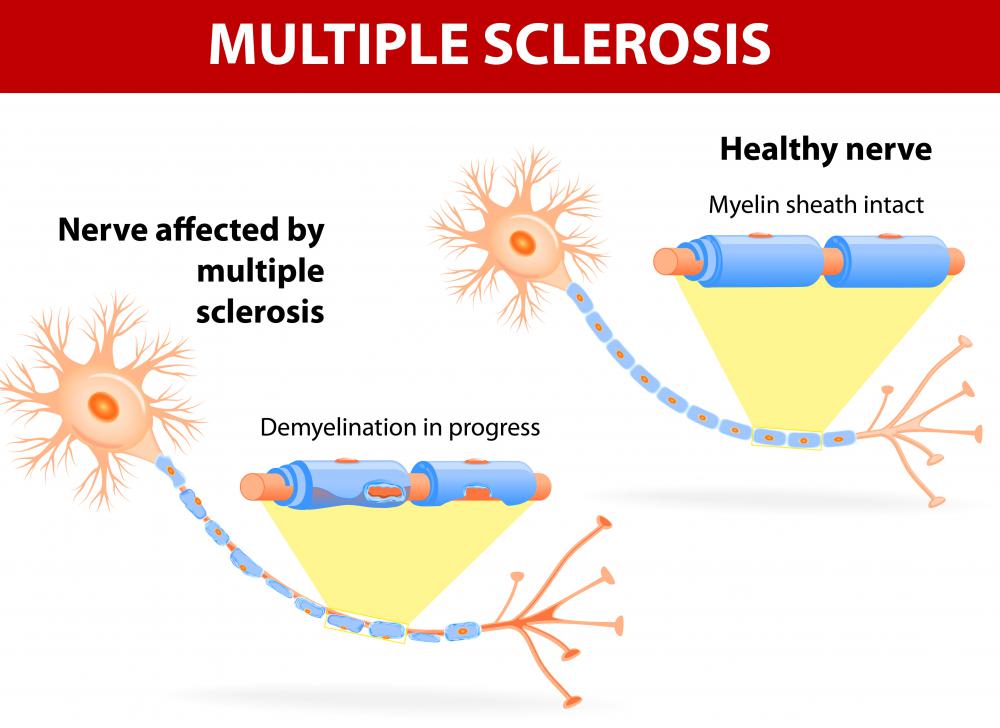
In addition to problems with neuron function, chronic cases of paresthesia can also be associated with damage to the nerves themselves. Some likely causes of nerve damage are Lyme Disease or multiple sclerosis; a brain tumor can also have similar effects. For people who are experiencing a "pins and needles" sensation on a frequent basis, it is important to see a medical professional who can test for any of the serious conditions that may cause the sensation.

Treatment for paresthesia depends on the underlying cause of the problem. In ordinary cases of the temporary "pins and needles," the sensation can generally be relieved by vigorous movement of the affected limb. Generally, as soon as pressure on the nerve is relieved, the problem will begin to go away on its own. When the paresthesia is related to a more severe condition, the sensation of numbness will often be cured with the treatment for the condition. Patients who suffer from multiple sclerosis frequently take prescribed drugs that alleviate many of their symptoms.

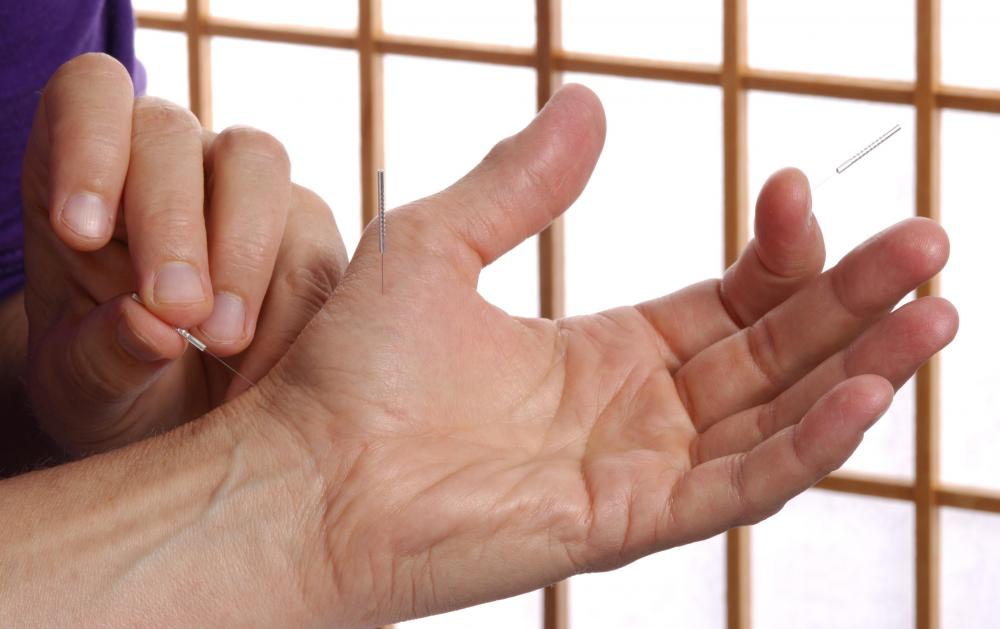
Some forms of alternative therapy may also help get rid of paresthesia. For example, as it is often related to a vitamin deficiency, it may be helpful to take vitamin supplements, as recommended by a healthcare professional. Massage and acupuncture have also been known to help treat the condition.
AS FEATURED ON:
AS FEATURED ON:


-
![Massage and acupuncture have been known to help treat paresthesia.]() By: Alfred WekeloMassage and acupuncture have been known to help treat paresthesia.
By: Alfred WekeloMassage and acupuncture have been known to help treat paresthesia. -
![In some cases, paresthesia is linked to malnutrition.]() By: poco_bwIn some cases, paresthesia is linked to malnutrition.
By: poco_bwIn some cases, paresthesia is linked to malnutrition. -
![A compressed nerve in the foot may cause toe paresthesia.]() By: Mercedes FittipaldiA compressed nerve in the foot may cause toe paresthesia.
By: Mercedes FittipaldiA compressed nerve in the foot may cause toe paresthesia. -
![Chronic paresthesia of the hands may inhibit the ability to grip a toothbrush.]() By: Photographee.euChronic paresthesia of the hands may inhibit the ability to grip a toothbrush.
By: Photographee.euChronic paresthesia of the hands may inhibit the ability to grip a toothbrush. -
![Multiple sclerosis may cause nerve damage, leading to symptoms of parethesia.]() By: designuaMultiple sclerosis may cause nerve damage, leading to symptoms of parethesia.
By: designuaMultiple sclerosis may cause nerve damage, leading to symptoms of parethesia.



Discussion Comments
I find tingling sensations are pleasurable. ASMR is what the good tingles are, or autonomous sensory meridian response. I guess the trick is convincing yourself there is no problem, but instead only pleasure.
What is going on if my hand and finger get stuck while writing, and I feel pain in my elbow and veins?
I have burning pain from my waist on down with pressure to these areas. So it hurts (burning pain) on my buttocks and the back of my legs when I sit and the bottoms of my feet hurt and burn when I stand. I have had this for approximately a year and doctors do not know what it is.
I feel itching and burns right when I feel happy or excited or whenever I feel that my body temperature is increasing. I avoid going into the sun because sun rays accelerate the condition. I have to throw water on my body to stop this condition.
It occurs on my neck, upper chest, whole back, left hand and both thighs. Sometimes I do feel that my legs are losing power when I suffer from this condition. Is this also paresthesia?
@anon262648, post 29: I read your post and it sounds so much like what I have. I have a back problem where my sacral fell out of place and well, once that happens, you can get it back in as much as you like with a chiropractor, but it won't stay in unless you can fight through pain and exercise your core.
I recommend seeing a physical therapist. Neither my MD nor chiropractor could tell me, but my PT figured it out right away. Now chiros say, “Yep, I can feel it” and they help me with it. If you have it, I'm sorry. I know how awful living in pain every day is. I wish it on no one – well maybe sex offenders.
Today, I went out with friends, after not really having much sleep or food, but tons of caffeine and I burned that pretty quickly. As they where doing the salt and ice challenge, I was recording and when they finished we went for a walk and on that walk I started to get pins and needles in both hands but only in my fingers and not in my thumbs.
It's been two hours and usually my pins and needles go straight away. I'm pretty scared because I used to get pins and needles pretty frequently in my legs and feet but they found nothing to be wrong. On both occasions I had not hit a nerve or anything. I'm pretty scared. Can anyone help me?
For the last two months, on the left side of my body (leg and arm), I get pins and needles almost daily. For the past two to three weeks, it has gotten to the point where it is happening several times a day and lasts 7-10 minutes. It wakes me up at night and now, it is in my face also, on the left side. Occasionally, it will happen to my right leg but never my right arm.
I told my doctor, but due to other issues I am dealing with, they are blowing this off. The other issues is Gyno-related due to a hysterectomy I had two years ago. I am in my early 30s and am afraid I have something seriously wrong here. Any suggestions?
Please help. I am a female, 23 years of age, weighing 115.5 pounds. Recently, I have been experiencing mild pain like pins and needles in my right leg. I experience pain in my right buttock and sometimes it is increased while sitting. I have difficulty in bending and tying my shoe and it causes pain in my right knee. I find it difficult to stretch my right leg and do forward bend wherein my body is close to my thigh. Sometimes I also experience pain lower in my leg (slight pin type).
I have a lesion between c2 and c3 cervical spine numb left arm and hand started out as pins and needles. The MRI showed no lesions on brain. I do, however, have a cyst on pituitary gland. The doctor ruled out ms. Can anyone help? I'm still going through tests right now, but I'm scared.
A lot of you guys are writing about one side of your body getting that feeling. I had that problem when I was 20. It was the pins and needles in my left leg and then it grew to a warmth that started to burn then turned into a stabbing pain. It got so bad that I could be standing in the shower on second and then the next have fallen down because my leg went out and I was lying in the shower, with water in my face and my elbow busted and bleeding and me freaking out. I went to a nerospecialist. He said it was in my head.
Finally, a chiro found the problem: whiplash from when I was 15 and was in a really bad wreck with my mom (she was driving but we were run off the road). Just because you feel better after a few days doesn't mean it won't come back to get you. I had pinched nerves. I suggest that maybe going to a chiro might find out what is going on.
For the past month on my right thigh in one area there's numbness. I am not able to feel anything on that area. There's no pain, even if i insert a needle, but i don't see any changes in my skin color, but it's slightly swollen. can anyone tell me what this is exactly? i am afraid it's a skin disease like leprosy. please tell me is it curable?
I have had a pins and needles and burning sensation on the right side of my back, where my bra is, and it goes around to the front. I went to the doctor, because I thought I may have shingles (no rash though). He put me on medication for shingles. I'm about half way through with the medication, the sensations have left my back area and yesterday I have the same sensations on the right side, starting in the front of my body, groin area, going up to the inner part of my leg.
I also spent two months in Hawaii, and got sunburned on arms and legs. I'm taking a mild water pill for high blood pressure and metformin for insulin resistance. I take calcium, daily vitamin, and glucosamine. I'm not sure what to do. go back to the doctor before I finish the meds for "shingles" or what?
it's been several weeks, when I wash my hands, I feel pins and needles on the back of my right hand. First I thought, I must have a small cut or something on my hand. Well, I don't. Only time it hurts is when I run water on my hand. Any advice? How serious it can be?
I have a few questions. I had recently drunk quite a bit you might say, and when I don't drink I get these pins and needles feelings all over me. It feels like little ants crawling all over my whole body. My nose is the absolute worst. It feels like there is an ant nest up there, mainly when I breathe out of my nose, but sometimes even when I'm not.
I have lost many nights of sleep over this, and it's the nights where it's 12-15 hours after my last drink. Also they seem to get worse right after a hot shower or bath, and especially at night.
However, today in the bath I noticed a rash on my chest and both my triceps; it went away when I dried off. At night, I seem to itch mainly in my legs, feet and seldom on my back. My nose is usually fine at night, but I feel like I have insomnia due to this.
I have been on detox for the past three days trying to get rid of it. I thought maybe it was the harmful toxins in my body coming out? Today I went to the gym and worked up a big sweat and they went crazy. Do you have any idea or could you please help me figure out my diagnosis? Thank you so much.
@Anon96888: When I was a teen I had the same symptoms. I went to see the doctor and he told me that during our growing time, sometimes our muscles between the bones don't grow as fast as our bones do. So the bones tend to rub together causing pain and the arm to fall asleep.
He showed me some exercises to do till the muscles caught up with the bone growth. Also I had to limit certain movements like carrying nothing heavy from below the waist and certain sports in gym class.
I broke my knee and tore a ligament seven months ago. I saw my doctor two months later due to leg and back pain, who sent me to a sports and spine (s&s) injury doctor for pain into my whole leg, from my foot to my lower back since about two months after the broken knee. the pain and discomfort is getting worse.
i have had a bone scan and it is normal, now the s&s doctor has put me on cymbalta which i thought is for depression (the first dose made me really sick so i stopped immediately)? i am not depressed, but i am ticked off. i am being lifted out of bed due to pain and the last s & s doctor says i have paresthesia. i am not depressed and my leg is not asleep, nor is my back. any suggestions as to what type of doctor to see? i sure feel as if i am getting the run around.
I'm really scared. I'm 13 and my arm falls asleep a lot. I'll wake up in the morning or in the middle of the night and it'll just be like a log, and i have to search around the bed and pick it up with my good hand, and shake it until i feel the arm filling up with blood again! it's really weird. i don't sleep on my arm and it's always in the right arm, and i also frequently have to twitch and flex my neck and shoulders because they feel sort of heavy! Is this a serious thing?
It's been a week or so and i am having a real burning sensation on my face. sometimes i wake up in the morning and my face is burning like i am really close to the heat.
i have sensitive skin. i don't go out in the sun that often. today i went outside and it wasn't even sunny outside, just really hot. i had my sunscreen on but i felt like my eyes were burning.
i have no idea what's going on. i wash my face with cold water all the time. i just start feeling this burning effect when i really feel happy or sad or aroused. or when i am out in sun.
this burning started right after i started using "protopic tacrolimus ointment/unguentum 0.1%" on my face. i believe it started right after i started using this ointment on my face
i have to use this cream for vitiligo and i am out of the city so i cannot go to see my doctor for a month. if someone can suggest something to me, i would be glad.
Dear mmmartin:
I have pasted your comment verbatim and will reply within what you wrote. I hope you might find some answers.
You: "I have had numbness and tingling in my left hand since mid-December and in my right hand since March."
My response: Tingling is usually from your nerve being pinched off. Do you have any neck problems? Your neck could be pinching off a nerve, which is making the pins and needles tingly feeling. Usually where the pain is, is not where it is truly coming from. What I mean is: If your arm, wrist, fingers are having pins and needles it is most likely from your neck or shoulder interfering, even if you don't feel neck pains.
You: "I've had nerve studies, CT Scans, x-rays, etc. I have full strength in both hands, good circulation, etc., however, I am gradually losing control of all of my fingers."
My response: If you are losing control of your fingers, all I can say is, I lost control of my hands, dropped things, could not grip. However, I could do all the gripping exams given me, until after months finally I couldn't use my arm, dress myself, blah, blah. I had a bulging disk in my neck. I would be concerned if you are losing control. Something is being "clipped" off. My "regular" doctor pretty much blew me off and the insurance company didn't want to get me an MRI or anything (Two neck surgeries later and still chronic pain etc., etc.). Anywho, I am shocked your doctor is at his wit's end. No one can say from all your tests where the pain/loss of feeling is stemming from? I would see someone else, but that is me. If you have had the tests, there are blockers they can give you to see if your pain disappears and then they are able to pinpoint note where it is all stemming from. Have you had any injections? Blockers? Also have you seen a head/neck specialist or neurosurgeon, not just your 'regular doctor'?
It is very hard to get through the system and figure out what is going on.
But when you say you have 'loss of' and that your doctor is at 'his wits end,' i say you are not seeing the correct person. Your doctor should be exploring every avenue to figure this out and be truly concerned that he has not figured out what is going on! You should not be put out. You need someone on your team.
I say who in the heck is helping you? All good thoughts to you.
P.S. They can have a great thought where it is stemming from, etc., with the blocker injections, etc., and have some idea from the tests you have done. Your doctor should be making you feel like he is doing everything to figure out what is going on.
I cannot have an MRI because I have a Cochlear Implant. My doctor is at his wit's end about what this is. Could it be Paresthesia?
I have an itch all over my body and going up to my head. I can't seem to relax. I need to scratch. The worst parts are the feet from the knees down. Some parts have scales and thick skin and is itchy too. my doctor is away on holidays. Can you please tell me what I have? Thank you, Mary
I have had burning sensations during the past three years, have not had any medical advice or anything.
Mostly starting from the shoulders down to the hands, or the thighs down to the ankles. It feels so painful and i cannot move unless the feeling fades. Usually lasts for two mins - 10 mins.
I had a friend tell me about this condition after my back having weird random tingling sensations in certain areas near my spine. it's right under my shoulder blades and I'm always on my feet during the day. any ideas? ~Bear
I helped lift a very heavy glass table yesterday and rested the table on my right forearm for a period of time. Now still, 24 hours later I cannot feel a section of my right forearm. I am very concerned. Have I permanently damaged a nerve? Will the feeling come back? Is there anything I can do to help get the sensation back in my arm?
- Concerned Australia
My two year old is having problems with his left foot/leg. After a short time of sitting, like five minutes, I believe his foot begins to fall asleep. he will not put pressure on it and it seems to hurt him. This only occurs after sitting and we have had x-rays done showing nothing.
Are there any medical conditions in children that I should be looking for? It's been about six days since the first episode and his leg has this problem around five times a day. We bought bigger shoes and socks thinking it was circulation. Didn't help. Any suggestions?
I infrequently had the pins and needles type of effects in my hands after I worked on the computer for any length of time and I attributed it to that. But last week I started to feel it across by back from shoulder to shoulder, even when I was nowhere near a computer.
Then about four days ago, I was lying in bed trying to sleep after a graveyard shift at work and it started at my head, then to my knees and back up - I freaked out. What the heck is going on?
It was like someone was pricking my skin with hundreds of dull pins simultaneously. Any info anyone?
I have been having pins and needles pain all over my body from head to shins but none on my hands or feet. It's been going on for a year -- sometimes on a daily basis -- but I have had weeks when there have been no pains.
The pain doesn't feel the same as a limb falling asleep -- it feels more like salt water or sweat on a small, open wound. It usually occurs when I have been moving around a lot or stressed out.
I have not been to the doctor yet. I am afraid that because I am a little overweight (but I still eat right and exercise daily) that the doctor will use that at a excuse instead of doing his job. Anyone have any advice?
i recently had a brain tumour removed from the frontal right lobe, and now three months later, my whole left leg is numb and tingly from the hip down and has been for the last two weeks. is this paresthesia?
People: if you sit on your feet they will fall asleep. Period. You pinch nerves when you sit that way. It will happen to anyone. Please, please, leave forums like this to people who actually have problems -- and stop sitting on your feet.
I have ms, finally diagnosed after 12.5 years of recurrent optic neuritis, both eyes, partial recovery, acute myelitis and joint/bone pain stiffness...Normal brain scans until a lesion was found in my neck in this month, which gave the elusive ms diagnosis (with other evidence combination of oligoclonal bands in csf not serum, delayed evoked potentials in both legs and left eye, sensory symptoms and clinical history, etc.). My latest flare-up occurred on 01.03.09, With acute loss of hearing, loin/flank pain and severe paresthesia. It is this burning paresthesia which is still causing immense discomfort. I am 9 weeks into acupuncture and take 100mg azathioprine, 40-70mg amitriptyline, 600mg tregretol, zantac, 75mg asprin for sticky blood...Can you suggest anything further to relieve these awful burning pins and needles, please?
I have had numbness and tingling in my left hand since mid-December and in my right hand since March. I've had nerve studies, CT Scans, x-rays, etc. I have full strength in both hands, good circulation, etc., however, I am gradually losing control of all of my fingers. I cannot have an MRI because I have a Cochlear Implant. My doctor is at his wit's end about what this is. Could it be Paresthesia?
A few years ago I had been out to eat with my mom and brother and on the way home in the car my chin started to go numb. It then spread to half my face. By then I was freaking out so my mom took me to a clinic. I was running a fever and couldn't feel my face. They told my mom to take me to the hospital. I was always petrified of doctors because of my fear of cancer or serious illness. The doctor at the ER diagnosed me with paresthesia caused by anxiety. It's only happened one other time since then. It's really annoying because if it does happen my face feels weird for days after that. So it can also be caused by anxiety.
Me too, I am constantly sitting on my feet (already a bad habit) and my legs fall asleep all the time. I am concerned I am damaging my blood circulation specially since I also take birth control pills which I understand they sometimes can hurt your blood circulation...
Also, when I am sleeping in bed my arms fall asleep too. Should I go see the doctor about this?
Also, I have very small veins, and as a result, all I have to do is go out into the cold for seconds, and my finger tips go white. I don't think that has anything to do with the Paresthesia. Also, my irritations do not feel like pins and needles, it feels like an underlying itch.
OK, I have had this condition for as long as I can remember. It started on my left foot, between my second and third toes. It drove me nuts, I always had this feeling like there was an itch inside that I could not scratch. Years later, it went into my back, and I could not sleep with clothes on, it felt like I was constantly trying to move it off under my shoulder blade. Recently it has moved between my left ankle and left wrist. The wrist has made me constantly flex my hand and wrist, and as a result, my tendons in my arm ache. The ankle is more irritating. I am constantly flexing it. Sometimes I get a cramp doing this. I need help. The only condition I have is Crohns disease. Help!!
Does anyone know if it is dangerous for your foot (or any other part of your body) to fall asleep on a regular basis? There's nothing wrong with me, but I often sit on my feet - can I be causing damage to my nerves?
Post your comments