
At DelightedCooking, we're committed to delivering accurate, trustworthy information. Our expert-authored content is rigorously fact-checked and sourced from credible authorities. Discover how we uphold the highest standards in providing you with reliable knowledge.
What is Palm Oil?
 Mary McMahon
Mary McMahon
Mary McMahon
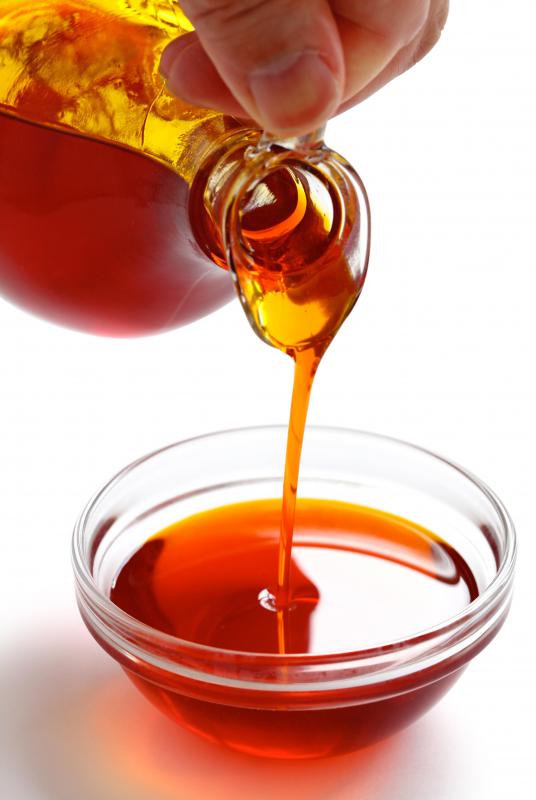
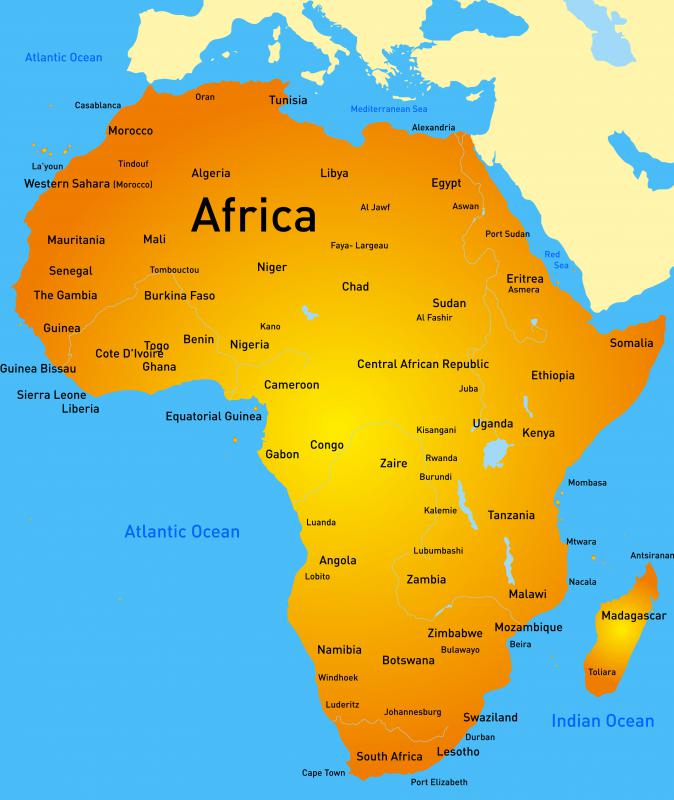
Palm oil is an oil that is extracted from the fruit of the palm oil tree, an African palm which has been cultivated for centuries for its useful oil. In addition to oil, the tree also yields palm-kernel oil, which is extracted from the seeds. Pure palm oil is widely available in Africa and Southeast Asia, and sometimes in specialty markets in other places, and products which contain it are also very common.
To extract the oil, the fruit of the palm oil tree is collected and pressed, yielding a rich, dark-red oil that is high in carotene. When it is exposed to heat through processing and cooking, it rapidly loses the carotene, turning a pale creamy color. Producers can sell the pure oil, or use a fractional distillation process to extract various components that have a variety of uses.

Palm oil is high in saturated fat, and it is often very close to solid at room temperature, unless it is specially treated. The high saturated fat also makes it a great cooking oil, because it is able to withstand very high heat, and it will not break down or change when heated. However, this also makes palm oil a less than ideal oil health-wise, because saturated fat is generally believed to be harmful when consumed in large amounts.

Many processed foods contain palm oil, which is viewed as a cheap, efficient, and highly stable oil by food manufacturers. In addition to being used in cooking, it can also be used in a number of industrial processes. Many cosmetics companies use it as a cheap replacement for more expensive natural oils in things like soaps and moisturizers. Palm oil creates the desired texture without the expense, although it also lacks many of the beneficial compounds which make these products good for the skin.

As of 2007, palm oil was the most widely produced vegetable oil in the world. It is made in many parts of Africa and Asia, and in parts of Latin America as well. Many native populations rely on it as a cheap and reliable source of fuel for cooking, heat, and lighting, which has become a problem, due to its rising cost. Increased demand has caused this oil to become much more costly, putting it out of the reach of some of the poorest people in the world.
Mary McMahon
Ever since she began contributing to the site several years ago, Mary has embraced the exciting challenge of being a DelightedCooking researcher and writer. Mary has a liberal arts degree from Goddard College and spends her free time reading, cooking, and exploring the great outdoors.
Learn more...
Mary McMahon
Ever since she began contributing to the site several years ago, Mary has embraced the exciting challenge of being a DelightedCooking researcher and writer. Mary has a liberal arts degree from Goddard College and spends her free time reading, cooking, and exploring the great outdoors.
Learn more...AS FEATURED ON:
AS FEATURED ON:


-
![Palm is is a very popular vegetable oil.]() By: uckyoPalm is is a very popular vegetable oil.
By: uckyoPalm is is a very popular vegetable oil. -
![Palm-kernel oil is extracted from the seeds of the oil palm, a tree native to Africa.]() By: Ruslan OlinchukPalm-kernel oil is extracted from the seeds of the oil palm, a tree native to Africa.
By: Ruslan OlinchukPalm-kernel oil is extracted from the seeds of the oil palm, a tree native to Africa. -
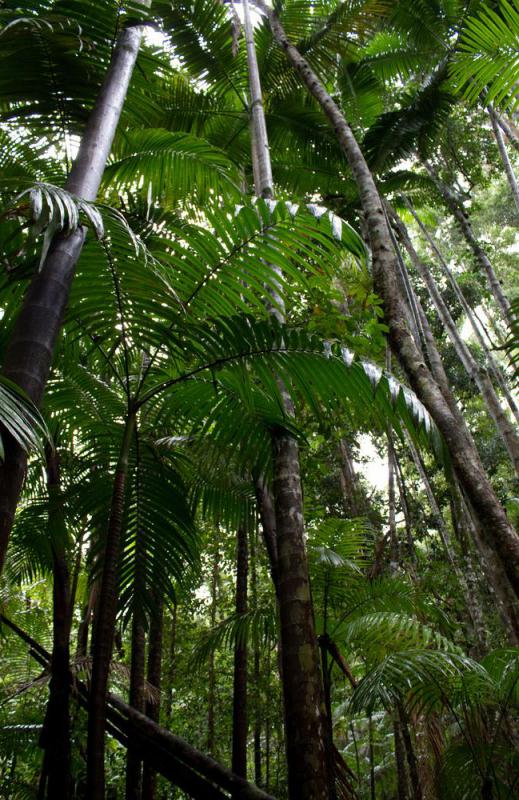
![Many types of palm trees grow naturally in rain forests or areas that typically have tropical or subtropical climates.]()
Many types of palm trees grow naturally in rain forests or areas that typically have tropical or subtropical climates.
Discussion Comments
can you help me identify or give me some knowledge on why RBD olein oil has some smell when it is in the drum? It is solidified partially but when heated at certain temperature and upon incorporation into cream filling mix, a flavor is detected. can you help me explain?
Palm oil is extracted from the fruit of the palm tree and palm kernel oil is got from the seed of the palm tree. What is crude palm oil then?
Is organic palm super oleic healthy or unhealthy??
Does anyone know the temperature at which palm oil melts and the temperature that it freezes? I have read it freezes at 24.1 degrees celsius but I just don't think that can be correct! Please help me straighten this out!!
Post your comments