
At TheHealthBoard, we're committed to delivering accurate, trustworthy information. Our expert-authored content is rigorously fact-checked and sourced from credible authorities. Discover how we uphold the highest standards in providing you with reliable knowledge.
What is Osteogenesis Imperfecta?
 Niki Foster
Niki Foster
Niki Foster
Osteogenesis imperfecta (OI), also called Brittle Bone Disease, is a genetic protein deficiency that results in fragile bones. The protein affected is usually Type-I collagen. The disorder is typically a dominant genetic trait that is passed through the parents, but it may also be a de novo mutation, with no family history. There are also two rare and recently discovered forms of osteogenesis imperfecta that are recessive genetic traits.
There are currently eight recognized types of osteogenesis imperfecta, ranging from the mild to the fatal. Most types result in deformities. In Type I OI, collagen is of normal quality, but there is not enough produced. This is the mildest type, though the bones are still easily broken. Other symptoms include discoloration of the sclera or whites of the eyes, early hearing loss, slightly protruding eyes, slight curvature of the spine, loose joints, and poor muscle tone.
Type II OI is the most severe form, in which collagen is of insufficient quality and quantity. Deformities and respiratory problems are severe, and most cases die within the first year of life.

In types III, IV, V, and VI OI, collagen is produced in normal quantities, but its quality is poor. Sufferers of Types III, IV, V, and VI OI are characteristically short in stature, with a curved spine and a barrel-shaped rib cage. Type III is distinguished by being progressive; deformities and other symptoms may be slight at birth but develop over time.
The symptoms of Type III OI are similar to those of other types, but more severe. Serious bone deformities may present, and bones may break even before birth. Respiratory problems are also possible.

Types IV, V, and VI OI share the same clinical features. Deformities are mild to moderate, often accompanied by discolored sclera and early loss of hearing. The risk of bone fractures is highest before puberty. Type V is characterized by a "mesh-like" appearance of the bones, while the bones of a person with Type VI have a "fish scale" appearance.

Osteogenesis imperfecta is an incurable condition. Treatments to manage the disease include surgery, physical therapy, and physical aids. Bone infections are managed with antibiotics and antiseptics when they occur. Medication, either oral or intravenous, is also used to treat osteogenesis imperfecta. Bisphosphonates are most widely used for this condition. Clinical trials have evaluated the efficacy of Fosamax, currently used to treat osteoporosis, for osteogenesis imperfecta. However, the long-term effects of such treatment are unknown, and the United States Food and Drug Administration has not yet approved the drug for osteogenesis imperfecta.
Niki Foster
In addition to her role as a TheHealthBoard editor, Niki enjoys educating herself about interesting and unusual topics in order to get ideas for her own articles. She is a graduate of UCLA, where she majored in Linguistics and Anthropology.
Learn more...
Niki Foster
In addition to her role as a TheHealthBoard editor, Niki enjoys educating herself about interesting and unusual topics in order to get ideas for her own articles. She is a graduate of UCLA, where she majored in Linguistics and Anthropology.
Learn more...AS FEATURED ON:
AS FEATURED ON:


-
![Osteogenesis imperfecta causes bones to be easily broken.]() By: kameelOsteogenesis imperfecta causes bones to be easily broken.
By: kameelOsteogenesis imperfecta causes bones to be easily broken. -
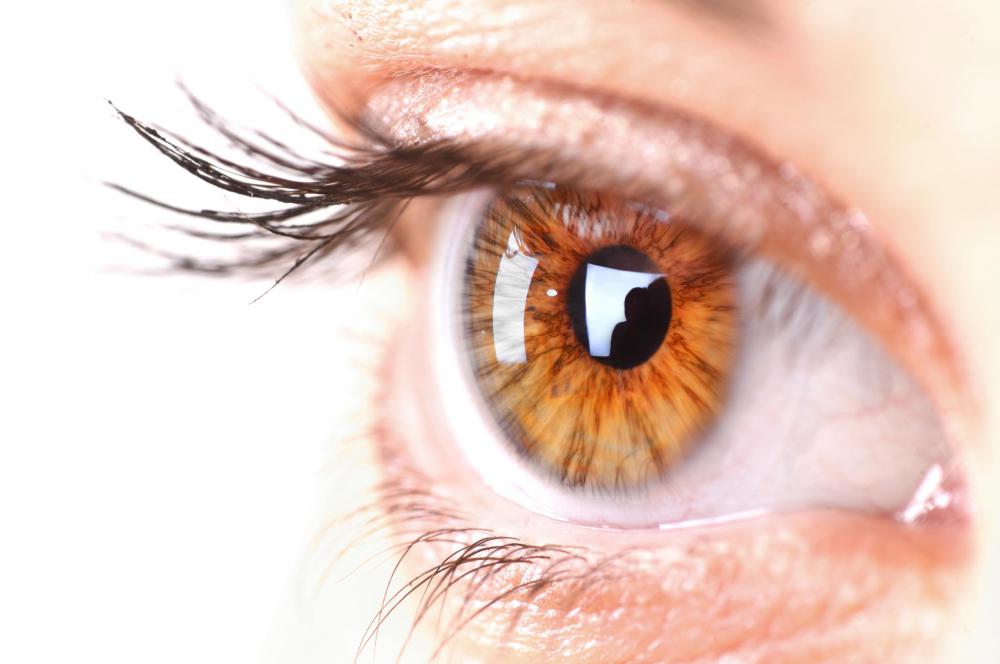
![Discoloration of the sclera, or the whites of the eyes, can be a symptom of osteogenesis imperfecta.]() By: Péter MácsDiscoloration of the sclera, or the whites of the eyes, can be a symptom of osteogenesis imperfecta.
By: Péter MácsDiscoloration of the sclera, or the whites of the eyes, can be a symptom of osteogenesis imperfecta. -
![Swimming may be an ideal exercise for individuals with brittle bone disease.]() By: Deyan GeorgievSwimming may be an ideal exercise for individuals with brittle bone disease.
By: Deyan GeorgievSwimming may be an ideal exercise for individuals with brittle bone disease. -
![Physical therapy may be helpful for individuals suffering from disorders that cause brittle bones.]() By: CandyBox ImagesPhysical therapy may be helpful for individuals suffering from disorders that cause brittle bones.
By: CandyBox ImagesPhysical therapy may be helpful for individuals suffering from disorders that cause brittle bones. -
![Some people with conditions that cause brittle bones may use a wheelchair to reduce their risk of fractures.]() By: Fotoluminate LLCSome people with conditions that cause brittle bones may use a wheelchair to reduce their risk of fractures.
By: Fotoluminate LLCSome people with conditions that cause brittle bones may use a wheelchair to reduce their risk of fractures. -
![Oral medications may be used to treat osteogenesis imperfecta.]() By: gilitukhaOral medications may be used to treat osteogenesis imperfecta.
By: gilitukhaOral medications may be used to treat osteogenesis imperfecta.




Discussion Comments
My daughter is 16 weeks pregnant and has just advised that her baby has Osteogenesis Imperfecta Type II. She needs to be induced next week as it is unlikely that the baby would survive birth (if it did it would die within weeks) This is her first baby. Can anyone tell me the likelihood of this occurring again? We have no family history of this.
After reading that it just left me feeling kind of empty, since I've been taking advantage of life. how I always think good health is always a given but now I truly understand. I'm sorry to hear this and hope you feel better
My Son was diagnosed at birth with Type V OI, having suffered fractures in the womb and a further 3 during birth.
His treatment was nothing more than splinting at or during fracture. We were never given a hope for his life expectancy. In the UK OI is treated with Pamidronate, It has not helped.
He is 27 years old and has had 230+ fractures, scoliosis, respiratory problems, short stature.
He was offered 'rodding' of the long bones. Sheffield Steel telescopic rods were inserted into the femurs and tibia bones also into the humerus bones in order to correct the severe 'bowing'.
He is wheelchair bound, unable to stand or walk, can now barely support his own body weight. They tell us his spine is collapsing and will eventually crumble and he will be paralyzed.
Continually in pain, his physician now refuses to prescribe pain management as it has become addictive. This is not a life.. barely existing and getting by.
Larland- How old were you when you were diagnosed?
I'm male 56 years old and this is what I've dealt with my whole life. I rarely find any mention of "manifested by" Blue China Cholera. Currently I'm dealing with a broken elbow. This is the 3rd time it's been broken, maybe the 4th I'm not sure. I've worked full time my whole life until now but I'm looking to get out of the work force and take my remaining time left easy. Yesterday I had a Dr visit for a (non related) throat problem. The Dr was a Ear, Nose and Throat Specialist. When he inquired about my deafness and I told him I had "Osteogenesis Imperfecta manifested with/by Blue China Cholera" he called in some co-workers. They wanted to see the whites of my eyes that are blue. Eventually this is rarely seen in its mildest form. But to someone who has dealt with it forever even the mild type is a major pain.
Post your comments