
At DelightedCooking, we're committed to delivering accurate, trustworthy information. Our expert-authored content is rigorously fact-checked and sourced from credible authorities. Discover how we uphold the highest standards in providing you with reliable knowledge.
What is Organic Sugar?
 Tricia Christensen
Tricia Christensen
Tricia Christensen
In most instances, organic sugar is a sugar that has been cultivated, harvested, and processed without the use of any chemicals or artificial additives. Different countries have different definitions of what is and is not “organic,” however, which makes a blanket definition somewhat difficult. In some places, such as the United States, the term “organic” is tightly controlled — but this is not the case everywhere. Organic sugar is almost always sugar that was grown and processed under natural conditions, but the specifics can be somewhat hazy when it comes to how, if at all, chemicals were used along the way.
Defining “Organic”

The United States Department of Agriculture (USDA) has one of the world’s most stringent certification processes when it comes to food products that hope to be labeled “organic.” To earn the coveted “USDA Organic” badge for sugar, growers must prove that no chemicals or man-made compounds came into contact with the sugar plant, be it cane or beet, anywhere from the time it was just a seed through to harvesting, refining, and packaging.

Most European countries have comparable regulatory bodies that control how and when a sugar can be marketed as organic, but in other places the term is something that manufacturers can add often to most any type of sugar that has some kind of “natural” component. It does not always guarantee that a sugar has been processed without any chemical intervention. Most sugars that bear the “organic” label are free of chemicals at the point of sale — but whether pesticides were used on the crops or whether different man-made compounds were used in processing is often times something of a mystery.
Debate Over Genetically Modified Sugar Beets

One of the biggest controversies in the organic sugar market concerns whether plants grown from genetically modified seeds can yield organic sugar if they are never treated with pesticides or never come into contact with any other chemicals. Experts come down on both sides of the issue, but the general consensus is “no.” Genetic modification alters the internal structure of a seed, which affects how a plant will grow and develop. Most people consider this a scientific intervention that violates the spirit of the organic movement.

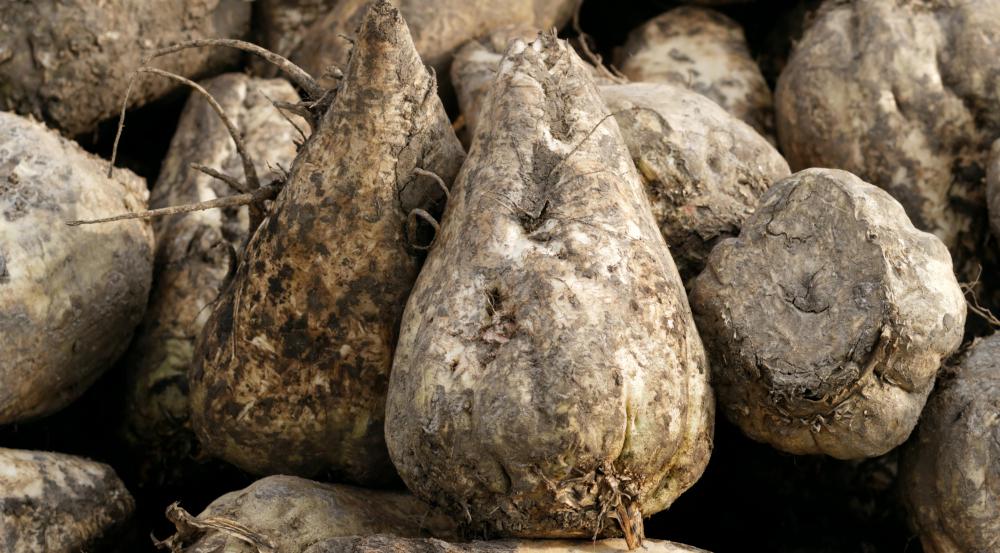
The debate primarily affects sugar that comes from sugar beets. Many of the sugar beet seeds on the market have been genetically engineered to help plants develop a pesticide resistance. This means that farmers do no have to spray their crops to keep bugs and weeds away — but it also means that it can be very challenging to find beet-derived sugar that is organic. Some smaller farms and more rural coops will produce it, but few mass-market distributors do. The vast majority of organic sugars on the market today come from sugar cane.
Characteristics of Organic Sugar

Organic sugar often has a more golden color than its more processed alternatives, but not always. An amber hue is often simply evidence that a sugar has not been subjected to extensive refining, and does not necessarily say anything about chemical use. It is possible — though often costly — to whiten sugar without the use of bleaches or other additives.

In most cases, it is very difficult to distinguish organic from non-organic sugar on looks or taste alone. Organic sugars come in brown, white, and powdered varieties with some regularity. The product is the same, just the process is often more involved.
How the Sugar is Used and Priced
Organically grown sugar can be used in the same way as chemically-treated versions. It is a common sweetener in baking, for instance, and can be added to beverages like coffee or tea to boost taste.

In most places, organically grown sugar is slightly more expensive than regular versions because of the added work required to bring it to the market. Avoiding all chemicals often means more work for farmers and processors, which is usually reflected in the overall price.
Tricia Christensen
Tricia has a Literature degree from Sonoma State University and has been a frequent DelightedCooking contributor for many years. She is especially passionate about reading and writing, although her other interests include medicine, art, film, history, politics, ethics, and religion. Tricia lives in Northern California and is currently working on her first novel.
Learn more...
Tricia Christensen
Tricia has a Literature degree from Sonoma State University and has been a frequent DelightedCooking contributor for many years. She is especially passionate about reading and writing, although her other interests include medicine, art, film, history, politics, ethics, and religion. Tricia lives in Northern California and is currently working on her first novel.
Learn more...AS FEATURED ON:
AS FEATURED ON:


-
![Sugar cane field.]()
Sugar cane field. -
![Organic cane sugar.]() By: HLPhotoOrganic cane sugar.
By: HLPhotoOrganic cane sugar. -
![Sugar beets are a source of sugar.]() By: jllhSugar beets are a source of sugar.
By: jllhSugar beets are a source of sugar. -
![The term "organic" is highly controlled in the United States, where farmers must follow stringent rules for organic farming.]() By: Johan LarsonThe term "organic" is highly controlled in the United States, where farmers must follow stringent rules for organic farming.
By: Johan LarsonThe term "organic" is highly controlled in the United States, where farmers must follow stringent rules for organic farming. -
![Organically grown sugar is often used to sweeten baked goods.]() By: al62Organically grown sugar is often used to sweeten baked goods.
By: al62Organically grown sugar is often used to sweeten baked goods. -
![Fresh sugar beets are whitish roots that look slightly similar to turnips.]() By: alukardsFresh sugar beets are whitish roots that look slightly similar to turnips.
By: alukardsFresh sugar beets are whitish roots that look slightly similar to turnips. -
![Organic sugar shouldn't have come into contact with any pesticides.]() By: lunamarinaOrganic sugar shouldn't have come into contact with any pesticides.
By: lunamarinaOrganic sugar shouldn't have come into contact with any pesticides.





Discussion Comments
We, as Americans, tend to reach for the bag of sugar on a regular basis. Let’s face it: we suffer from “sweet tooth”. I have been trying to find out as much as possible about organic sugar and its benefits. Here’s what I have found:
Organic sugar doesn’t have side effects on our planet. Paraquat (a very potent herbicide) is commonly used on sugarcane crops. Organic sugar doesn’t contain harsh chemicals like sucralose. Many people don’t know that sucralose is made with chlorine. Also, organic sugar is less processed than regular sugar. It retains more moisture and molasses which gives it that nice caramel-like taste.
Are there any legislation in South African regarding the growing of organic sugarcane? If there are, please provide details regarding these regulations.
Post your comments