
At DelightedCooking, we're committed to delivering accurate, trustworthy information. Our expert-authored content is rigorously fact-checked and sourced from credible authorities. Discover how we uphold the highest standards in providing you with reliable knowledge.
What is Non-Fat Milk?
 Tricia Christensen
Tricia Christensen
Tricia Christensen
Non-fat milk, also called skim milk, is cow milk from which most of the fat content has been removed. It tends to be thinner and has a less rich taste, although it is used in a variety of products. The name skim milk is less in use because the process to produce non-fat milk is now highly mechanized.
In earlier times, when cows were milked, most fat solids rose to the top, producing cream. This top layer would be skimmed off and used to make butter, though some fat solids would still exist in the milk. Defatting milk and producing non-fat milk and low fat milk began to grown in popularity in the 1950s. In addition to non-fat products, people can now buy 1% or 2% milk, which tends to taste more like whole milk.

When cows are first milked, especially on large dairy farms, milk is sent through a separator or a clarifier. A clarifier removes debris from the milk, and a separator removes debris and separates the milk into weights. This process creates both cream and non-fat milk. Milk, unless it is raw, is then pasteurized (heated) to kill any bad bacteria. Most milk in the US is also fortified with Vitamin D.

As a food, non-fat milk is often considered superior to whole milk because the removal of most of the fat means the milk is higher in nutrients. A cup of milk, or 8 fluid ounces (about 0.236 liters or 247 grams), has about 0.015 ounces (0.44 grams) fat, 0.296 ounces (8.4 grams) of protein, and 86 calories. Whole milk, because of its higher quantity of fat, has less protein, about 0.277 ounces (7.86 grams), more calories, 146, and about 0.279 ounces (7.93 grams) of fat.

Most nutritionists recommend that milk drinkers switch to skim milk. This is especially the case for adults who do not need the extra calories or fat contained in whole milk. The same recommendation does not apply to children, especially under the age of five, or to anyone not getting enough calories in their diet. It's considered a bad idea to give children under five non-fat milk as a regular milk source because children need more fat intake when they are young. The fat in milk has a positive effect on brain development and growth in general.

There may be some pitfalls attached to drinking skim milk. Some studies have suggested a correlation between drinking skim milk and greater development of prostate cancer. This same risk did not apply when people drank low fat or regular milk. Thus far, two studies have suggested this possible correlation, but many more studies are needed to establish a complete cause/effect relationship between non-fat milk and prostate cancer.
Tricia Christensen
Tricia has a Literature degree from Sonoma State University and has been a frequent DelightedCooking contributor for many years. She is especially passionate about reading and writing, although her other interests include medicine, art, film, history, politics, ethics, and religion. Tricia lives in Northern California and is currently working on her first novel.
Learn more...
Tricia Christensen
Tricia has a Literature degree from Sonoma State University and has been a frequent DelightedCooking contributor for many years. She is especially passionate about reading and writing, although her other interests include medicine, art, film, history, politics, ethics, and religion. Tricia lives in Northern California and is currently working on her first novel.
Learn more...AS FEATURED ON:
AS FEATURED ON:


-
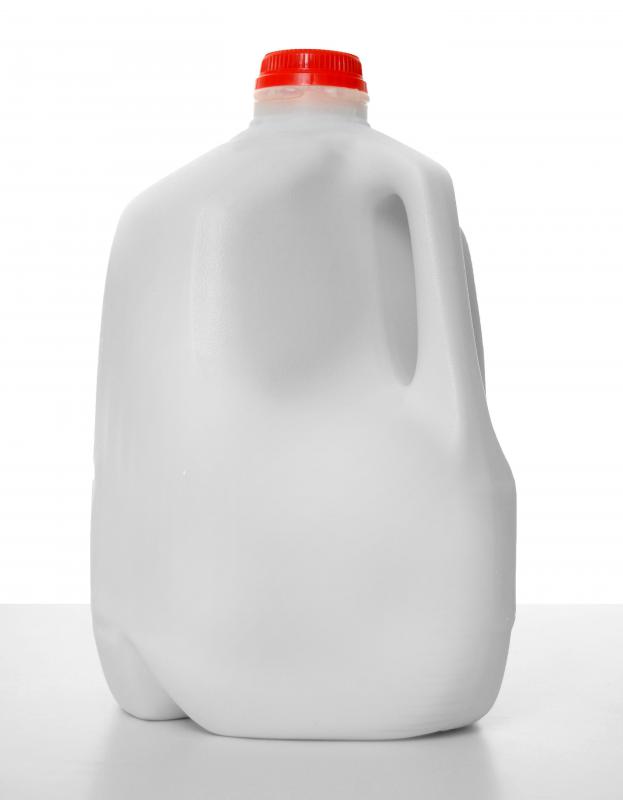
![Non-fat milk.]() By: Elena SchweitzerNon-fat milk.
By: Elena SchweitzerNon-fat milk. -
![Skim milk can be bought in grocery stores.]() By: vlorzorSkim milk can be bought in grocery stores.
By: vlorzorSkim milk can be bought in grocery stores. -
![Many nutritionists advise that milk drinkers switch to skim milk.]() By: vgstudioMany nutritionists advise that milk drinkers switch to skim milk.
By: vgstudioMany nutritionists advise that milk drinkers switch to skim milk. -
![Some studies have suggested a correlation between drinking skim milk and the development of prostate cancer.]() By: peterjunaidySome studies have suggested a correlation between drinking skim milk and the development of prostate cancer.
By: peterjunaidySome studies have suggested a correlation between drinking skim milk and the development of prostate cancer. -
![Dairy processing plants are responsible for pasteurization and homogenization of skim milk to specific standards before it is bottled.]() By: Budimir JevticDairy processing plants are responsible for pasteurization and homogenization of skim milk to specific standards before it is bottled.
By: Budimir JevticDairy processing plants are responsible for pasteurization and homogenization of skim milk to specific standards before it is bottled.



Discussion Comments
What is the difference between "skim milk" and "skim rich milk"?
When storing your milk in the refrigerator, do not put it on the door shelf, even though it might fit perfectly. Milk is sensitive to changes in temperature. It is better to keep it on the shelf inside the refrigerator.
Post your comments