
At TheHealthBoard, we're committed to delivering accurate, trustworthy information. Our expert-authored content is rigorously fact-checked and sourced from credible authorities. Discover how we uphold the highest standards in providing you with reliable knowledge.
What is Niacin?
 Mary McMahon
Mary McMahon
Mary McMahon
Niacin, also known as vitamin B3 or nicotinic acid, is a water soluble vitamin that is a vital component of the human diet. Like other water soluble vitamins, the body expresses excess niacin, meaning that a continuous supply needs to be consumed. Common sources of B3, along with other healthy vitamins and minerals, are meats, wheat germ, dairy products, and yeast. Under rare situations, a patient may need to take this vitamin as a supplement. Caution should be used when adding it to the diet, however, as an excess can be harmful.
Vitamin B3 was discovered by chemists who were working with nicotine. When nicotine was oxidized, it produced nicotinic acid. As the chemists explored the properties of the substance, they realized that it had potential health applications. Since nicotinic acid is found in substances that do not contain nicotine, a new name was chosen to distinguish it from nicotine. Allegedly, niacin is a portmanteau of nicotinic acid vitamin. Further research showed that this vitamin played a crucial role in many biological functions, either in a pure form or in the form of chemicals derived from it.

In addition to reducing bad cholesterol and elevating good cholesterol, niacin also contributes to the regulation of a number of bodily processes, including metabolism and cell repair, in the form of derivatives which are created in the body through biosynthesis. It also appears to reduce triglyceride levels in the blood. A deficiency of niacin, called pellagra, can lead to skin conditions, susceptibility to cold, dementia, and diarrhea. Excess can also lead to health problems, so supplemental B3 should only be taken under medical supervision.

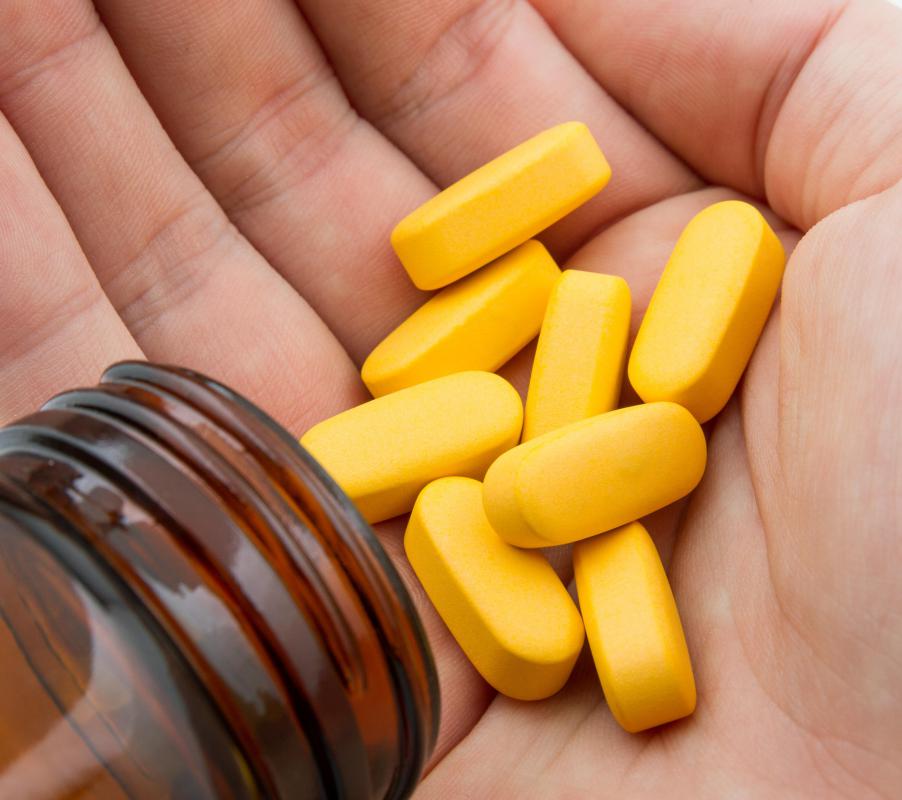
Pure niacin is a white, water soluble powder. Most people get enough of this vitamin from a balanced diet that includes foods with plentiful amounts of it. Women require around 14 milligrams each day, and men need slightly more, 16 milligrams. Over 20 milligrams a day can bring on skin rashes, liver damage, and changes in the body's natural insulin levels. If a patient is diagnosed with pellagra, a doctor may prescribe niacin supplements. These supplements are typically taken with food to increase absorption.

Many people do not eat balanced diets, either because they lead busy lifestyles or because they are unaware of the basic needs of the human body. Vitamin deficiency can lead to health problems further down the line, and patients should consult a medical professional or dietician about their nutritional needs. The needs of the body change with age, and reviewing the diet with a professional may help to determine whether or not a person needs to alter his or her diet or consider taking supplemental vitamins for health.
Mary McMahon
Ever since she began contributing to the site several years ago, Mary has embraced the exciting challenge of being a TheHealthBoard researcher and writer. Mary has a liberal arts degree from Goddard College and spends her free time reading, cooking, and exploring the great outdoors.
Learn more...
Mary McMahon
Ever since she began contributing to the site several years ago, Mary has embraced the exciting challenge of being a TheHealthBoard researcher and writer. Mary has a liberal arts degree from Goddard College and spends her free time reading, cooking, and exploring the great outdoors.
Learn more...AS FEATURED ON:
AS FEATURED ON:


-
![Niacin is a water-soluble vitamin that can be found in meats.]() By: dream79Niacin is a water-soluble vitamin that can be found in meats.
By: dream79Niacin is a water-soluble vitamin that can be found in meats. -
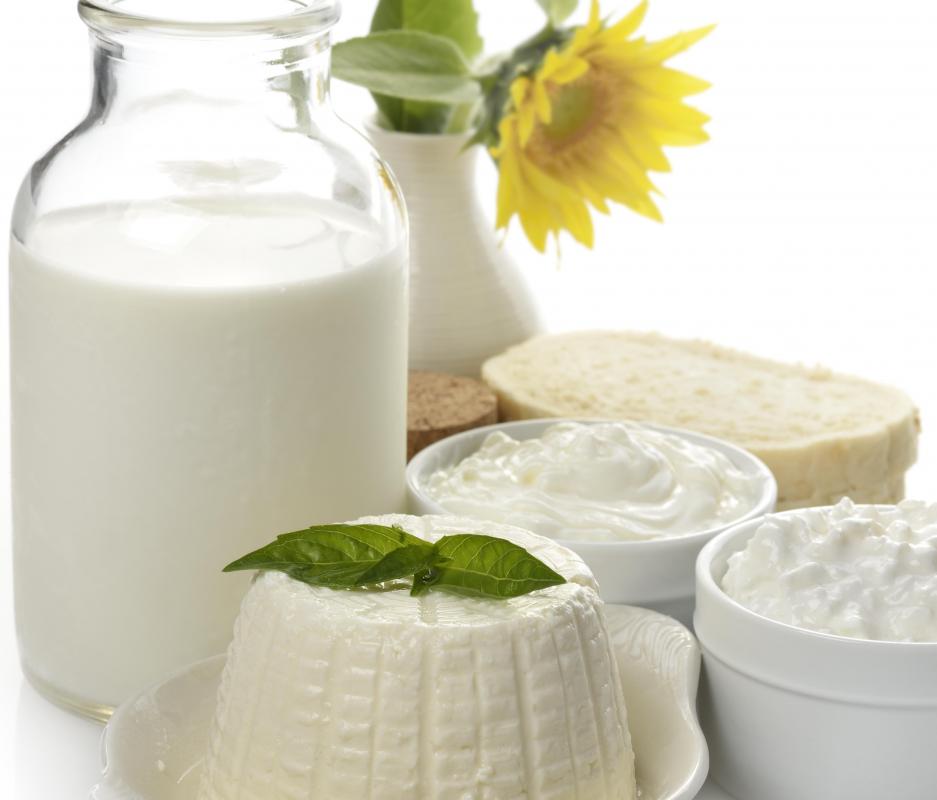
![Dairy products contain niacin.]() By: SunnySDairy products contain niacin.
By: SunnySDairy products contain niacin. -
![Wheat germ is high in niacin.]()
Wheat germ is high in niacin. -
![Most types of mushrooms are high in niacin, which helps elevate good cholesterol levels in the body.]() By: Subbotina AnnaMost types of mushrooms are high in niacin, which helps elevate good cholesterol levels in the body.
By: Subbotina AnnaMost types of mushrooms are high in niacin, which helps elevate good cholesterol levels in the body. -
![Niacin and other B vitamins can help improve the functioning of the heart.]() By: milosducatiNiacin and other B vitamins can help improve the functioning of the heart.
By: milosducatiNiacin and other B vitamins can help improve the functioning of the heart.



Discussion Comments
what would be the worst thing that could happen to someone who has too much niacin because i have a life water every day and that has some niacin.
tmarieseigal: have you ever considered gout being the reason for your right big toe ailment? If not, you should check into it with your doctor. Just from someone who has experienced gout.
doctor has me working on taking up to 500 mg. of niacin a day. bad cholesterol is marginal. Is this safe?
How many mg. of niacin in a vitamin should we take daily?
I don't know about Niacin for a swollen toe, but I do know that I take 500mg of Niancin for my Cholesterol and it has lowered my LDL. It went from 125 to 162 within a two month time.
For months my big right toe has been swollen and hurting; color changes to blue at times. I did go to my doctor and she sent to a vascular surgeon who ran test to see if my circulation is OK. They found nothing wrong and sent me to another doctor who said it was Raynaud Disease (I don't believe they are correct but what do I know) So, I read up on Raynauds and found one of the thing I could take is Niacin. I had some at home (100mg) In the article I just read on your website said women need 14 milligrams and anything over 20 a day causes problems. Should I not take the Niacin? What would you suggest for a swollen toe? You help is greatly appreciated.
Post your comments