
At EasyTechJunkie, we're committed to delivering accurate, trustworthy information. Our expert-authored content is rigorously fact-checked and sourced from credible authorities. Discover how we uphold the highest standards in providing you with reliable knowledge.
What is Network Management?
Network management is the top-level administration and maintenance of large networks, often in areas such as computers or telecommunications, but not including user terminal equipment. It often involves functions such as security, monitoring, control, allocation, deployment, coordination, and planning. A large number of protocols, including SNMP, CMIP, Common Information Model, and Java Management Extensions, govern this field and exist for its support.
Routing, which refers to the process of selecting the paths in a computer network on which to send data, is an important area of network management. In this area, logically addressed packets are passed from their source to their destination through nodes, which are called routers, in a process called forwarding. This is usually based on routing tables that maintain a record of the most efficient routes.

Security management is also a key management component. This involves protecting a network from unauthorized access and includes many sub-functions, such as the authorization of subscriber access, the control of the distribution of cryptographic keying material, and the distribution and reporting of security related events.
Configuration management relates to both the security and quality areas of network management. It refers to the management of security features in a network by controlling changes made to the software, hardware, firmware, documentation, and test features in a system. This area keeps the system under control as it evolves and grows, maintaining quality and security.

Software configuration management can be divided into two main areas. The first is concerned with the storage of entities from a software development project and is sometimes called component repository management. The second area involves the production and change to these entities and is often referred to as engineering support.
Successful network management also uses accounting management, which controls and reports on the financial status of the network. This is done though analysis, planning, control of financial data reporting programs, and reporting for managerial decisions. This area involves bank account maintenance, financial statement development, and the analysis of cash flow and financial health.
AS FEATURED ON:
AS FEATURED ON:









-
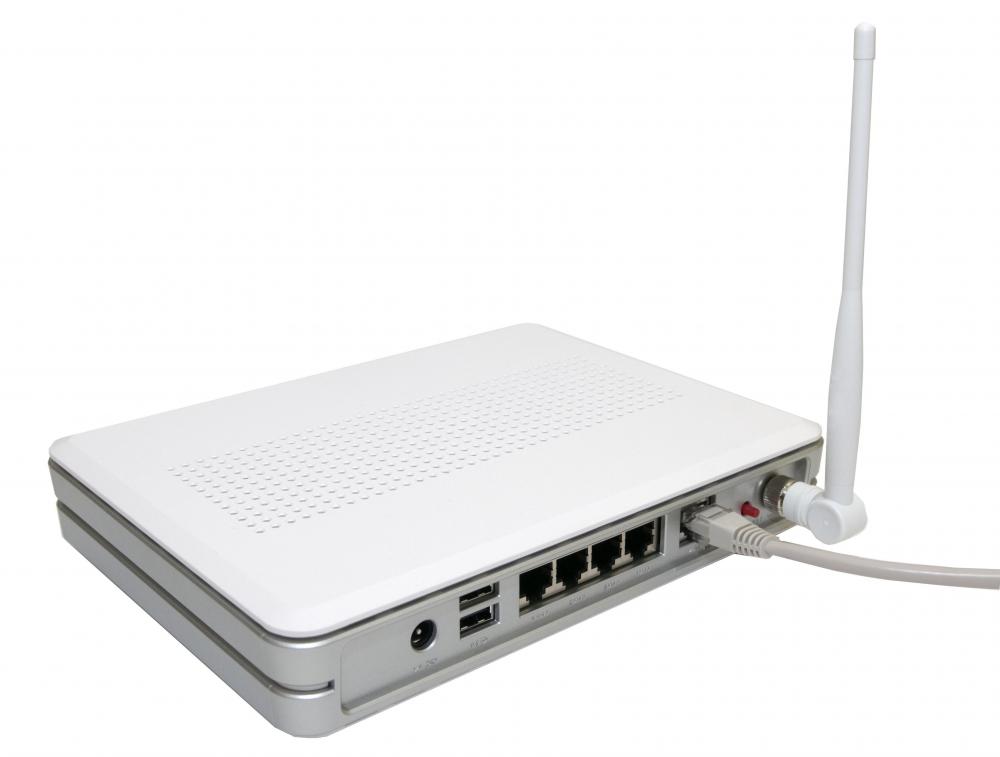
![A wireless network router.]() By: lexanA wireless network router.
By: lexanA wireless network router. -
![A computer network technician sets up and maintains network equipment, like routers.]() By: Andrey KhritinA computer network technician sets up and maintains network equipment, like routers.
By: Andrey KhritinA computer network technician sets up and maintains network equipment, like routers.

Discussion Comments
The modern world of IT is rather competitive and any company should be cautious in case of any alerts and to have some network and IT infrastructure software is a must. I can recommend Anturis, which our company uses to get additional protection and monitoring of sites, servers, databases and so on.
Wikipedia provides the very nice Network Monitoring Software Comparison article. I can also recommend AggreGate Network Manager for both standard and custom network management tasks. We've selected the system for its flexible nature, and the price tag seems very reasonable, too.
For enterprise class network management I recommend Netcrunch 6.0+ from Adrem Software - Monitoring Software.
It means your hardware was not found so now you should find a sound driver for vista.
i need to know since i installed windows vista home basic i have not be able to get my volume to come on my computer what do i need to do do i need to reinstall xp or what.
Post your comments