
At TheHealthBoard, we're committed to delivering accurate, trustworthy information. Our expert-authored content is rigorously fact-checked and sourced from credible authorities. Discover how we uphold the highest standards in providing you with reliable knowledge.
What is Necrosis?
 Michael Anissimov
Michael Anissimov
Michael Anissimov
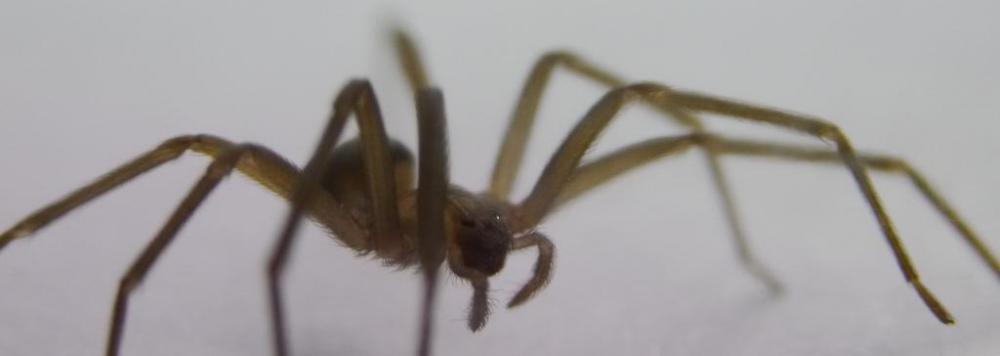
Necrosis is the disorganized breakdown of flesh in some part of the body of a multicellular organism. In an average adult human, between 50 billion and 70 billion cells die off and are replaced every day, but necrosis refers to cell death that is unprogrammed and results from atypical body conditions, such as infections, cancer, serious injury, the presence of venom, severe inflammation, and a variety of diseases. One of the most severe forms is caused by the brown recluse spider, whose bite can cause necrotic lesions up to 10 inches (25 centimeters) in diameter.
When normal cells die off in a process called apoptosis, they send special signals to the janitor cells of the body, phagocytes, which clean them up in an orderly manner. During necrosis, the breakdown is disorganized and chaotic, and phagocytes do not consume the cells in question, nor most of the internal material released from them as they perish.

Every cell has special organelles called lysosomes, which are responsible for digesting food through the controlled release of enzymes. Lysosomes contain enzymes capable of digesting all sorts of macromolecules — for example, the enzyme lipase digests lipids, the enzyme carbohydrase digests carbohydrates, and so forth. These digestive enzymes are kept isolated from the rest of the cell by a special protective membrane surrounding each lysosome. During necrosis, these membranes dissolve, releasing the digestive enzymes indiscriminately, which go on to dissolve the membranes of further lysosomes, resulting in a chain reaction of cell death.

This cellular breakdown is a horrible affliction to undergo, and it can lead to death or permanent injury if not addressed quickly. Medical professionals have come up with a variety of ways to halt the process in people before it leads to irreversible damage, including freezing, removal of the affected tissue, or exposure to a high-oxygen environment for extended periods of time. In the past, it could frequently lead to full amputations, but today, the damage can be contained as long as the affected person is treated properly.

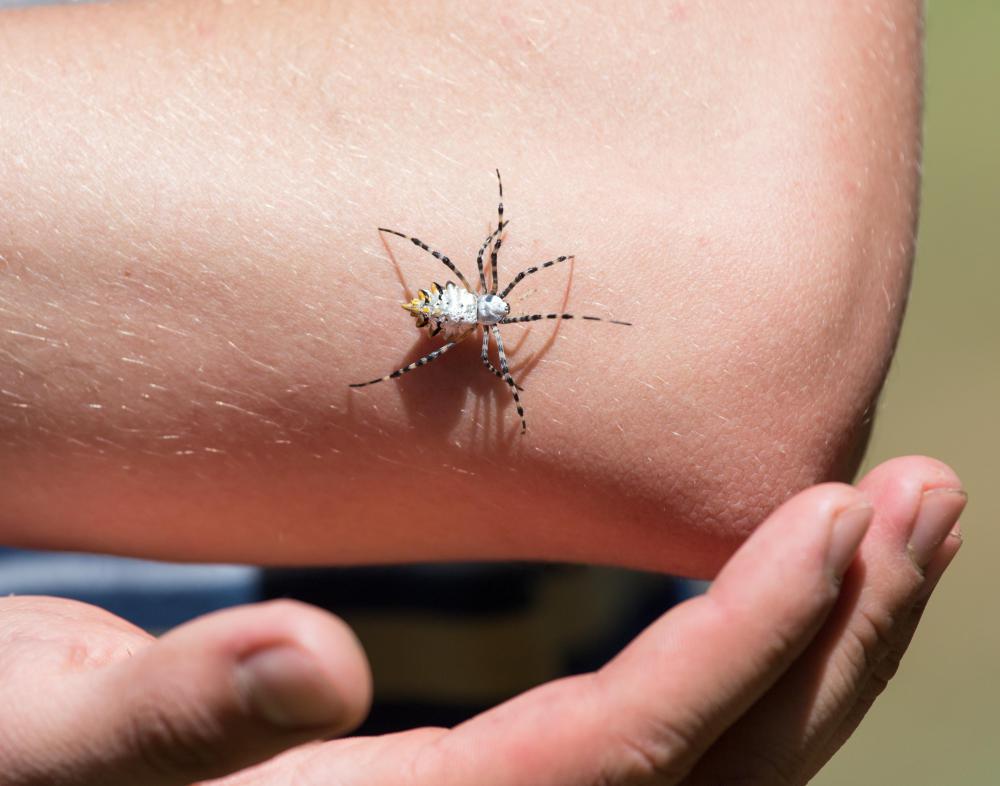
Necrosis does not spontaneously occur in healthy people, and the number of insects capable of causing it are relatively rare. If a person gets a spider bite, chances are that he or she has absolutely nothing to worry about. If the area around the bite begins to look infected and produces pus in large quantities, however, the bite victim should get to a hospital immediately.
Michael Anissimov
Michael is a longtime TheHealthBoard contributor who specializes in topics relating to paleontology, physics, biology, astronomy, chemistry, and futurism. In addition to being an avid blogger, Michael is particularly passionate about stem cell research, regenerative medicine, and life extension therapies. He has also worked for the Methuselah Foundation, the Singularity Institute for Artificial Intelligence, and the Lifeboat Foundation.
Learn more...
Michael Anissimov
Michael is a longtime TheHealthBoard contributor who specializes in topics relating to paleontology, physics, biology, astronomy, chemistry, and futurism. In addition to being an avid blogger, Michael is particularly passionate about stem cell research, regenerative medicine, and life extension therapies. He has also worked for the Methuselah Foundation, the Singularity Institute for Artificial Intelligence, and the Lifeboat Foundation.
Learn more...AS FEATURED ON:
AS FEATURED ON:


-
![Banana spider and web.]() By: Cheryl CaseyBanana spider and web.
By: Cheryl CaseyBanana spider and web. -
![A hyperbaric chamber for high-oxygen environment.]() By: Steve SimpsonA hyperbaric chamber for high-oxygen environment.
By: Steve SimpsonA hyperbaric chamber for high-oxygen environment. -
![A brown recluse spider bite has been known to cause necrotic lesions of up to 10 inches in diameter.]() By: Jason OrmandA brown recluse spider bite has been known to cause necrotic lesions of up to 10 inches in diameter.
By: Jason OrmandA brown recluse spider bite has been known to cause necrotic lesions of up to 10 inches in diameter. -
![Many spider bites go unnoticed or cause only minor irritation -- unless a person is allergic to spider venom or the venom is poisonous.]() By: schankzMany spider bites go unnoticed or cause only minor irritation -- unless a person is allergic to spider venom or the venom is poisonous.
By: schankzMany spider bites go unnoticed or cause only minor irritation -- unless a person is allergic to spider venom or the venom is poisonous. -
![In most cases, a person who gets a spider bite is not in serious danger.]() By: ronstikIn most cases, a person who gets a spider bite is not in serious danger.
By: ronstikIn most cases, a person who gets a spider bite is not in serious danger.



Discussion Comments
I suffered a Spiral Fracture to my right Humerus, which was treated simply by wearing a Sarmiento Brace. 7 weeks later, the tissue under the brace became inflamed, produced a green ooze and when the top layer peeled off, it was raw and bright red, repeating the same steps over and over. I was fearful gangrene was next. Thankfully I received antibiotics and was advised to remove the brace while relaxing, but wear it to bed and when moving around & to apply triple antibiotic ointment to the affected area. This has helped tremendously within 24 hours, so hopefully it has stopped the degradation of the bicep area! I did not know that necrosis could be caused by a constant pressure being applied, such as a Sarmiento Brace! But it can!
This helped me and my group in Biology on a virus that would relate to zombies and how it happens. This is one of the top 10 viruses that are close to being a "zombie" in real life.
I was diagnosed with necrosis in my neck. What does it mean?
@post 7: How about stem cells?
My daughter had brain surgery and they took fat from her stomach to repair the hole made for the surgery. She now has a baseball sized hole under the stomach incision that is getting precariously close to her intestines.
The doctor has packed it with a silver thread, but it doesn't seem to be making a difference. Any ideas on other treatments?
I wanted to know if taking Viagra (overdose -read 100 Mg) without a doctor's prescription leads to necrosis?
I have been diagnosed with necrosis in the breast and was put on a simple course of antibiotics, Keflex. My doctor said she has never seen this in the breast before and I am unsure whether to be concerned about it.
this help me to really know the different between apoptosis and necrosis. Thanks.
I have been diagnosed with necrosis in the area where a serious infection (Micobacterium Fortuitum)developed after an attempt at reconstruction after a radical mastectomy for breast cancer. (Not elective). I have never had any kind of treatment for this and the area is always painful. Should I be worried that it is spreading?
this really helped! Thanks! I am doing a report on apoptosis, and i need to see its difference from necrosis. you explained it really simply and it was easy to understand after this.
This helped me do a report on apoptosis and necrosis. Thanks.
Post your comments