
At WiseGEEK, we're committed to delivering accurate, trustworthy information. Our expert-authored content is rigorously fact-checked and sourced from credible authorities. Discover how we uphold the highest standards in providing you with reliable knowledge.
What is Nasal Polyp Surgery?
Nasal polyp surgery is the removal of a growth inside the nose or the sinuses through incision. It is usually employed by a medical professional when other treatment methods fail to relieve a person of nasal congestion, loss of sense of smell, or sinus infection caused by nasal polyps. It is normally done as an outpatient procedure that allows a patient to be home within the day. There are two ways to perform nasal polyp surgery — nasal polypectomy and functional endoscopic sinus surgery (FESS). A person who has a bleeding disorder, coronary disease, or asthma that is poorly managed is generally considered ineligible to undergo nasal polyp surgery.
One type of nasal polyp surgery, nasal polypectomy, is typically performed under local anesthesia. It is commonly chosen as a surgical option to remove a small nasal polyp that can be easily seen and reached through the nostrils. During the procedure, the nose is held open by a nasal speculum to facilitate removal of the polyp with forceps or a wire loop. A suction device or microdebrider may also be used to extricate the polyp. Packing and pressure or electro-cauterization is usually employed to control bleeding during the procedure.

FESS is a minimally invasive surgical technique employed to remove a nasal polyp that is not easily visible or is located on the roof of the nose or on the sinuses. The procedure may be done under local or general anesthesia. It is done with the aid of an endoscope — an instrument with a tiny camera attached to a thin tube and used to give the surgeon a better view of the polyp and the area surrounding it. The surgeon, usually an otolaryngologist, removes the nasal polyp using tiny instruments and guided by the endoscope.

Prior to surgery, a patient is usually required to undergo certain tests. These tests may include, among others, nasal and sinus endoscopies and computerized tomography (CT) scan of the sinuses. Additional tests may also be advised for a patient suffering from a medical condition or disease that precludes nasal polyp surgery as a treatment option.
To avoid false expectation, it is advisable that a patient who will undergo nasal polyp surgery be made aware that his or her sense of smell may not be restored. The growth of nasal polyp may also recur. As such, it may be necessary to continue with treatment after surgery to prevent the recurrence of nasal polyps and their symptoms.
AS FEATURED ON:
AS FEATURED ON:









-
![A scalpel is a small, sharp knife that is used in surgeries to make incisions.]() By: iofotoA scalpel is a small, sharp knife that is used in surgeries to make incisions.
By: iofotoA scalpel is a small, sharp knife that is used in surgeries to make incisions. -
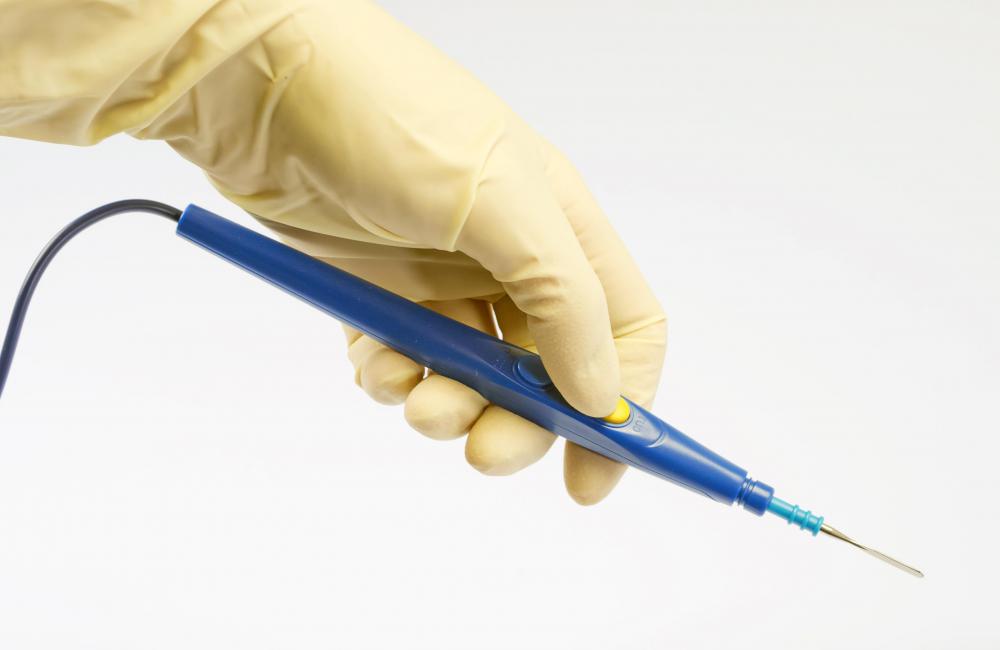
![Electric scalpels may be used in electrocauterization to control bleeding during nasal polyp surgery.]() By: starman963Electric scalpels may be used in electrocauterization to control bleeding during nasal polyp surgery.
By: starman963Electric scalpels may be used in electrocauterization to control bleeding during nasal polyp surgery. -
![Nasal polyp surgery is the removal of a growth inside the nose or the sinuses through incision when other treatments have failed.]() By: xixinxingNasal polyp surgery is the removal of a growth inside the nose or the sinuses through incision when other treatments have failed.
By: xixinxingNasal polyp surgery is the removal of a growth inside the nose or the sinuses through incision when other treatments have failed. -
![The presence of nasal polyps may result in discolored nasal mucus.]() By: IlikeThe presence of nasal polyps may result in discolored nasal mucus.
By: IlikeThe presence of nasal polyps may result in discolored nasal mucus. -
![FESS technique for removing nasal polyps is done under general anesthesia.]() By: uwimagesFESS technique for removing nasal polyps is done under general anesthesia.
By: uwimagesFESS technique for removing nasal polyps is done under general anesthesia.




Discussion Comments
@rundocuri- I have a relative that had nasal polyp surgery and she has been very happy with the results. She also had a lot of nasal congestion, but nothing else helped relieve it. Though she was reluctant to have surgery, she found a doctor that she trusted who had great credentials doing this type of surgery. He walked her through the whole procedure to put her mind at ease months before her surgery.
If your brother has tried all other available sinus treatments and they have failed, he should consider having nasal polyp surgery. However, for the best results, he should do his homework about surgeons in his area, and find one that has a lot of experience in this field. It is also important that he feels comfortable with the doctor he chooses to perform his surgery.
Does nasal polyp surgery really work? My brother has all of the problems mentioned in this article, and has tried every kind of treatment possible except surgery. He is afraid that after surgery, he will still have nasal congestion and will regret having the procedure.
Post your comments