
At AllThingsNature, we're committed to delivering accurate, trustworthy information. Our expert-authored content is rigorously fact-checked and sourced from credible authorities. Discover how we uphold the highest standards in providing you with reliable knowledge.
What Is Nacre?
 Tricia Christensen
Tricia Christensen
Tricia Christensen
Nacre is crystalline aragonite or calcium carbonate. Shellfish and mollusks excrete it when they are exposed to a parasite or a foreign body introduced into a shell. It is noted for its shine and iridescence, and its coating on shells is called mother of pearl.
In some situations, production of nacre is induced or cultured by introducing a foreign body to a shellfish. This is the case with cultured pearls, where the formation of pearls is accelerated by placing small foreign shell bits in oysters. It essentially “cultures” the production of nacre, resulting in valuable and iridescent pearls. Alternately, fresh pearls or naturally occurring pearls are usually an oyster’s or mussel’s response to parasitic agents. Since the methods for producing this substance are not externally controlled, the quality and size of these pearls can vary.

Nacre also tends to line the inside of mollusk shells. It can even be seen in garden snails, but it is most noticeable and impressive in sea mollusks. From time to time, people can find shells that exhibit either a white or black shine on their interior, often making them appealing to shell collectors.
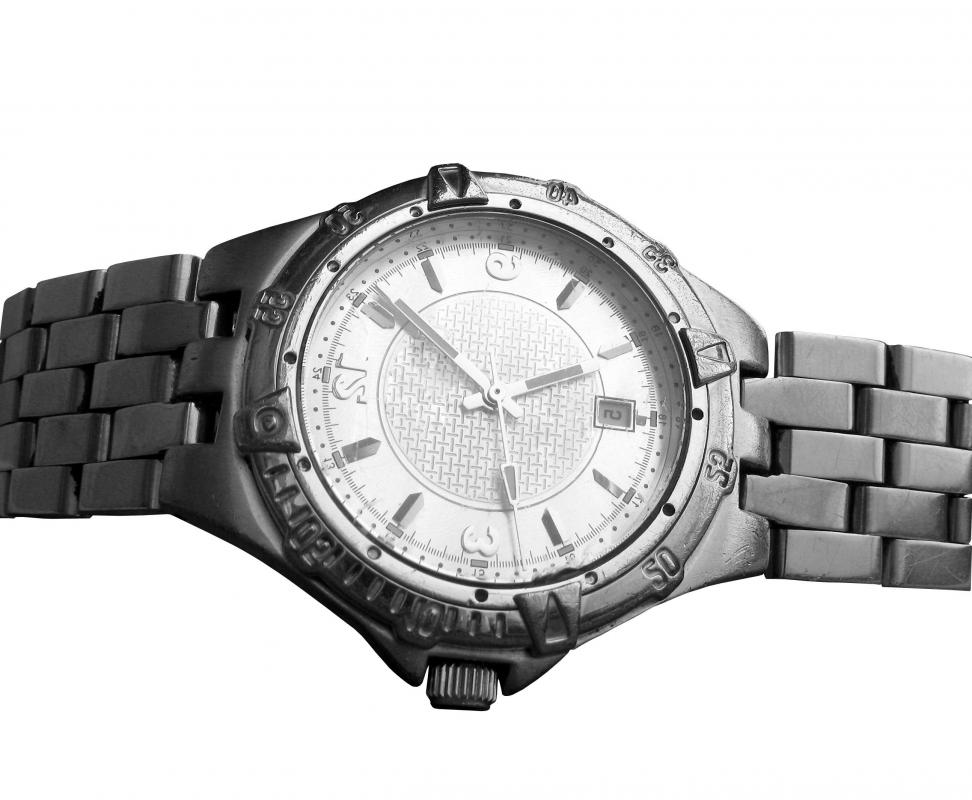
When not in pearl form, this substance has been used in a variety of decorative forms. Mother of pearl was traditional on shirt buttons, and some brands still use it. It may also be used on the keys or components of musical instruments. The dial on Rolex® and many other high end watches also use mother of pearl.

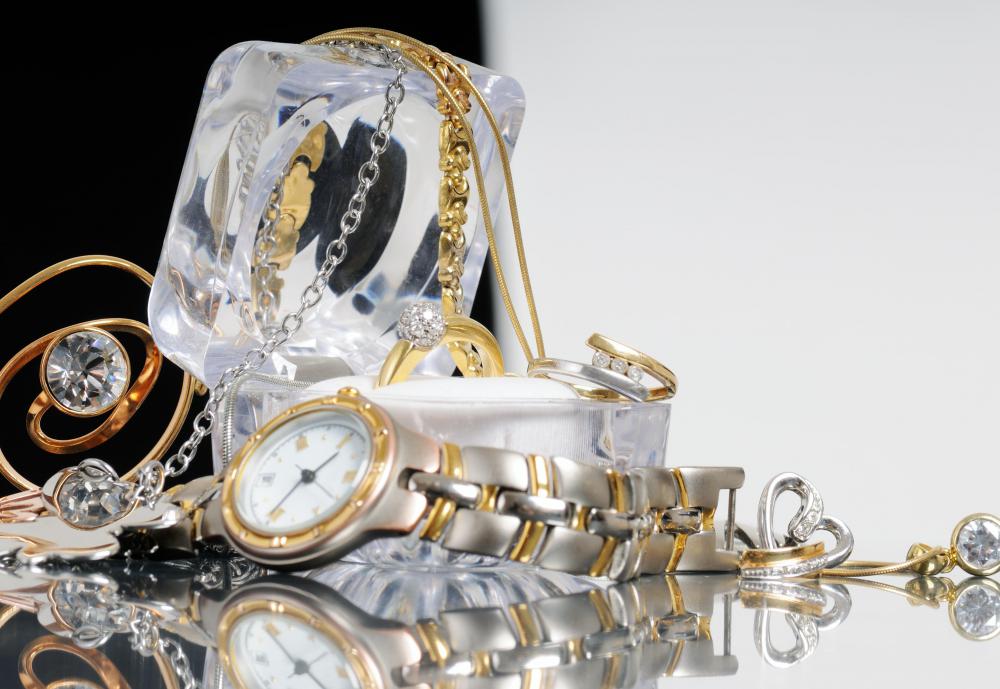
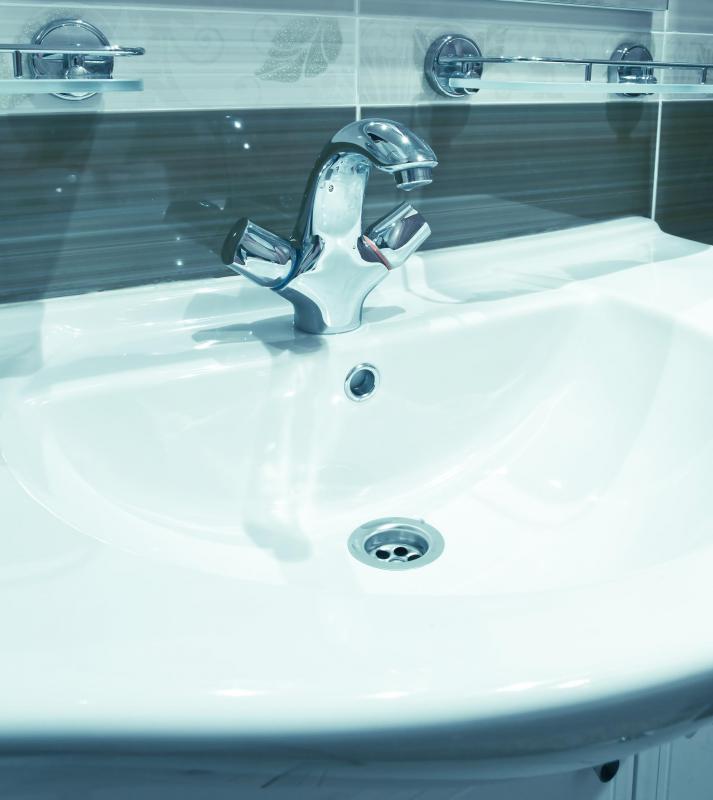
Nacre may be worked into tiles, designs in the wood of decorative boxes for jewelry, create cufflinks, or be used in jewelry like rings, necklaces, and earrings. It may also be used with porcelain for kitchen and bathroom sinks. The quality of mother of pearl depends upon the thickness of the crystalline forms, and whether or not the nacre has been dyed to produce certain colors.

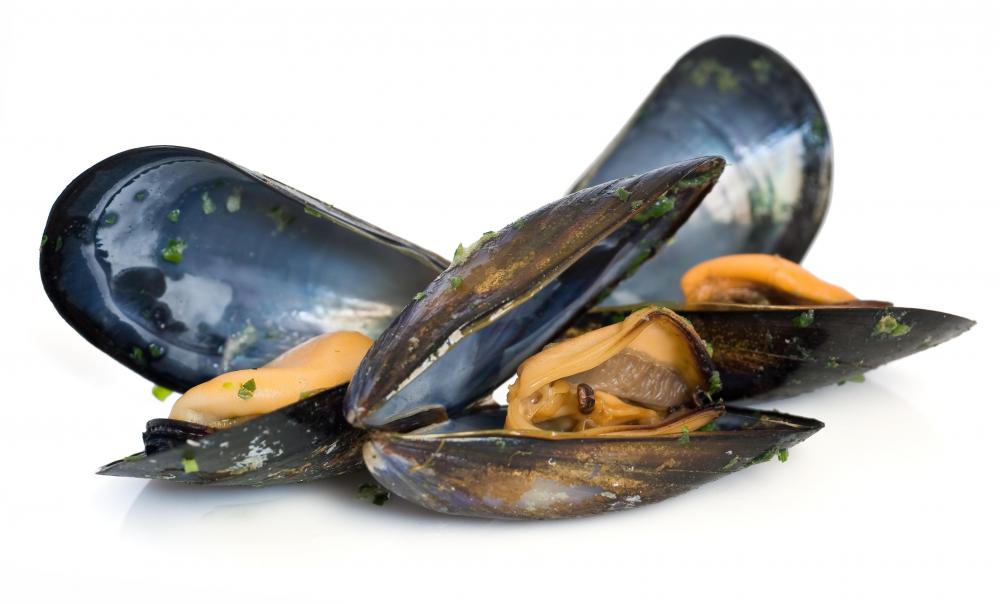
Though most people associate nacre with ocean-dwelling mollusks, much of what is produced commercially is found among fresh water shellfish like mussels. Though abalone is commonly thought a terrific source for decorative purposes, harvesting of the sea snails can be limited in some areas. Commercial producers often find it easier to use smaller, easier to obtain, and less endangered animals for this purpose.
What Is Nacre?

Nacre is an excretion inside the shell of mollusks that is shiny and iridescent. The secretions are made from calcium carbonate called crystalline aragonite and are used as a defense mechanism. The secretions are meant to protect the delicate tissues within. Excretions happen when something enters the shell that shouldn’t be there; it will trap and layer over the foreign body. Depending on the object and what kind of shell is producing the nacre, it could end up as mother of pearl or valuable and iridescent pearls.
How Does Nacre Form?

Not all shellfish or mollusks secrete nacre as a mode of defense. Primarily nacre comes from oysters, mussels, and marine gastropods. Although, you can occasionally find nacre on the inside of some land snail shells too. When the carbonate aragonite secretion hits the shell, it creates a hard layer. As each secretion settles, another layer hardens on top of the other.

The iridescent nature of the nacre is due to the aragonite. The thickness of aragonite platelets is close to visible light wavelengths. As a result, the platelets interfere with how light affects the visibility from certain angles. You will see different colors variants, depending on how you view the subject.
Can Nacre Be Cultured?
Nacre is often cultured. In fact, many sustainable farms culture pearls to safely take and replace the ones taken for harvest. One thing to keep in mind about culture-assisted pearls is that they are often irregular. Irregular pearls can range from rare and costly to inexpensive and flawed. Professional nacre workers have extensive knowledge on how best to supplant the foreign objects within the shells to produce the best results.

Because mollusks will produce the calcium carbonate crystalline aragonite for the duration of their lives, having a sustainable supply is ideal for pearl cultivation. Pearls are formed through a forced entry, hostage, and secretion process called encystation. If the foreign object gets in, whether cultured or utilizing natural selection, it is not getting out.

The secretion solidly stops the foreign object or parasite in the layer of nacre, and another concentric layer is secreted again and again. Once the water and nacre swirl and harden, the bivalve will have created either a pearl or a blister pearl. Pearls are formed in the soft tissue of the mollusk, and blister pearls form on the inner mantle layers. A shell blister is a pearl-like blister that forms outside the shell mantle, though they produce no actual pearls.
Is Nacre Expensive?

Mother of pearl is in the medium range of cost, and it is found in abundance. It can also regularly be found discarded when harvesters have found all the pearls they need. It is not uncommon for mother of pearl to wash up on beaches. However, there are mother of pearl selections greatly coveted by certain high-dollar brands. The brands aren’t likely to begin purchasing from a small-time nacre dealer, so pedaling shells probably isn’t in your future. Big brands use mother of pearl for watch faces and hands, guitar inlay, shirt buttons, and jewelry.
How Is Nacre Used?

Originally, nacre and mother of pearl were in great demand. Since nacre has a hardness close to platinum, it is durable but requires either special sealant or careful maintenance, which is why it likely fell out of common favor. It was used for flooring, walls, mirrors, jewelry, bathrooms, and spas in the early days.
Now, it still has the same uses but is primarily relegated to accents and inlays. Nacre comes in many colors that people enjoy. From silvers and greens to purples and pinks and shiny blacks, nacre is a common jewelry element still. Others choose to ignore its natural beauty and opt for bleached versions; the cream and white nacre still holds its iridescence even without a color profile. An additional use of nacre is to carve it into a small spoon explicitly used for caviar since any metal alters the delicate flavor profile.
Can You Keep Nacre?
Though nacre can be sold for high prices depending on the culture and product, it can also be relatively inexpensive due to its wide availability. If you are combing the beach with friends and find a shell with nacre on it, you can keep that for yourself.
There is no ocean merchant that you have to pay for your find. The only places you have to be wary of leaving the environment the way you found are protected federal lands and private properties. Public areas have little to no regulations concerning finders keepers.
Frequently Asked Questions
What is nacre and how is it formed?
Nacre, also known as mother-of-pearl, is a lustrous substance that lines the inner shells of some mollusks, like oysters and mussels. It's formed when an irritant enters the mollusk's shell, prompting the creature to secrete layers of aragonite and conchiolin, which are minerals found in its shell. These layers are laid down in a brick-and-mortar pattern, giving nacre its strength and iridescence.
Why is nacre important to mollusks?
Nacre plays a crucial role in protecting mollusks from parasites and debris. When an irritant slips into the mollusk's shell, the nacre layers encapsulate the foreign material, preventing it from causing harm or discomfort to the mollusk. This defense mechanism not only safeguards the creature's soft body but also results in the creation of pearls, which are highly valued in jewelry.
What gives nacre its iridescent quality?
The iridescence of nacre is due to its unique microstructure. The thin layers of aragonite are separated by sheets of organic matrix composed of conchiolin. This structure causes light to diffract and interfere as it passes through the different layers, resulting in a spectrum of colors that change and shimmer when viewed from different angles. This optical phenomenon is known as structural coloration.
Can nacre be found in all mollusks?
No, nacre is not found in all mollusks. It is primarily produced by mollusks that belong to the families of bivalves, such as oysters, mussels, and clams, as well as some gastropods. Not all species within these families produce nacre, and the quality and characteristics of the nacre can vary significantly among those that do.
How is nacre used by humans?
Humans have utilized nacre for thousands of years, primarily in the creation of jewelry and decorative items. Its iridescent sheen makes it a popular choice for inlay work in musical instruments, watches, and furniture. Nacre is also studied for its durable properties in biomimetic research, with scientists looking to replicate its toughness in synthetic materials.
Is the harvesting of nacre sustainable?
The sustainability of nacre harvesting largely depends on the practices employed. Overfishing and habitat destruction can threaten mollusk populations. However, pearl farming can be sustainable when managed responsibly. According to the Food and Agriculture Organization, sustainable pearl farming can provide environmental benefits, such as habitat restoration and improved water quality, while also supporting local economies.
Tricia Christensen
Tricia has a Literature degree from Sonoma State University and has been a frequent AllThingsNature contributor for many years. She is especially passionate about reading and writing, although her other interests include medicine, art, film, history, politics, ethics, and religion. Tricia lives in Northern California and is currently working on her first novel.
Learn more...
Tricia Christensen
Tricia has a Literature degree from Sonoma State University and has been a frequent AllThingsNature contributor for many years. She is especially passionate about reading and writing, although her other interests include medicine, art, film, history, politics, ethics, and religion. Tricia lives in Northern California and is currently working on her first novel.
Learn more...AS FEATURED ON:
AS FEATURED ON:









-
![Nacre inside of abalone shells.]() By: kaowenhuaNacre inside of abalone shells.
By: kaowenhuaNacre inside of abalone shells. -
![A nacre bracelet.]() By: Steve MannA nacre bracelet.
By: Steve MannA nacre bracelet. -
![Nacre may be seen in garden snails.]() By: JohanSwanepoelNacre may be seen in garden snails.
By: JohanSwanepoelNacre may be seen in garden snails. -
![Mother of pearl may be used on the keys of musical instruments.]() By: tezzstockMother of pearl may be used on the keys of musical instruments.
By: tezzstockMother of pearl may be used on the keys of musical instruments. -
![Rolex watches may feature mother of pearl.]() By: VitRolex watches may feature mother of pearl.
By: VitRolex watches may feature mother of pearl. -
![Nacre may be used in jewelry.]() By: Anna KhomuloNacre may be used in jewelry.
By: Anna KhomuloNacre may be used in jewelry. -
![Nacre may be used with porcelain for sinks.]() By: VladittoNacre may be used with porcelain for sinks.
By: VladittoNacre may be used with porcelain for sinks. -
![Nacre buttons.]() By: elen_studioNacre buttons.
By: elen_studioNacre buttons. -
![Mussels can produce nacre.]() By: antonio scarpiMussels can produce nacre.
By: antonio scarpiMussels can produce nacre. -
![The nacre inside mollusk shells produces pearls.]() By: valeriy555The nacre inside mollusk shells produces pearls.
By: valeriy555The nacre inside mollusk shells produces pearls.




Discussion Comments
@OeKc05 – I wish my buttons on my favorite shirt were 100% nacre. I found out after about a year of wearing it that they are much like the fake pearls, though.
They have nacre on the surface, but after many washings, it can start to flake away. This probably isn't the case with some more expensive buttons, but I paid $15 for this shirt, so I'm not entirely surprised.
Real pearls are nacre to the core. Fake pearls have nacre as a coating on the top few layers, but they have plastic cores.
I love mother-of-pearl jewelry. I have several sets of seashell earrings that are iridescent with nacre.
I've seen seashell jewelry that is coated in gold or silver, but I think that the kind coated with nacre is the most gorgeous. It just seems natural to put mother-of-pearl on a shell, even if it didn't have it to begin with.
I have seen nacre as mother-of-pearl on the inside of many shells. The kind that are usually clamped shut can be found on the beach in halves after they have broken apart, and their undersides often are covered in nacre.
I store these shells nacre side up on a shelf in my bedroom. I collect all sorts of beach items, and these are among the prettiest in my collection.
Some souvenir shops add nacre to their decorative trinkets, but I think the most beautiful kind is that which occurs naturally. On a ceramic item, it just looks fake.
@anon27267: River beds are also the place where rice pearls are grown. They do this by inserting a piece of oyster shell inside another oyster in the mantle tissue. The shell then creates a blister that eventually forms into a pearl.
For the rice pearl shape, freshwater pearls are chosen specifically because the river oyster is known to make those kinds of pearls. In general, freshwater oysters are known for creating these elongated pearls that aren’t as round as the saltwater varieties.
@anon27267: As you know, man-made pearls are made in the oyster farms. These oysters are specifically cultivated for the purpose of growing pearls. They have different characteristics that can include faster growing or rounded pearls.
To create rice pearls, the oysters are chosen specifically because the pearls that they make are elongated. These are also known as drop pearls. It is the exact same process as regular pearls except the fact that the pearls end up in looking like a rice grain.
where can we find rice pearls?
Post your comments