
At DelightedCooking, we're committed to delivering accurate, trustworthy information. Our expert-authored content is rigorously fact-checked and sourced from credible authorities. Discover how we uphold the highest standards in providing you with reliable knowledge.
What is Mustard?
 Mary Elizabeth
Mary Elizabeth
Mary Elizabeth
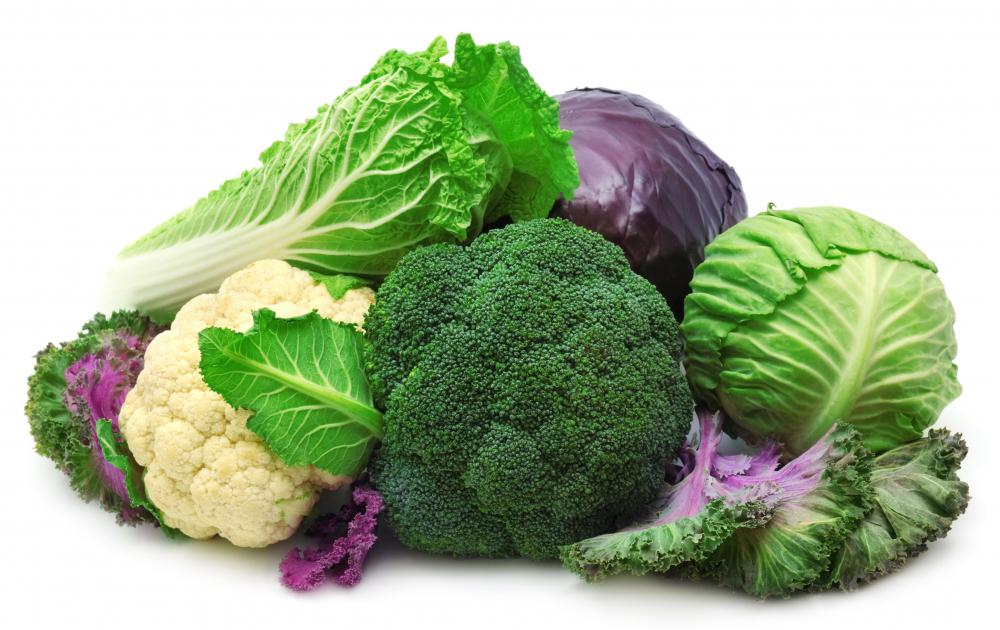
Mustard is a plant in the Brassicaceae or Cruciferae family, which includes the cruciferous vegetables like broccoli, Brussels sprouts, cabbage, and cauliflower. The family is sometimes referred to as the mustard family, and the plants in it are often rich in vitamin C, as well as recommended for their cancer-preventive properties.
In general, mustard is used to add a piquant, spicy flavor to foods. It does this in a wide variety of ways, in part because the plant has a large number of different forms. There are two basic varieties of the whole seed: white or yellow and brown or Asian. The yellow seed is the larger and less strong of the two, and it is used to make prepared yellow mustard that is often called “American-style.” Brown seeds are used for pickling and in curry, as well as in prepared condiments characteristically used in Europe and China. There is also black seed, but it is not as commonly used.

The seeds can be ground to create a powder that can be combined with vinegar or wine and other seasonings to make prepared mustard, or pressed to create mustard oil, a very hot oil used in stir-fries. This oil is, in fact, a by-product of commercial condiment production in some places.
Mustard greens come from a completely different part of the plant and are used in salads or cooked as a vegetable. They may be boiled, braised, or steamed, and are often combined in dishes with other greens from the same family, such as collards.

This plant also serves medicinal purposes, having been recommended through history for a wide variety of symptoms. The powdered seeds can be made into a plaster that is used as a counterirritant, creating inflammation in one place with the aim of relieving it in another.
Mary Elizabeth
Mary Elizabeth is passionate about reading, writing, and research, and has a penchant for correcting misinformation on the Internet. In addition to contributing articles to DelightedCooking about art, literature, and music, Mary Elizabeth is a teacher, composer, and author. She has a B.A. from the University of Chicago’s writing program and an M.A. from the University of Vermont, and she has written books, study guides, and teacher materials on language and literature, as well as music composition content for Sibelius Software.
Learn more...
Mary Elizabeth
Mary Elizabeth is passionate about reading, writing, and research, and has a penchant for correcting misinformation on the Internet. In addition to contributing articles to DelightedCooking about art, literature, and music, Mary Elizabeth is a teacher, composer, and author. She has a B.A. from the University of Chicago’s writing program and an M.A. from the University of Vermont, and she has written books, study guides, and teacher materials on language and literature, as well as music composition content for Sibelius Software.
Learn more...AS FEATURED ON:
AS FEATURED ON:


-
![Mustard is a plant in the Brassicaceae or Cruciferae family, which includes vegetables like broccoli, cabbage, and cauliflower.]() By: Serghei VelusceacMustard is a plant in the Brassicaceae or Cruciferae family, which includes vegetables like broccoli, cabbage, and cauliflower.
By: Serghei VelusceacMustard is a plant in the Brassicaceae or Cruciferae family, which includes vegetables like broccoli, cabbage, and cauliflower. -
![A hot dog with yellow mustard.]() By: Brenda CarsonA hot dog with yellow mustard.
By: Brenda CarsonA hot dog with yellow mustard. -
![Pretzels dipped in mustard are a tasty snack.]() By: ilolabPretzels dipped in mustard are a tasty snack.
By: ilolabPretzels dipped in mustard are a tasty snack. -
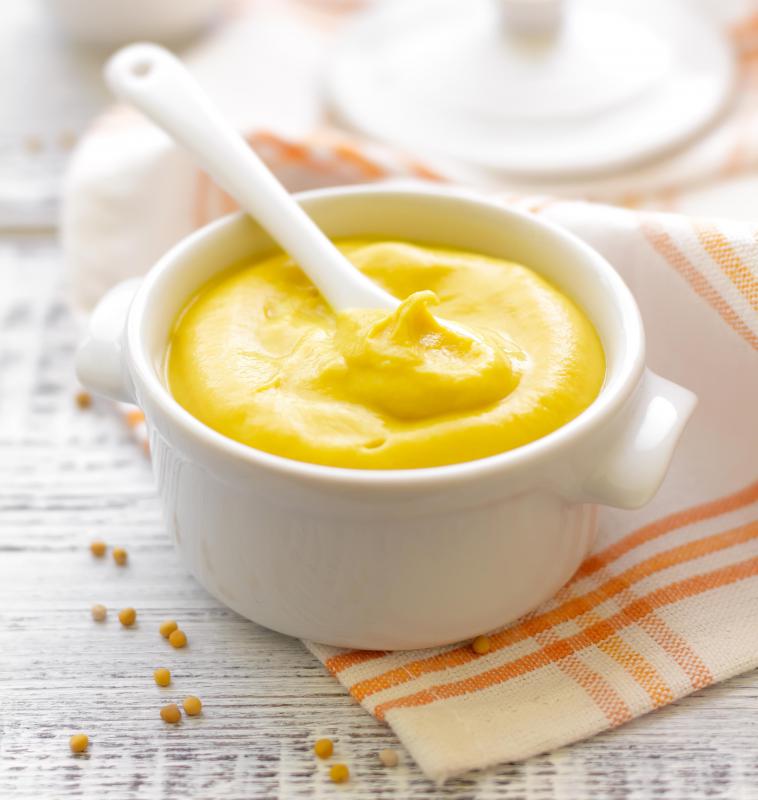
![Prepared yellow mustard is sometimes known as “American style".]() By: Sea WavePrepared yellow mustard is sometimes known as “American style".
By: Sea WavePrepared yellow mustard is sometimes known as “American style". -
![Mustard oil is derived from mustard seed.]() By: spline_xMustard oil is derived from mustard seed.
By: spline_xMustard oil is derived from mustard seed.



Discussion Comments
I actually had no idea that mustard seed was a spice, until a few months ago when I was making a recipe that called for powdered mustard seed. I thought I was going to have to go to some kind of special grocery store to get it, but I found powdered mustard in the spice aisle at my local store.
The recipe that called for the mustard was a homemade macaroni and cheese recipe! I was really surprised, but it tasted great. I'm not sure if packaged macaroni and cheese contains mustard seed, but I'd be curious to find out.
@eidetic - I like all kinds of different mustards also. I like to make mustard chicken a lot, and it always tastes different based on whatever kind of mustard I decide to use.
I think my favorite mustard sauce is probably honey mustard. I always get honey mustard if I get chicken tenders at a restaurant, and I always like it, no matter what kind of restaurant I'm at. Unfortunately, I usually find that store bought honey mustard isn't as good, for whatever reason.
My favorite is this mustard BBQ sauce I buy at my local health food store. It sounds kind of weird, but it tastes really good. The mustard really adds a certain something to the bbq sauce.
@DylanB - Thanks for posting this. When I was reading through the article, I was wondering if mustard greens tasted like the condiment mustard, and you answered my question. I had no idea the two were related either, and I was really hoping that mustard greens tasted like table mustard. I love the taste of mustard, but I don't like greens that much.
I have never been too brave when it comes to trying different kinds of mustard. I am used to the bright yellow prepared mustard that stays good for a long time in my refrigerator!
The few times I have tried a brown, or slightly spicy mustard, I have never cared for it. I usually get honey mustard sauce when I order chicken tenders at a restaurant, but am not too keen on trying a gourmet mustard.
Mustard is one of those foods that I think you either love or hate. I don't like the taste of mustard and if I were living alone, would never have it around the house.
My husband and two of my kids love mustard though, so I always have to make sure there is some around. I know there are some foods you can acquire a taste for, but I don't think mustard is on that list for me.
I can even taste mustard in potato salad. Even if there is just a little bit, the taste of the mustard comes through and is too strong for me.
Has anyone ever made their own honey mustard dressing? I often like to make my own dressings, but don't know how much work it would be to grind up my own mustard seeds.
I keep a bottle of mustard in the refrigerator and have some ground mustard in a spice container, but have never thought about trying to make my own mustard sauce or dressing before.
@DylanB-- I like mustard as a condiment with certain foods, but can't quite imagine what it would taste like with broccoli. I think broccoli tastes much better with cheese on it instead of mustard!
If I am eating a hamburger, hotdog or tenderloin, I always like to have mustard on them. Just like I can't imagine mustard with broccoli, and can't imagine adding broccoli to any of these meats I have added mustard to.
I can see how both of these foods would be healthy for you, but I think I will stick with eating them separately.
I'm amazed that all of those vegetables are in the mustard family! They really don't taste like the condiment at all.
I have heard that eating broccoli with mustard dressing is a good way to fight cancer. Broccoli has some sort of enzyme that it loses when we cook it, but spreading on the mustard dressing adds it back.
Broccoli and mustard seems like a strange flavor combination, but since broccoli actually is a mustard, I guess it isn't that odd. I suppose that is why the dressing is able to add back what cooking the broccoli took away.
I love putting honey mustard on chicken. It has just the right combination of sour and sweet.
Most restaurants that offer dipping sauces for chicken always include the option of honey mustard. I think it is probably the most requested sauce for chicken.
I don't think that it would taste good with fish or with a burger, but it is the perfect accompaniment to chicken tenders. It tastes better with the fried kind than with the grilled, though it will do for both.
@giddion - Dijon mustard is a little bitter, but if you mix it with a few other ingredients, you can get a very flavorful sauce. I like to mix mine with honey, brown sugar, and butter and melt them all together in a saucepan over low heat.
Dijon has a weird brownish-gray color. I've heard that it is made with black and brown mustard seeds.
That sauce that I make taste great on top of salmon. I cover the fish with the sauce before I bake it, and I add more sauce halfway through when I flip the salmon.
I've been thinking about trying some dijon mustard. I'm getting a bit bored with regular old yellow mustard, and I want to branch out.
The only thing that deters me a little is what I've heard about dijon being bitter. I dislike bitter things, and I don't want to ruin my food by spreading something like this on it. Can anyone tell me what dijon mustard tastes like?
Mustard is one of those condiments that can last relatively long, especially if refrigerated. It can be kept in the refrigerator for a whole year. Hopefully it will be consumed during that time.
The thing that a lot of people don't know is mustard keeps fine out of the fridge! Even once opened it won't go bad, so long as the jar is closed tightly. The only downside is that it can lose some of its kick, so be sure to store it in a cool and dark place to help avoid that.
@Valencia - You have the Romans to thank for mustard as we know it today. They mixed the seeds with fermented ale and hey presto! I wonder what they would think of all the varieties available now!
I am a big fan of spicy mustard but not so keen on the sweet mixtures.
My brother is a bit of a walking encyclopedia but when I asked him about the origins of mustard as a flavor enhancer to food he was stumped.
I really enjoyed reading the information here but is anyone can tell me more about the history aspect I'll be very happy.
Post your comments