
At TheHealthBoard, we're committed to delivering accurate, trustworthy information. Our expert-authored content is rigorously fact-checked and sourced from credible authorities. Discover how we uphold the highest standards in providing you with reliable knowledge.
What is Muscular Strength?
Muscular strength is generally defined as the ability to generate force at a given velocity of movement. One of the five primary components of physical fitness — along with muscular endurance, flexibility, cardiovascular fitness and body composition — muscular strength typically is developed using resistance training. This type of training typically aims to stimulate increased strength on various physiological levels. Strength can be an indicator of overall health or a measure of progress during resistance or rehabilitation training programs. There are several methods for testing physical strength, including the use of certain devices or determining how much weight can be used during certain exercises.
The Purpose of Muscle

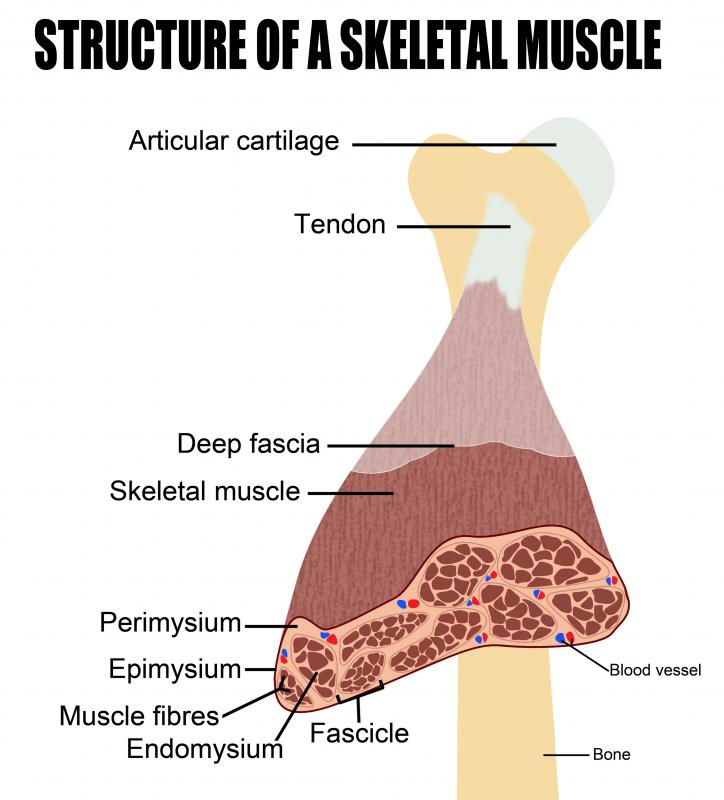
The fundamental purpose of skeletal muscle is the generation of force, either to stabilize and balance the skeleton or to produce movement. Muscular force is produced by a complex series of interactions between neurons, nucleotides, ions and protein complexes within the muscle. The level of force generated can vary not only between muscles and muscle groups but also within the range of motion of each particular muscle. Factors that can affect muscular strength include age, sex and level of physical conditioning. From day to day, strength levels can be influenced by nutrition, sleep, one's state of mind and even the time of day.
Types of Strength

Muscular strength can refer to either isometric strength or dynamic strength. Isometric strength is a measure of how much force can be exerted against an immovable object or fixed resistance. Standing in a doorway and pressing one's hands outward against the frame is an example of using isometric strength. This type of strength training typically is used more often in rehabilitation clinics than in fitness centers, because it can help prevent atrophy of an immobilized limb. In a sports setting, isometric training is most often used to overcome weaknesses at a particular angle of a limb's range of motion.
Concentric and Eccentric Movements

Dynamic strength can be further divided into concentric movements and eccentric movements. Concentric movements are those in which the muscle shortens as it moves, such as the biceps muscle when the arm goes from being extended to being fully bent at the elbow. Eccentric movement is when the muscle is lengthening as it moves, such as the biceps when the arm goes from being bent to being fully extended. In a rested muscle, eccentric strength can be as much as 40% greater than concentric strength.
Measuring Strength

A device called a cable tensiometer can be used to measure isometric strength. It originally was designed to measure the strength of aircraft cables. Another device, called a dynamometer, can test muscular strength by assessing the amount of force used to squeeze the instrument with the hand or legs. From these measurements, overall muscular strength can be roughly estimated. More highly technological devices involving computers and electroconductive materials also can be used.

In the interest of simplicity and ease of access, the most popular method of muscular strength testing usually is the one-repetition maximum test. This test measures the greatest amount of weight that a person can move during one repetition of a specific exercise. Although this usually is a reasonably accurate assessment of muscular strength, it should be carried out only with extreme caution. Performed improperly or without appropriate assistance, if necessary, this type of test can pose a risk of significant injury.
AS FEATURED ON:
AS FEATURED ON:


-
![An illustration of the human muscular system.]() By: adimasAn illustration of the human muscular system.
By: adimasAn illustration of the human muscular system. -
![Resistance training helps develop muscular strength.]() By: seravResistance training helps develop muscular strength.
By: seravResistance training helps develop muscular strength. -
![One of the five indicators of physical fitness, muscular strength can be enhanced by weightlifting exercise.]() By: pressmasterOne of the five indicators of physical fitness, muscular strength can be enhanced by weightlifting exercise.
By: pressmasterOne of the five indicators of physical fitness, muscular strength can be enhanced by weightlifting exercise. -
![The fundamental purpose of skeletal muscle is the generation of force, either to stabilize and balance the skeleton or to produce movement.]() By: Balint RaduThe fundamental purpose of skeletal muscle is the generation of force, either to stabilize and balance the skeleton or to produce movement.
By: Balint RaduThe fundamental purpose of skeletal muscle is the generation of force, either to stabilize and balance the skeleton or to produce movement. -
![Muscle strength can change daily depending on nutrition, hydration, level of rest and one's mental state.]() By: ArenaCreativeMuscle strength can change daily depending on nutrition, hydration, level of rest and one's mental state.
By: ArenaCreativeMuscle strength can change daily depending on nutrition, hydration, level of rest and one's mental state.



Discussion Comments
I love to watch the strong man competition on TV. I am amazed by the amount of muscular strength these men have and can't imagine the hours of training they have put in.
I don't think a lot of the things they do are all that good for your body, but it does make for some good entertainment. I do some muscular strength training in the form of resistance exercises. Basically this involves using weights in some way. It really doesn't take a lot to see a difference.
Once you get to the point where you can do the exercise fairly easily, it is time to add more resistance and increase your strength even more.
It makes sense to me that your muscular strength is different depending on how you are feeling. I know if I am tired or hungry, I don't have near as much muscle strength as when I am full and alert. Some people recommending working out the first thing in the morning, but this is not the best time for me. I have to eat a little something and wake up before I start my muscular strength workouts.
@julies -- I do a workout routine that combines both cardiovascular fitness with muscular strength exercises. I had to start out with this slowly, as my muscles weren't used to being worked like this. If I did too much too soon, they would be really sore.
Once you build up your muscular strength you can actually eat more calories because muscle burns more than fat. I think this combination of exercises is the best of both worlds.
I have had to work the hardest on my upper arm strength. I used to skip the push ups because they were too hard, but I have gradually worked my way up to the point where I can do them. It takes time to develop muscular strength, but I like feeling stronger and toned up.
My husband has worked construction for 30 years and he has a lot of muscular strength. He has been doing muscular strength activities all day long for a long time, which makes him very strong and muscular.
I don't have a lot of muscular strength, but am more fit than he is when it comes to cardiovascular fitness. I would rather do an hour of aerobics and get my heart rate up than lifting weights all that time.
@trogjoe19 - Everyone's bodies are different. His hormones work differently than yours do so you just have to remember to be comfortable in your own skin! As long as you work out and eat in a healthy way, then you will gain more muscular strength and be at a higher level! Good luck!
Is muscular strength equal to muscular size? I have a friend who is much "stronger" than me, and obviously receives more complements than I would for being strong, but he rarely works out and I beat him at arm wrestling every time. What causes someone to look strong like that?
Post your comments