
At TheHealthBoard, we're committed to delivering accurate, trustworthy information. Our expert-authored content is rigorously fact-checked and sourced from credible authorities. Discover how we uphold the highest standards in providing you with reliable knowledge.
What is Muscle Memory?
 Tricia Christensen
Tricia Christensen
Tricia Christensen
Muscle memory can best be described as a type of movement with which the muscles become familiar over time. For instance, newborns don’t have muscle memory for activities like crawling, scooting or walking. The only way for the muscles to become accustomed to these activities is for the baby to learn how to do these things and then practice them with a great deal of trial and error. Gradually, as the baby becomes a skilled walker, he falls less, is able to balance, and finally is able to incorporate other activities into his life such as running.
Although the precise mechanism is unknown, what is theorized is that anyone learning a new activity, or practicing an old one has significant brain activity during this time. The walking child is gradually building neural pathways that will give the muscles a sense of memory. In other words, even without thinking, the child is soon able to walk, and the muscles are completely accustomed to this process. The child doesn’t have to tell the body to walk; the body just knows how to do it, largely because neurons communicate with the muscles and say, “walk now.”

Muscle memory thus becomes an unconscious process. The muscles grow accustomed to certain types of movement. This is extremely important in different types of training for sports. The more often you do a certain activity, the more likely you are to do it as needed, when needed. If you’ve kicked thousands of field goals, exercise physiologists assume that the likelihood of being able to kick one during an American football game is pretty good through this memory. You don’t have to think, “I need to make this kick.” Your body already knows how to do it.

This is one of the reasons that with many activities that involve the body’s muscles, like playing an instrument, learning appropriate technique is always stressed. You want your muscle memory to reflect the correct way to do things, not the incorrect way. Your muscles can actually play against you if you’ve constantly been practicing something the wrong way.

Music teachers often make this argument. It’s a lot harder to teach someone who’s been playing an instrument for a few years because the first step is breaking them of all the bad habits they’ve acquired, which are now part of the muscle memory. Similarly, if you learn to bat, throw, kick or pitch wrong, the memory has to be overcome, and new neural pathways formed to be a better athlete.

Most top level athletes and performers in a variety of fields believe that muscle memory is best developed when the same activities are practiced over and over again, with any corrections of form that are needed. Continual practice may mean you can make that perfect golf swing every single time (or almost), or hit a high note every time if you’re a singer.

It does appear though, that despite practice, attitude can interfere with the process. Nerves can lead to clenched muscles that can’t quite perform, as they would probably do if you weren’t thinking about it. A sense of being unable to perform as you would wish may also affect the muscles. The processes are still complex, and the “confidence factor” needs to be taken into account in future studies on muscle memory.
Tricia Christensen
Tricia has a Literature degree from Sonoma State University and has been a frequent TheHealthBoard contributor for many years. She is especially passionate about reading and writing, although her other interests include medicine, art, film, history, politics, ethics, and religion. Tricia lives in Northern California and is currently working on her first novel.
Learn more...
Tricia Christensen
Tricia has a Literature degree from Sonoma State University and has been a frequent TheHealthBoard contributor for many years. She is especially passionate about reading and writing, although her other interests include medicine, art, film, history, politics, ethics, and religion. Tricia lives in Northern California and is currently working on her first novel.
Learn more...AS FEATURED ON:
AS FEATURED ON:


-
![A baby builds muscle memory by crawling.]() By: Lev DolgatsjovA baby builds muscle memory by crawling.
By: Lev DolgatsjovA baby builds muscle memory by crawling. -
![Muscle memory is developed when activities are practiced over and over again, like making the perfect golf swing every time.]() By: Gino Santa MariaMuscle memory is developed when activities are practiced over and over again, like making the perfect golf swing every time.
By: Gino Santa MariaMuscle memory is developed when activities are practiced over and over again, like making the perfect golf swing every time. -
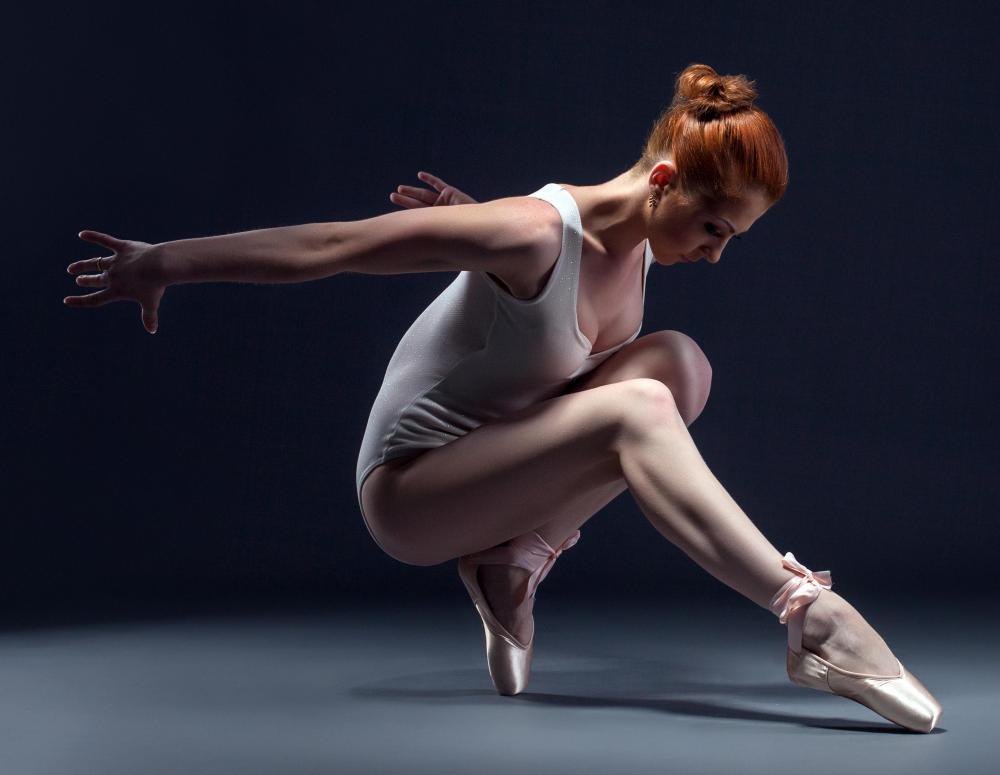
![Live performers use muscle memory to learn routines without having to think about them during a performance.]() By: WiskyLive performers use muscle memory to learn routines without having to think about them during a performance.
By: WiskyLive performers use muscle memory to learn routines without having to think about them during a performance. -
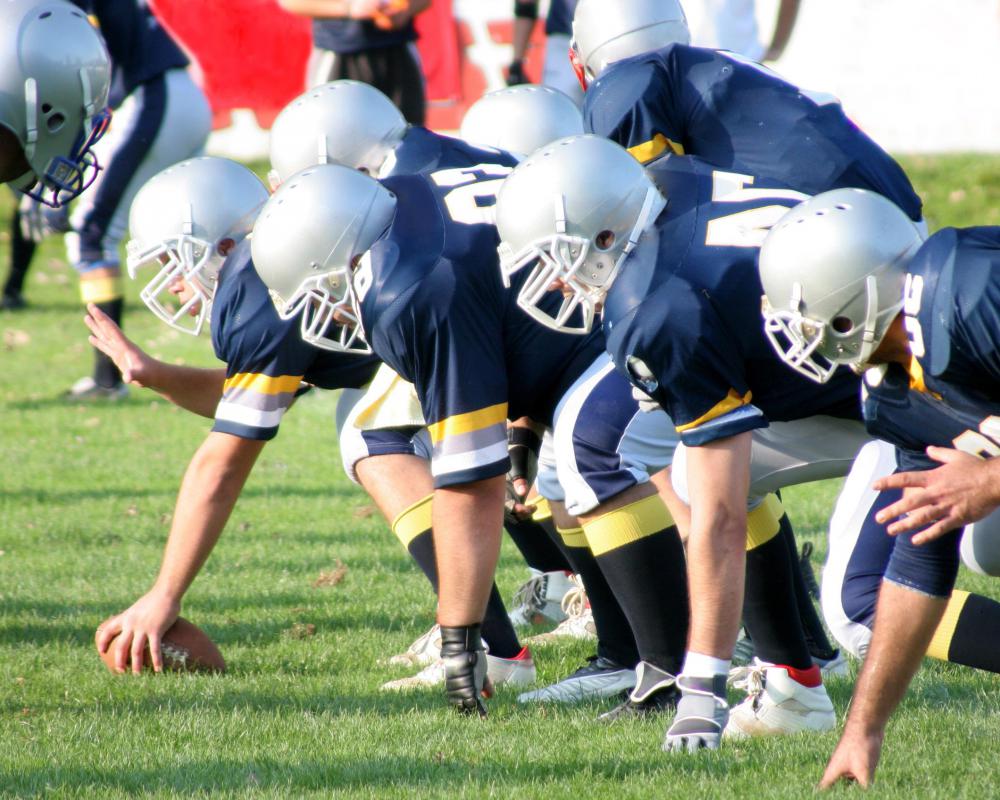
![Football players rely on muscle memory to quickly and efficiently execute different plays.]() By: Vladimir MucibabicFootball players rely on muscle memory to quickly and efficiently execute different plays.
By: Vladimir MucibabicFootball players rely on muscle memory to quickly and efficiently execute different plays. -
![Motor skills are learned and refined through muscle memory.]() By: Photographee.euMotor skills are learned and refined through muscle memory.
By: Photographee.euMotor skills are learned and refined through muscle memory.



Discussion Comments
I'm pretty sure muscle memory isn't what most people think it is. It's not the body actually remembering, but your mind remembering what your five senses went through when you did that before and repeating the process, while allowing for adjustments that make it feel more natural. Also, the more you do it the easier you remember how exactly to do it, like with pretty much anything you remember.
I take gymnastics and I really think that muscle memory plays a huge role in it. I was injured a couple of months ago, and when I got back into the gym, I was still able to do the skills I was able to do prior to the injury. Your body will still remember how to do the skill, although your body won't be in as good a shape as it was before, only because you haven't been working your muscles for a while.
Also, people are saying that it's not really "muscle" memory, that it has more to do with the brain. Well, they call it muscle memory because, though your brain is sending the messages, your muscles are what is actually performing. Plus, they call it muscle memory because your muscle are still able to flex and stretch in the ways necessary to complete certain skills. For me, I use muscle memory every day at practice, especially when it comes to learning new skills. If you watch a professional gymnastics competition on television, you see gymnasts before they go to do a routine on a certain apparatus. They kind of jerk their bodies to the side to jog the muscle memory for a twist they'll be doing.
There is no such thing as muscle memory. It is a misnomer; muscles have no abilities to memorize. it is a brain memory process, not a muscle memory. The memory is in the brain. The eyes see it then send it into the
brain which in turn sends it into the body.
@tc69: One helpful way of thinking of retraining yourself is that you are doing "another version" of the skill. Unless your old way was completely wrong, you may want to keep some of the elements. Your muscles will never completely forget the old way, so just think of the new version as an "alternative" to what you're doing now. If it works better, always choose the alternative.
If you think of it that way, you don't have to take a long extended break. That could weaken muscles important to the skill.
"Although the precise mechanism of muscle memory is unknown..."
This is because there is no such thing as the "muscle memory" just as any good anatomy professor can tell you. This concept involves the neurons in your brain creating new synapses more than the muscles. This is how you learn or remember anything and that is what allows you to do the act more easily over time. The "ease" comes from your brain not working so much to send the signal to the muscles to get the motion accomplished. That is also why it can be done faster; it comes from the ease and speed of the signal, not so much the ease of the motion.
My daughter has had 10 years of vomiting with severe pain, partially due to reflux and because of colon which replaced her esophagus (did not develop at birth) unable to sustain solid food. She just had surgery -stomach brought up-she can now eat normally again; however, the vomiting started again (no food comes up). The doctors say muscle memory will retrain her system not to do this. I hope and pray they are right. I appreciate any comments.
I have been doing martial arts for over nine years, and I have found muscle memory to be involved in doing something repetitively until you don't have to think about it anymore and also we have found muscle memory to be accelerated when another sense is involved.
Pain association works amazingly well. Some of my best techniques were learned through pain association. Almost instantly, the connections were made and technique was learned.
Muscle memory doesn't have to be something big like sports or professional like pianist. It is in our everyday lives.
Ever notice that even if you haven't ridden a bike in years you don't have to go back to training wheels? Treading water while swimming, etc. One could even call it "body memory" as much as "muslce memory". A door that has a certain quirk in the handle. After a while you're doing it without even thinking about it. Braiding hair or putting in a hairband is a prime example as well. Your hands/fingers seem to work independently of your mind. The brain multi-tasks in so many ways we aren't even aware of! It's quite amazing.
If muscle memory fails you when you need it most you are not trusting your preparation or you are training the wrong way. Maybe your "ego" is getting in the way?
Does anyone use a 10-key adding machine? Doing it properly doesn't require that you look at the keys, nor do you have to think where your fingers need to go. The fingers automatically know where to go. I believe that the mind isn't even involved when using a 10-key calculator the right way. The function is all in the fingers and muscle memory.
I am a singer and study voice with an amazing vocal coach. My opinion on muscle memory is this: When performing, our ego has to be sidelined and we have to be total servants to the mind and the body. Through proper training, whether it be singing, playing the piano or gymnastics, the mind and body learn what to do. It is actually the mind that communicates to the body what to do.
For instance, I am preparing a song that includes the tenor high c. To produce an authentic sound, "I" cannot tell the body what to do, because "I" produce a pushed, mechanical, pinched sound. When I put my ego on the chair next to me and let my mind produce the high c, it is glorious every time. My mind knows how to produce it and in turn muscles move and the mouth opens and out comes this incredible sound. Muscle memory does exist in many scenarios.
my "muscle memory" always fails me when i need it most.
it always happens during performances. if i play anything wrong, my entire performance will go downhill. muscle memory actually stinks sometimes, because it makes me pay less attention to my music, so when i start going downhill, recovery is very difficult. I'm not sure if it applies to sports, but I'm just saying to be wary of depending completely on muscle memory.
I haven't worked out or done any gymnastics in over five years. I just took a tumbling class last night and was able to do high level tricks such as back handsprings and back tucks (a.k.a. flips). I really believe this has something to do with "muscle memory".
I could barely keep up with the conditioning aspect, such as sit ups and push ups but my body just remembered how to do flips. Can someone please explain this?
it's the brain that has memory, not a muscle.
If one experienced severe emotional and physical trauma repeatedly, then this can be "remembered" by the subconscious mind. PTSD is not related to only one event - necessarily, as others have stated.
I have been a pianist for some 60 years or so.
When preparing for exams I had to learn to play scales and other technical exercises. The acquired technique has lasted well for many years. Even without daily practice, I can still perform fairly well.
I believe this is not just due to mental memory, but there seems to be some hidden skill in the fingers. A difficult piece learned 40 years ago is still easy to memorize.
There must be memory in the brain for this. Muscular memory must allow the fingers to negotiate the notes as well. I conclude that muscular memory is not alone able to make the fingers work. The brain is the central powerhouse, where lots of things happen.
You are also building the muscle to perform.
Like kicking a ball, if you hook your leg the muscles to perform the hook will get stronger on one side and stretch the other. so the leg will always hook. If your kick is with a straight leg, the muscles will be balanced with strength and stretch.
I'm doing a masters in cognitive neuroscience specializing in memory and can I just say there's no scientific evidence for muscle memory.
The closest is growth and changes in the motor cortex, it's this that changes with practice, not the muscle itself.
Musicians, for example, have a massive difference in the amount allocated for fine motor skills in the fingers for example compared to non musicians.
69070, thank you that is the reply i am after! cheers!
The basic requirement to obtain basic muscle memory is approximately three sets of six repetitions every other day (three to four times in a week). The first set on each day must be done very slow.
we would have to teach ourselves how to do stuff over and over again.
Basically if you've never done something, your body is not used to the exercise or activity that you are trying to do. to get better you have to practice. --Scooby Doo
Cheyenne: All this deals with practicing and keeping in good shape, as i see it.
Muscle memory is learning a way of doing something and doing it over and over so that when you try to do it for real your muscles know how to do it.
muscle memory is good for athletes because i run track and it gets you in good body shape. Muscle memory means basically your body is remembering when you worked out or something.
well i love fitness, and to me well you need to train a lot more for your muscle memory.
this all seems to be focused around practice.
so if we do the same exercise to reduce weight repeatedly, does it become less effective?
I am just starting out my master's thesis in kinesiology and considering muscle memory as my topic. Any leads on this subject matter would be appreciated.
Hi, can anyone tell me how many repetitions of gross motor skills are needed for 'muscle memory' to 'take place'? I teach martial arts, and this would be a great help to know.
The subconscious level of the mind controls all so-called muscle memory. Anything and everything we have ever done is permanently stored within the subconscious. When something is repeated many times, we now can perform that without consciously thinking of each individual step. Our subconscious directs the appropriate muscles to respond as they are accustomed. As long as we allow the subconscious to control the action, everything works as it has in the past. When we get nervous under pressure, feel the adrenalin, we consciously get involved, tightening the muscles, thus altering their performance. Extended lay-off will not help. Only proper performance, repeated until the new action over-rides the old one.
Taking time off will not help undo your muscle memory. You need to re-train your body through repetition.
Definitely has nothing to do with PTSD. Muscle memory involves practice, your muscles don't remember the 'first time.' It is the accumulation of practice. PTSD deals with one event.
In the intro article, it states" Your muscle memory can actually play against you if you’ve constantly been practicing something the wrong way".
Unfortunately, I have developed some very bad habits in a sporting activity I am involved with. Might I be better off by taking an extended period off to clear my head psychologically and for my muscles to forget?? I would then get professional instruction and start from scratch. Is this a viable solution??
I am open to your thoughts...Thanks
Does anyone have any exercises to stimulate muscle memory?
I always wonder if PTSD has something to do with muscle memory - because it seems like your body is actually remembering experiences in a far deeper way than just with your mind or emotions.
Post your comments