
At HomeQuestionsAnswered, we're committed to delivering accurate, trustworthy information. Our expert-authored content is rigorously fact-checked and sourced from credible authorities. Discover how we uphold the highest standards in providing you with reliable knowledge.
What Is Mulberry Paper?
Mulberry paper is textured paper commonly used in crafting that is traditionally made from the fibers of the leafy paper mulberry plant. Some homemade versions use ordinary white paper that is processed and soaked to resemble mulberry fibers, and though the end product may carry the “mulberry” name, it’s more in reference to the style than the actual composition. Both types are typically used for the same things, though, and carry the same basic characteristics, namely a dense, thick feel that rips easily and can add texture to things like greeting cards, collages, and scrapbooks. Art conservators and curators sometimes also use this paper to make repairs to damaged paintings or to preserve paper-based art.
Basic Concept

The paper mulberry plant is distinct from the mulberry tree. The plant sits low to the ground and the leaves, together with its thin bark, are what make the best paper. The plant is known scientifically as Broussonetia papyrifera, has a distinctive flaky texture that has been used in papermaking for centuries. Unlike the pulp of ordinary paper trees, which tends to be fine and closely compacted, mulberry fibers are usually softer and more loosely packed, at least on a cellular level. This leads to a paper that is flexible, dense, and usually a bit textured. Even when the paper is produced flat and smooth, it’s usually possible to see plant fibers, which isn’t usually the case with more standard bleached papers.
Main Uses
Traditionally, this sort of paper was used as writing paper, particularly in places where the plants were prolific and widely processed. Japan is one of the most commonly cited examples, and many ancient Japanese paintings and printings were made with paper derived at least in part from paper mulberry leaves. Today, it’s most commonly popular with crafters. It can be used to make cards, envelopes, books, and more. In addition, the paper can be used as a background or border to a variety of different projects. The paper is both strong and lightweight, and as a result is often used by art conservators for making repairs to paintings, maps, and other similar artifacts.
Tearing Techniques
Mulberry paper is generally torn rather than cut. Tearing provides an interesting jagged edge, and also usually allows the fibers a more natural way to bind to and grip the surrounding environment. There are two methods commonly used in tearing this paper. The first method is generally referred to as the lick and tear technique. The paper is folded where desired and then licked or moistened along the fold and subsequently torn.
For more complex shapes and curves, the so-called drawing method is more common. With this technique, cotton swabs are dipped into water and the desired shapes are drawn onto the paper. These shapes can then be carefully torn or pressed out along the dampened lines.
How It’s Made
Although this paper can be readily purchased through most craft suppliers, it is not uncommon for some people to make their own. Homemade mulberry paper is a relatively easy process, though it can take some time. The most traditional method requires careful processing of mulberry leaves and bark. Though less authentic, similar end results are often possible using recycled paper that’s been processed to resemble mulberry fiber.
When using the leaf method, the leaves must be sliced or ripped and the bark must be peeled into small, typically 1-inch (2.5 cm) strips. These are then soaked in water for about twelve hours. Afterward, soda ash alkali is added to the water and the fiber is cooked for about three to four hours. Once the fiber has cooled, the water is squeezed out and then beat into pulp on a flat surface.
This pulp is placed in a container and slowly mixed with a small amount of water. A paper-making mold can then be dipped into the pulp and excess water is soaked up until the resulting paper can be peeled from the screen. This should then be dried for about a day or so. Once dry, the paper can be pressed flat with a heavy book.
Recycled Alternatives
Making "mulberry" paper from recycled general use paper is also practiced, although this is not usually true mulberry paper, and purists typically discount it. Generally, about four times as much white paper is used as colored. Papers are torn into small pieces and soaked in water overnight. The white is then separated from the colored and placed in a blender with warm water. It is then blended to an oatmeal-like consistency and the colored pieces are slowly added until the mixture resembles confetti. The idea here is to mimic the textured, fibrous look and feel of paper made from plant leaves.
A mold is also commonly used to shape the paper with this method. Alternatively, though, old picture frames can also be used, typically in conjunction with some type of screening. A thin layer of pulp is applied with excess water allowed to drip through the screening material. The water is continually soaked up until the paper begins peeling away from the screen. It can then be dried for about 24 hours and pressed between heavy books or weights to be flattened.
AS FEATURED ON:
AS FEATURED ON:


-
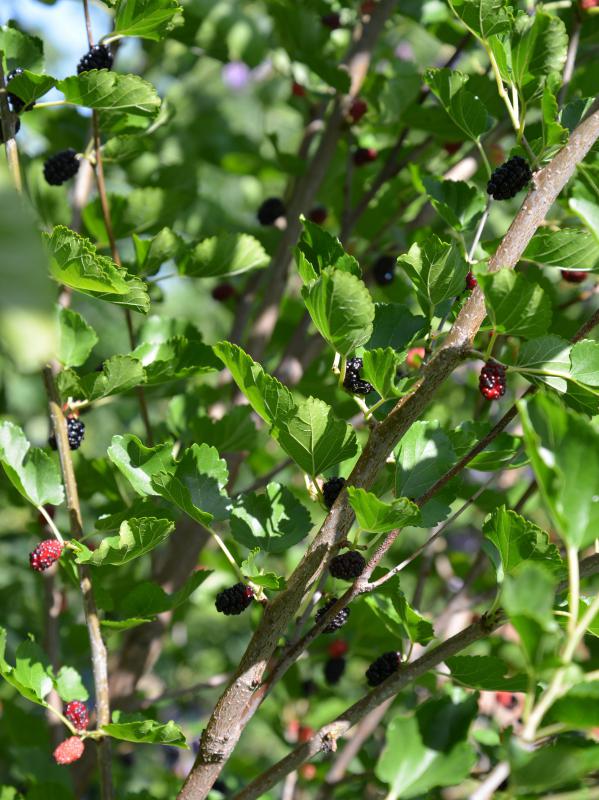
![Mulberry paper is made from the fiber collected from mulberry tree bark.]() By: vodolejMulberry paper is made from the fiber collected from mulberry tree bark.
By: vodolejMulberry paper is made from the fiber collected from mulberry tree bark.
Discussion Comments
What weight mulberry paper do I want for making katazome stencils?
If I want to make paper, is mulberry paper a good type to start with?
How easy is it to make at home?
I happen to be more of a fan of vellum paper, but I certainly think that a good handmade Thai mulberry paper can give vellum a run for it's money any day.
I saw a really pretty green mulberry paper the other day, come to think of it -- it was dyed a light jade shade, and was very beautiful. It would have been perfect as a backing for a picture, or even as stationery.
I think that of all the decorative paper out there, thick white mulberry paper is the best.
I used that for my wedding invitations, and was lucky enough to find a bulk mulberry paper products supplier that even had pre-made invitations.
This really is a very beautiful paper, and I would recommend it to anyone out there who needs a good, classic decorative paper.
Post your comments