
At WiseGEEK, we're committed to delivering accurate, trustworthy information. Our expert-authored content is rigorously fact-checked and sourced from credible authorities. Discover how we uphold the highest standards in providing you with reliable knowledge.
What is Morton's Toe?
 Jeff Petersen
Jeff Petersen
Jeff Petersen
Morton's toe is a disorder of the foot in which the second toe is longer than the big toe. Also commonly called Morton's foot, this disorder can cause pain and discomfort, and can lead to other foot problems. Fortunately, the condition can often be treated with orthotics, devices such as shoe inserts that give the foot support. Choosing the right shoes can also help alleviate the pain associated with Morton's toe, and may actually help correct the problem.
The second toe of a patient with Morton's toe may not appear to stick out further than the big toe, but he or she actually has a longer second metatarsal, the bone inside the foot. Curling the toes downward will allow the person to better see where the metatarsals end because the bones will push upward against the skin, causing a row of bumps to appear just behind the toes. If the second metatarsal extends past the first, the patient has this condition.

Other symptoms of Morton's toe include thick calluses on the bottom of the foot located just behind the second toe and on the inside and outside of the foot right where the toes connect. A patient with this disorder may also have flat feet. Pronation, the tendency of the ankle to roll toward the inside of the foot, can also occur.
Patients experiencing Morton's toe can often find relief by treating the symptoms and by using orthotics and proper shoes. Arch supports and padded insoles can help correct the poor foot posture associated with the condition. Patients should make sure that their shoes fit comfortably, and do not squeeze or pinch the toes. Shoes without enough room can cause pain and discomfort, so patients may want to buy slightly larger shoes to help relieve the problem.

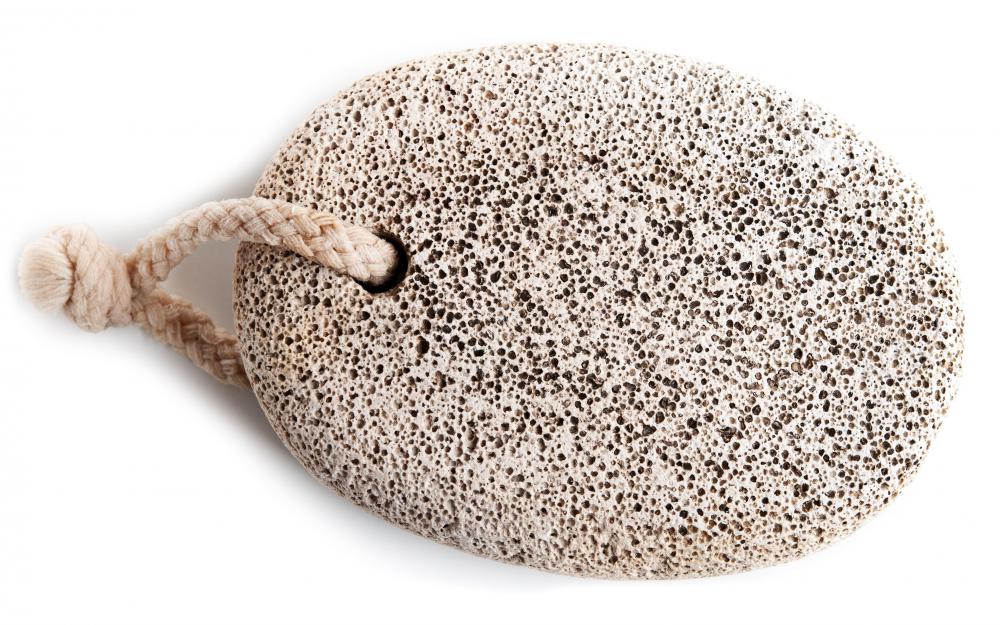
The calluses commonly caused by Morton's toe can be treated by soaking the foot in warm water and using a gentle scrubbing motion with a foot scrub or pumice stone. Patients should be careful not to scrub too hard and damage the skin. If a patient with this condition experiences severe pain, or if the symptoms are not relieved by the use of orthotics and proper footwear, he or she may need to see a medical professional for further help.
Jeff Petersen
Jeff is a freelance writer, short story author, and novelist who earned his B.A. in English/Creative Writing from Creighton University. Based in Berkeley, California, Jeff loves putting his esoteric knowledge to good use as a WiseGEEK contributor.
Learn more...
Jeff Petersen
Jeff is a freelance writer, short story author, and novelist who earned his B.A. in English/Creative Writing from Creighton University. Based in Berkeley, California, Jeff loves putting his esoteric knowledge to good use as a WiseGEEK contributor.
Learn more...AS FEATURED ON:
AS FEATURED ON:









-
![Comfortably-fit shoes may help alleviate pain associated with Morton's toe.]() By: Nomad_SoulComfortably-fit shoes may help alleviate pain associated with Morton's toe.
By: Nomad_SoulComfortably-fit shoes may help alleviate pain associated with Morton's toe. -
![A pumice stone, which can be used to treat calluses caused by Morton's toe.]() By: dimasobkoA pumice stone, which can be used to treat calluses caused by Morton's toe.
By: dimasobkoA pumice stone, which can be used to treat calluses caused by Morton's toe. -
![Morton's toe occurs when the second toe is longer than the big toe.]() By: evasilchenkoMorton's toe occurs when the second toe is longer than the big toe.
By: evasilchenkoMorton's toe occurs when the second toe is longer than the big toe. -
![The calluses that come with Morton's Toe can be treated by soaking the foot in warm water.]() By: TandemThe calluses that come with Morton's Toe can be treated by soaking the foot in warm water.
By: TandemThe calluses that come with Morton's Toe can be treated by soaking the foot in warm water.



Discussion Comments
Greek toe was a symbol of beauty in all statues of ancient Greece! It's not a disorder!
Post 46 scores! If Morton's Foot causes you an issue (e.g., morton's neuroma, plantar fascitis) then putting a pad under just the first metatarsal will help you. A lot. Perhaps, though, it will never cause you pain - good for you. There is also a company that sells shoe inserts with just a first metatarsal pad, no other 'active ingredient' so to speak.
I think simian feet look more ape-like as the name suggests. Morton's toe, or Greek foot as I've known it for years, is beautiful! The ancient Greeks saw them as the epitome of beautiful feet.
I find the most beautiful feet to be Greek feet, also known as angel feet. But I suspect they are more vulnerable to the barbaric practice of shod living. The toe is not the problem: shoes are the problem. The toes should breathe, spread wide and embrace the ground, instead of being mutilated inside a moldy coffin all day long.
I have it and you just need to go to your podiatrist and get orthotics. Problem solved.
One treatment is to tape a piece of foam insole one inch by two inches wide directly under the first (ball of the foot). Be careful not to touch the second metatarsal. This way the weight of the body falls to the first metatarsal, not the second. I do this every day, and the pain is gone.
"It is a widely held misconception about Morton’s Foot is that it’s characterized by a long
second toe..." It is in the trigger point therapy workbook if anyone wants to look it up! Just thought it may help people out there.
There are also some who link it to myofascial pain syndrome and fibromyalgia. Makes sense to me!
Can anybody tell me why do i constantly get a pinch on the bottoms of my toes after playing football/soccer?
Disorder? Excuse me? I have always had Mortons toe and never have I had a problem with it. I can balance fine and most of my shoes are fine. I can't roll my ankles inward even when I try and I rarely have pain caused by it. Maybe once in a while but that is because I am a dancer, not because I have a mortons toe. "Disorder"? That's nonsense.
To the comment a few above mine: I am the youngest child in my family, and I am the only child in the fam to have Morton's toe (but my dad also has it).
It's not a disorder, what nonsense! The only reason why Morton's causes grief now is that we walk on flat paved surfaces most of the time.
I have short first metatarsals on both feet. There is no need to spend a lot of money - all you need is to add little strips of tape (athlete's muscle tape for example) to your short first Met(s) to bring it to a height where it can bear weight and take a little of the pressure off the second mets.
According to my orthopaedic doc, I have flat fore feet and metatarsalgia but I do have a lovely skeleton and nice feet! I'd say I was fairly trustworthy!
I also have Morton's toe. The symptoms are burning pain on the ball of the foot playing sports and running and when walking the second and third metatarsal head hits the ground first - still battling for a solution.
So far, I have been through physio, injection therapy, ligament release and very, very expensive custom-made insoles. I'm still looking to stop the pain.
Morton's toe is a shoe disorder, not a toe disorder.
You are darned right this is a disorder! My second toe sticks out so far that it has gotten to the point that the end of my toe points down and is squished up in the middle. The squished up part gets rubbed, blistered and calloused. I wish I could get it fixed.
And yes, like anon18213 I most definitely can't be trusted - my deformed toes make me evil and an abomination before God. Oh wait, God made me, so um, bless my unusual, painful second toes.
I have mortons toe. I have an advanced degree in physics and have owned two business before 35- that are successful, and I'm a female.
I was also a member of a national team that competed internationally and received a number of scholarships to attend universities. I can speak three languages. Judging one by a toe is no different than judging someone by their color.
I have morton's toe and very flat feet. If I walk too long, my feet will burn and my thighs will ache for days.
I have morton's toe and don't see it as a disorder or really even an appearance issue at all, however as a runner it has caused me a lot of pain in my legs and lower back due to the way I push off as I run because of my toes. I also have very flat feet and calluses at the base of my "longer toe". My doc says its genetic and as far as I can see it is. My mom, sister and both of my daughters have it. Getting orthotics and hopefully that helps with running.
I have a severe case of Morton's toe. I wonder if it's the cause of my foot/leg pain. I'm 23 and in the last four or five years, the pain in my leg has become pretty bad. My legs and feet hurt every time I walk too much. I try to wear comfortable shoes but nothing seems to work.
For example, whenever I'm out shopping or spend too much time on my feet, I have to take a break because my knee's ache and so do my feet. Some nights I sit in bed and my knees ache like crazy. I can't wait to find some relief, because this kind of pain isn't normal for a healthy young 23 year-old. I had x-rays done and the doctors couldn't find anything wrong with my knees.
people with morton's toe are not a far along the evolutionary line as people with normal feet. if you look at a picture of a foot with a severe case of morton's toe it will somewhat resemble that of an apes foot. the big toe on an ape's foot is set further back, and acts as a thumb. so, people with morton's toe are inferior to real humans like myself which makes them sub-human.
A "disorder" is an "abnormal physical condition" according to Webster. This is not abnormal in any way. It may be unusual (10% of the population), but it is an insult to call this abnormal! Are left handed people also abnormal? Come on, this is 2010, not 1920!
I always thought my feet were ugly, but could never figure out why. I am a fellow Morton!
I can't believe the amount of "wives tales" that are posted here about this. What year is this? LOL.
My son has Morton's Toe. I thought it always looked a little out of place, but never did I think it was a real issue until about a year ago when he would get horrible arch pain and his toes would go spastic and freeze in odd positions. It was so bad he would start to cry. Orthotics, that's what he needed.
And yes, it's not a life-threatening, horrible illness, but really people, where do you get off telling people they don't have a problem? If you were in pain, you'd want it fixed, too.
Whether you call it a disorder or not is irrelevant. The fact is that if you have Morton's toe, you are more likely to develop foot pain than a person whose big toe and second toe are more evenly matched. This is because most of the pressure occurs on the smaller joint at the base of the second toe, which can eventually cause a callus, and pain when walking or running. It is mainly a problem for runners.
Even the Statue of Liberty has Morton's toe. I'm sure most people never heard of her having a foot "disorder"!
What total nonsense to call this a "disorder", you might as well call blue eyes a disorder!
If you ever see an ancient Greek or Roman statue, have a close look at the feet. They *all* have Morton's toe. The ancients considered it much more beautiful than having a longer big toe.
I love Morton's toe, especially on women. It's very sexy, especially if the nail is wide and convex also.
'morton's toe' is actually one sign that you have a condition called histadelia. Of course, this is if you were born with it.
I had both feet reconstructed at 24 years old due to severe bunions. I had morton's toe then, and still have it now. My feet are not flat (in fact i have high arches and have been a dancer since i was three).
I saw a bio-chemist to have this real condition diagnosed. It is a sign that heart functioning can suffer, allergies (especially skin) are normally present, and mental illnesses can be wrongly diagnosed -- just to name a few symptoms. Haha, morton's toe. Yes, i believe it needs treatment, but no, morton's toe isn't the condition -- histadelia is.
at age 67, I was experiencing some foot pain and found to my astonishment, that there is a name for my foot problem called Morton's toe.
I was the only one in my class, throughout my education at a small school, who had this condition and was teased here and there.
I decided that my toes were unique and beautiful and did not buy into any negative comments about them, and as long as I constantly change my shoes using different styles, with plenty of room for my toes, my problems are few.
Open toe sandals are very helpful as well. Forget any pointed toes, they just make it worse.
I had bunions and had that surgery and now my second toe is much longer than my big toe. I'm a runner and I usually lose the toenail on my longer toe.
I hear all your grief but at least we have toes, legs, and can run! Let's be grateful for what we have.
I wear sandals and I love open toe heels and finding a pair that fits me without my second toe hanging over the edge of the shoe size I "should" be wearing is frustrating. Still blessed with two legs and feet!
"A patient with Morton's toe may also have flat feet." ... and so might any other person. Do a search for flat feet pictures on the internet and see how many also have a "Morton's Toe." Real biologists consider anatomical variation among individuals of a species to be normal and expected.
I have seen no empirical evidence that "Morton's Toe" is more closely associated with any other problems or conditions related to pronation or posture than living too close to a high voltage power line.
But, if you need to hear that your long big toe is a "disorder," and demand treatment, please send your money to me, and I'll be happy to sell you all sorts of supposedly expert advice and appliances to help you deal with it! Ha!
I have the same problem and i hate it. I can never wear sandals because someone always says how ugly my toes are. both my second and third toe are longer than my big toe.
I heard about toe shortening and i was thinking of doing that. it's a surgery where they fix your toes, but then I'm scared to go under the knife. i just wished i could wear sandals especially in the summer time. i hate my feet so much, it gets me depressed sometimes
i always thought that my second toe was abnormal and really bothered me by the way it looked. it wasn't until i was diagnosed with morton's neuroma that i found out that i had morton's toe -- actually a severe case of morton's toe. tear drop pads on the back of the foot are working for me.
My second toe feels as if its about to fall off as I run races all the time and today's race it took a real bashing. About to try those silicone toe protectors. Not sure if they are any good but at only £2, what have I got to lose? Just wish I could wear pretty sandals but every time I do some idiot goes "AAH! Look at your toes". I want to say "Aaah look at your face" but refrain politely!
i have "mortons toe" but my second toe is only a little bigger than the first, but not a whole lot. i heard people with this can't be trusted but i can be trusted so i don't believe it. i do have foot pain not that often though. and about last month my foot got infected but luckily it's better now.
I also have morton's toe. my naturopathic doctor tells me it is caused by a vitamin B6 which the pituitary needs to carry out certain functions.
my second toe is longer and crosses over the big toe-why is this?
I have a longer second toe and an even longer third toe on both feet. My right foot is the real problem as I would take a whole size smaller if not for this problem. I also have narrow feet! I have heard all the positives and the negatives, but all I know is it has been a problem my entire life.
The second toes on both my feet are longer than all the rest. I often wondered if there were others out there with the same situation and why I was blessed with such an annoying condition. (Now I can put a name to it)! Sure makes wearing open toe shoes interesting since the second toe makes quite an entrance each and every time. Along with that I have developed a hammer toe on the right toe -- I'm guessing because of the Morton toe. I have been told that all those fortunate enough to be born with a longer second toe come from royalty!
I have been running for 34 years and I have Morton's toe. The callus build up on that toe prevents proper nail development and I use an exacto knife to remove the callus occasionally but you must be careful. I have never experienced any pain from it. Just don't wear sandals on the beach. A runner's feet take quite a beating.
Both my sister and I have what this article calls Morton Toe. however, in my family they said that a longer second toe meant you would be boss of your family. I can assure you that is not true.
My second toe is much longer than my big toe, but I have very high arches; I guess that's why I have foot pain and ankle problems.
Asics or stability running shoes seem to help with the pain that I have with my feet.
Is there any info about Morton's toe being more predominate in girls rather than boys? I have Morton's toe and an informal survey of the family shows it is more common with girls. The reason I ask is that I'm pregnant and it looks like baby's got Morton's toe too!
I have had problems with my feet over the last couple years, I'm 55yrs old (female) I just noticed that my second toe is longer and I've been getting those terrible calluses on the ball of my foot right under that toe. I soak my feet a lot, but never thought to see the doctor about it. Guess I need to see a foot doc !
I've heard that it only happens to children that will have a sibling following it.
Like, if you have a son born with Morton's Toe then you're supposed to have another it child. It's said that the youngest will never have Morton's Toe.
It's true. I have "Morton's Toe," and I cannot be trusted.
I never knew that a longer second toe was considered a disorder! I know a lot of people with this "disorder." I've also heard a saying that people with longer second toes than first toes can't be trusted. I have no idea where that idea came from!
Post your comments