
At WiseGEEK, we're committed to delivering accurate, trustworthy information. Our expert-authored content is rigorously fact-checked and sourced from credible authorities. Discover how we uphold the highest standards in providing you with reliable knowledge.
What is Mitochondrial Myopathy?
 Mary McMahon
Mary McMahon
Mary McMahon
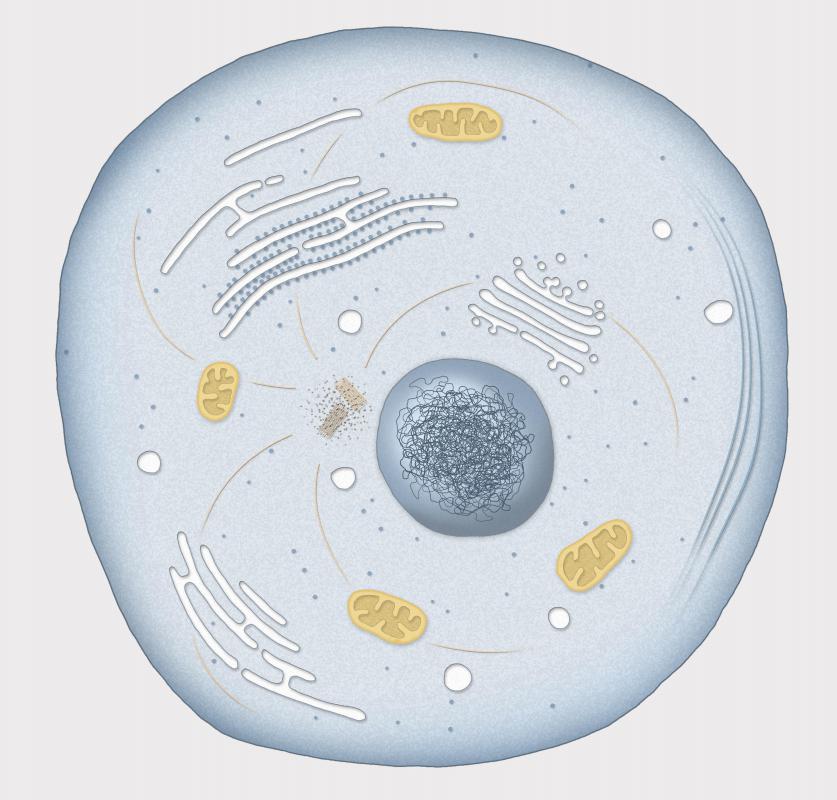
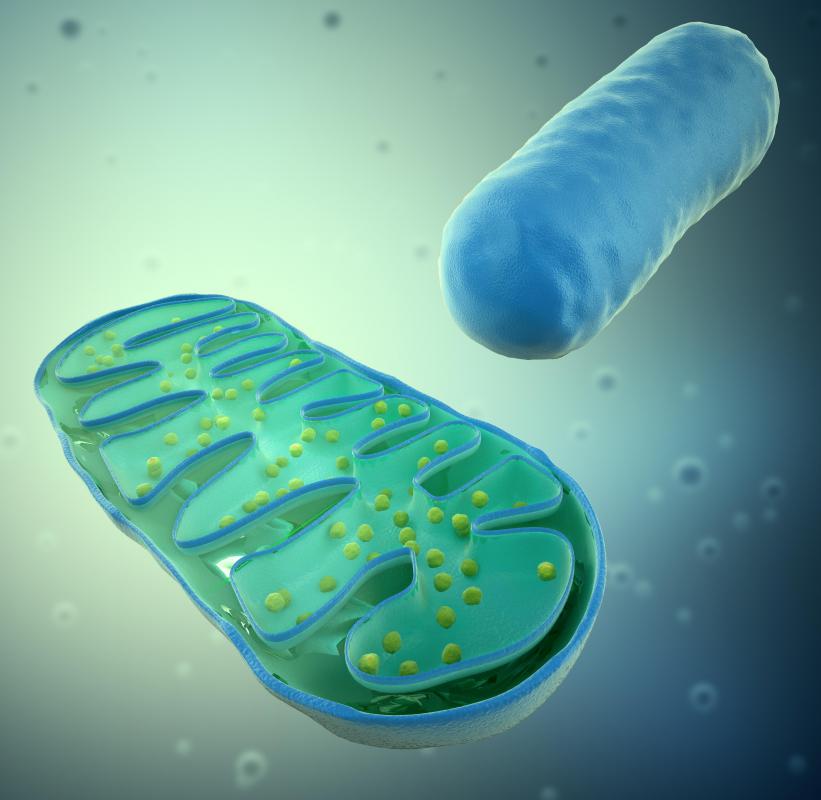
Mitochondrial myopathy is an umbrella term used to refer to a family of conditions caused by disorders which involve the mitochondria. Mitochondria are organelles found within the cells of living beings. They are essentially the power generation facilities of the cell, converting various compounds into ATP, a chemical which is used for energy and cell signaling. When the mitochondria do not function properly, a variety of serious health problems can occur, just as houses on an electrical grid experience brownouts when part of a power generation station shuts down.
In the case of mitochondrial myopathies, the malfunctioning of the mitochondria leads to problems with the muscles. This is a common situation with mitochondrial diseases, because the muscles need a great deal of energy, and when the powerhouses of the cells are shut down or malfunctioning, the muscles tend to suffer. Some examples of mitochondrial myopathy include: myoclonus epilepsy with ragged-red fibers, Kearns-Sayre Syndrome, and mitochondrial encephalomyopathy with lactic acidosis and stroke-like episodes (MELAS).

These conditions are caused by genetic defects, and can vary in severity. Many children are diagnosed with a mitochondrial myopathy under the age of five, although symptoms can also emerge later in life. There is no cure for these conditions currently, with the provision of care being focused on management of the symptoms. Patients often attend physical therapy, and they may take vitamin and mineral supplements along with certain medications. Eventually, gene therapy to target mitochondrial myopathy may be developed.

Muscle weakness is a common symptom of mitochondrial myopathy. Patients can also develop strokes, seizures, blindness, drooping eyelids, vomiting, and difficulty exercising or getting around. The heart is also commonly affected, since the heart is just a big muscle, and it is therefore susceptible to breakdowns in the mitochondria. Patients can be diagnosed with a biopsy, in which the muscle fibers can be examined for signs of myopathy, and genetic testing may be used as well.
The prognosis for a patient with a mitochondrial myopathy is generally not very good. Some patients die within a year due to the severity of their conditions, while others may survive for several years, even living an active life. Supportive medical care is critical in managing mitochondrial myopathies, and many patients and their families also benefit from memberships in organizations which focus on people with mitochondrial myopathies. These organizations can provide emotional support, advice which can help patients manage their conditions, and information about ongoing medical trials and research which may be beneficial.
Mary McMahon
Ever since she began contributing to the site several years ago, Mary has embraced the exciting challenge of being a WiseGEEK researcher and writer. Mary has a liberal arts degree from Goddard College and spends her free time reading, cooking, and exploring the great outdoors.
Learn more...
Mary McMahon
Ever since she began contributing to the site several years ago, Mary has embraced the exciting challenge of being a WiseGEEK researcher and writer. Mary has a liberal arts degree from Goddard College and spends her free time reading, cooking, and exploring the great outdoors.
Learn more...AS FEATURED ON:
AS FEATURED ON:









-
![A cell with mitochondria.]() By: Amelie OlivierA cell with mitochondria.
By: Amelie OlivierA cell with mitochondria. -
![Mutations in the DNA of mitochondria can interrupt ATP synthesis, leading to disease.]() By: MopicMutations in the DNA of mitochondria can interrupt ATP synthesis, leading to disease.
By: MopicMutations in the DNA of mitochondria can interrupt ATP synthesis, leading to disease.
Discussion Comments
I have mitochondrial in my family history (an uncle) and I also have some muscle issues. What type of doctor would I go to get diagnosed with or without this disease? help please.
I don't have a subcategory either. I was told by my neurologist that it didn't really matter, because even within the subcategories, everyone is unique, so they just manage the symptoms that you present with and try to support you the best they can.
I'm going through tests for it and all my symptoms lead to mitochondrial myopathy. I'm in constant pain every day and i can't cope with it.
I've fought this disease for four years. now it's gone into the melas stage. it takes forever and you will be told it's all in your head every time you are at the er. good luck.
Same problem. Recently diagnosed, but no sub category. I was told that your doctors will keep a watch on your symptoms to determine which type. I guess it's a waiting game. My doctor has been practicing for 30 years and I am only her second patient with this disease. She says it is very rare. (I guess that makes us something of a medical celebrity! LOL) Better to laugh, than cry!
i have just been diagnosed with a mitochondrial disease but they cannot find which sub category i have. why is that and what does it mean?
Post your comments