
At WiseGEEK, we're committed to delivering accurate, trustworthy information. Our expert-authored content is rigorously fact-checked and sourced from credible authorities. Discover how we uphold the highest standards in providing you with reliable knowledge.
What is Miso Soup?
For the Japanese, miso soup is a culinary staple. Miso is a paste made from a mixture of soybeans, a starch such as rice or barley, salt, a touch of water, and yeast. This mixture is placed into wooden barrels and aged for as long as three years. As early as the seventh century, Buddhist monks began creating this unique product, mixing it with stock to make a soup. Rich in fiber, protein, vitamins, and minerals, the soup was used regularly by Samurai warriors for its nutritional content.
Many health experts believe miso soup helps prevent breast cancer. This is because it's rich in isoflavones, which are believed to help block out cells that can become cancerous. According to health experts, women should drink two or three bowls per week in order to gain these benefits.

Miso comes in four forms: red, white, barley, and soybean. Red miso is made from equal portions of white rice, soybeans, and barley. The end result is a reddish brown product with a high protein count. White miso also blends a mixture of white rice and soybeans, but a higher concentration of white rice is used. This type of miso is typically lighter in color and has a shorter shelf life than red miso.

Barley miso is made from a blend of barley and soybeans. It's the cheapest miso to make, and consequently quite popular. Soybean miso is made solely from soybeans, yeast, and salt. This type of miso has a very long fermentation process and contains lots of protein and few carbohydrates.
Miso can be made at home, though it is time consuming. To make white miso, cooks can soak 2 pounds (about 907 grams) of dried soybeans in 1 gallon (3.78 l) of water overnight. The soybeans should then be rinsed and placed in a large cooking pot. The cook should cover the soybeans with another gallon (3.78 l) of water and simmer them for two hours.

The soybeans should be simmered until they are soft, which should take about two hours. The beans should then be drained and cooled, after which the cook will mash them in a food processor or with a potato masher. The mashed soybeans should then be placed into a vessel that can be tightly covered.
Next, the chef adds 1 pound (about 454 grams) of salt and 2 pounds (about 907 grams) of koji, or fermented rice. A small amount of water is also added if the mixture is too hard, and then the mash is formed into a ball and wrapped with cheesecloth. The chef should place the ball in the airtight vessel and allow it to ferment for at least one year.

Once the miso has fermented, it can be used in stir-fries or rice dishes, spread on toast, or made into soup. Miso soup is typically a mixture of miso paste, carrots, onions, seaweed, and water or broth. One pint of water, one cubed carrot, one diced onion, and one sheet of seaweed are simmered for fifteen minutes. Next, the cook should remove the soup from the heat and stir in 2 tablespoons (34.38 g) of miso paste. He should be sure to dissolve the paste in an equal amount of water before adding it to the soup. The soup should be served immediately for the best flavor.
AS FEATURED ON:
AS FEATURED ON:









-
![A bowl of miso soup.]() By: jedi-masterA bowl of miso soup.
By: jedi-masterA bowl of miso soup. -
![Soybeans are an ingredient used to make miso soup.]() By: VasiliusSoybeans are an ingredient used to make miso soup.
By: VasiliusSoybeans are an ingredient used to make miso soup. -
![Miso is typically aged in wooden barrels.]() By: Brad PictMiso is typically aged in wooden barrels.
By: Brad PictMiso is typically aged in wooden barrels. -
![Enoki mushrooms are commonly used in soups, like miso.]() By: LovelliEnoki mushrooms are commonly used in soups, like miso.
By: LovelliEnoki mushrooms are commonly used in soups, like miso. -
![Buddhist monks began creating miso soup as early as the seventh century.]() By: KadmyBuddhist monks began creating miso soup as early as the seventh century.
By: KadmyBuddhist monks began creating miso soup as early as the seventh century. -
![Samurai warriors regularly used miso soup.]() By: strixcodeSamurai warriors regularly used miso soup.
By: strixcodeSamurai warriors regularly used miso soup. -
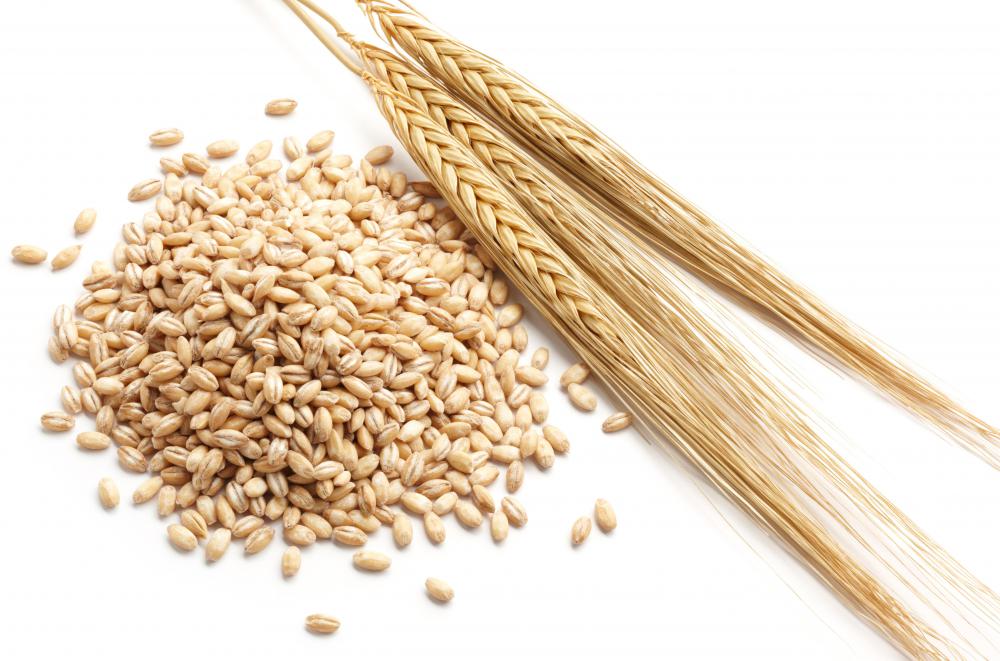
![Barley is used as a starch in miso soup.]() By: OkeaBarley is used as a starch in miso soup.
By: OkeaBarley is used as a starch in miso soup.




Discussion Comments
I really want to try that. It looks delicious.
I was watching a program on Japanese cuisine. They were showing a soup that was cooked slowly. A pot of broth was placed in the middle of the table and then a variety of meats and vegetables were brought out. Customers put whatever miso soup ingredient they wanted in the broth and ate it as it cooked. It was amazing.
@burcidi-- I don't know the calories in miso soup but I don't think it's a high calorie food and it's rich in protein. Models apparently eat a lot of miso soup.
I wouldn't recommend the ready-to-eat miso sold in stores though. It's better to make it at home if you can.
I don't know if one type of miso is superior to others. I personally like white miso, with dried onion and tofu. It's delicious.
Does miso soup encourage weight loss? Which type of miso is best for this?
I have only tried miso soup once, from a well known food chain in the UK and it gave me food poisoning.
It couldn't have been anything else, as it was the only thing I had for lunch and the symptoms (nausea, feeling faint, palate tongue and lips feeling swollen and tingly) started about 10 - 15 minutes after I had it!
So I'd say yeah the soup can obviously spoil, as that shop managed to let it!
anon33408 - I don't think there's anything in miso powder that can spoil. Still, I personally don't like to take chances with old food -- a bad bout of food poisoning once was all I needed to learn that lesson. I'd play it safe and just toss it out.
I have had a sealed bag of Mugi Miso in my pantry for several years (Eden Organic Mugi(barley)miso). Since this is aged so long, is it still good? PW
While I *absolutely love* miso soup, it probably isn't something that should be enjoyed regularly. The salt content is pretty high. I'm sure it varies, but one instant miso soup I've seen had 800 grams of sodium which is a whopping 1/3 of the recommended daily value (i.e., 2,400 grams) for sodium. So something to enjoy, for sure, just in moderation!
Post your comments