
At DelightedCooking, we're committed to delivering accurate, trustworthy information. Our expert-authored content is rigorously fact-checked and sourced from credible authorities. Discover how we uphold the highest standards in providing you with reliable knowledge.
What is Mascarpone?
 Mary McMahon
Mary McMahon
Mary McMahon
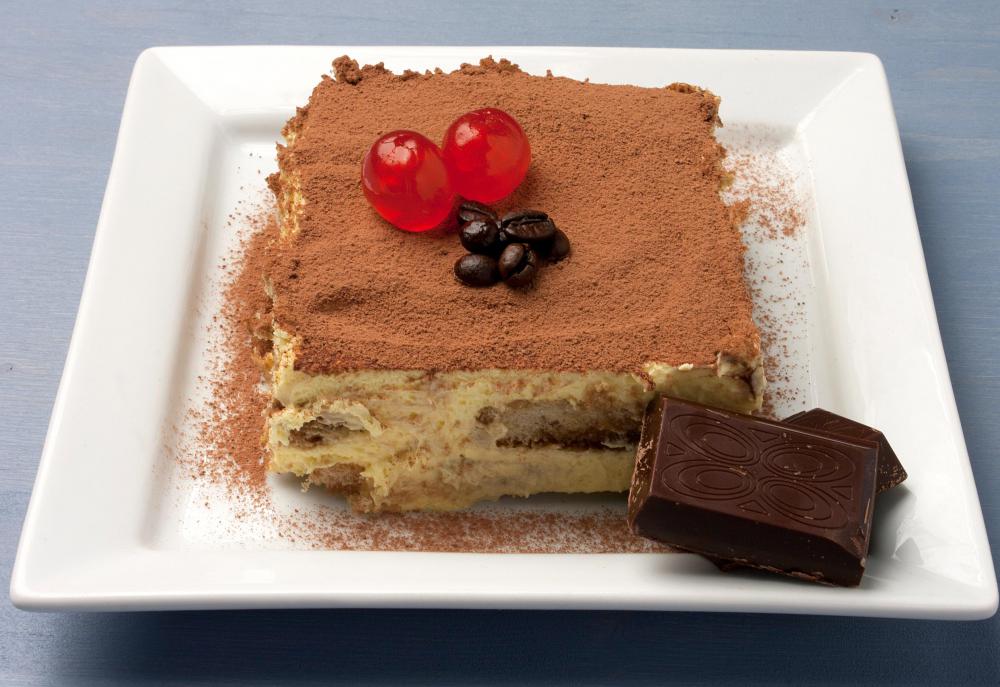
Mascarpone is an intensely rich Italian triple cream dessert cheese. It often appears in Tiramisu, but is also eaten plain or used to dress up sweet fruits. This type of cheese is readily available in specialty stores and most markets, and many cooks have learned that a small amount of the sweet, rich cheese goes a long way. It is sometimes confused with cream cheese, another soft cheese, but the two are technically different.
Cooks can also use mascarpone in savory applications, blended with spices and spread on bread. The rich cheese lends itself well to savory cheese tortes, and is sometimes blended with Gorgonzola and other strong savory cheeses to be spread on crackers or breads. Especially in Italy, it is very popular in savory dishes. The high fat cheese is generally eaten very young, and is often likened to yogurt because the two products use similar manufacturing processes.

Mascarpone has been made in Italy for centuries, and is thought to originate in Lombardy, where it plays an important role in much of the cuisine. The roots of the name are unclear, but are probably related to the process used to make it, which is similar to the technique employed to make ricotta. Mascarpia, in the local dialect, means ricotta, with the word “mascarpa” being used to refer to dairy products made from whey.

To make this cheese, milk is allowed to stand for approximately 24 hours and then the cream is skimmed off into large double boilers and heated while being mixed with a mildly acidic culture. The mixture is allowed to stand while it thickens and the whey precipitates out, and then it is squeezed in cheesecloth for another 24 hours to press out any additional whey. After this, the cheese can be packaged for sale. Unlike many other cheese products, it is suitable for vegetarians because rennet is not used.

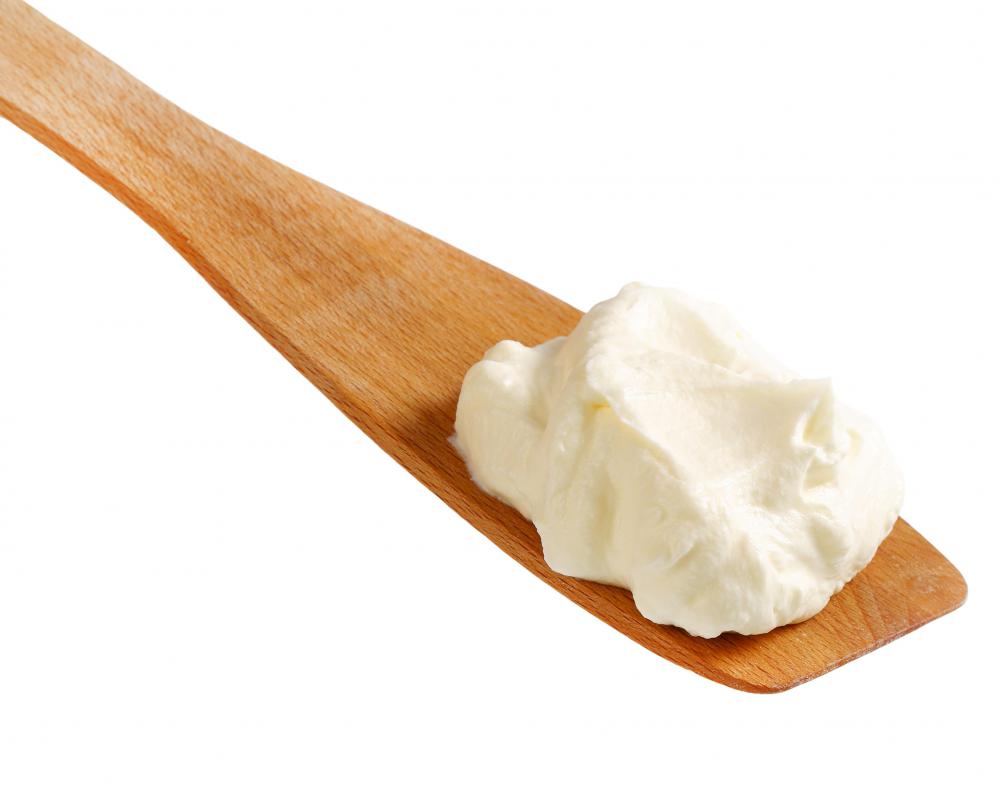
Mascarpone is a very soft, spreadable cheese that resembles cream cheese in texture although it tends to be very smooth, and a pale cream in color. Many producers use summer milk, which is sweeter and has more flowery notes, lending the cheese a sweet and complex scent. Some dairies will feed their cows diets high in flowers and herbs to give the cheese a very fresh flavor. The cheese is unarguably delicious, appealing to fat receptors on the tongue in a wide variety of culinary settings.

Some people mispronounce the name of this cheese as marscapone, which has led to some confusion over the correct spelling and pronunciation of the word. Like words in many other romance languages, The name is pronounced much as it as spelled, with all the consonants being clearly pronounced.
Mary McMahon
Ever since she began contributing to the site several years ago, Mary has embraced the exciting challenge of being a DelightedCooking researcher and writer. Mary has a liberal arts degree from Goddard College and spends her free time reading, cooking, and exploring the great outdoors.
Learn more...
Mary McMahon
Ever since she began contributing to the site several years ago, Mary has embraced the exciting challenge of being a DelightedCooking researcher and writer. Mary has a liberal arts degree from Goddard College and spends her free time reading, cooking, and exploring the great outdoors.
Learn more...AS FEATURED ON:
AS FEATURED ON:


-
![Gorgonzola cheese, which can be blended with mascarpone to make a spread.]()
Gorgonzola cheese, which can be blended with mascarpone to make a spread. -
![Mascarpone frequently appears in tiramasu.]() By: MarcoBagnoli ElflacoMascarpone frequently appears in tiramasu.
By: MarcoBagnoli ElflacoMascarpone frequently appears in tiramasu. -
![Mascarpone is a very rich, Italian cream cheese used in desserts.]() By: ViktorMascarpone is a very rich, Italian cream cheese used in desserts.
By: ViktorMascarpone is a very rich, Italian cream cheese used in desserts. -
![Some dairy producers feed herbs and flowers to their cows, a technique that is said to produce very fresh cheese.]() By: seqoyaSome dairy producers feed herbs and flowers to their cows, a technique that is said to produce very fresh cheese.
By: seqoyaSome dairy producers feed herbs and flowers to their cows, a technique that is said to produce very fresh cheese.


Discussion Comments
I tried a lemon mascarpone sorbet that was wonderful. It's like ice cream, but very cheesy.
My friend who made it said that she just put mascarpone in her blender with some water and sugar. Then, she put it in her ice cream maker and finally put it in the freezer after adding lemon juice to it.
It's incredibly rich, and any fan of mascarpone would love it. It's amazingly simple to make, if you have an ice cream maker.
I am one of the few people that actually hate cheese. I am grossed out by the texture and the taste, and I won't even eat cream cheese.
So, the mascarpone crème in Tiramisu is revolting to me. My friend talked me into trying it by saying that it really didn't taste like cheese, but to me, it represented everything I abhor about cheese. It was incredibly pasty and had the rich flavor of spoiled milk that most cheese have.
I know most of you will think I'm crazy. I just wanted to let any cheese haters out there know that mascarpone cheese is not subtle and you will definitely notice its presence in a dessert like Tiramisu.
@DylanB – I also make a lot of mascarpone desserts, and I've found that mixing cream cheese with sour cream results in a texture and flavor that resembles mascarpone. I never know when my grocer will have mascarpone in stock, so if he doesn't, I get the cream cheese instead.
The flavor isn't identical, but it's close enough. The desserts still taste amazing with this substitution.
Can I use cream cheese as a mascarpone alternative? My grocery store doesn't carry mascarpone, and several recipes that I would like to make require it. Since cream cheese is so much like it, can it be used as a substitute?
Post your comments