
At TheHealthBoard, we're committed to delivering accurate, trustworthy information. Our expert-authored content is rigorously fact-checked and sourced from credible authorities. Discover how we uphold the highest standards in providing you with reliable knowledge.
What is Low Eye Pressure?
Low eye pressure occurs when there is less fluid between the lens and the cornea of the eye than normal. The fluid, called aqueous humor, is usually produced and drained at a steady rate to maintain pressure levels and help the eye maintain its normal shape. If there is not enough fluid, a person can experience pain and changes in vision. Most cases of low eye pressure are acute and related to injuries or medication use, but some people suffer chronic problems in one or both eyes. Treatment depends on the underlying cause and may include taking medications, undergoing surgery, or a combination of the two.
Also called ocular hypotony, low pressure in the eyes can be the result of too much drainage or insufficient production of aqueous humor. A person may develop the condition after a traumatic eye injury as fluid leaks out of lacerations on the cornea. A detached retina can also create a pathway for fluid to escape. Severe eye infections, conditions that disrupt blood flow, and dehydration may be responsible for symptoms when there is no history of eye trauma. In addition, it is common to experience a mild, temporary drop in eye pressure following glaucoma surgery.

The symptoms of low eye pressure can vary, and many people with mild conditions do not experience problems at all. A person may have occasional or chronic eye pain, blurred vision, and swelling in and around the eyeball. Occasionally, inflammation causes redness and increased tearing as well. A cloudy spot called a cataract can develop the problem is not diagnosed and treated appropriately.

Tonometry is a test that ophthalmologists use to measure aqueous humor concentrations in units called millimeters of mercury (mmHg). Normal tonometry readings fall between 10 and 21 mmHg. A person is typically diagnosed with low eye pressure if readings are at or below 5 mmHg, and he or she has related symptoms. A healthcare professional can also review the patient's family and medical history, results from blood tests, and current medication use to help identify the underlying cause.

There are no medications available that are designed specifically to raise pressure levels in the eyes. Instead, healthcare professionals treat the problem by treating the underlying problems. Patients who have eye injuries are often given anti-inflammatory topical ointments or eye drops. Oral or topical antibiotics may be prescribed if symptoms develop after glaucoma surgery or infection. If problems become chronic, surgery may be necessary to repair damaged tissue, reattach the retina, clear up a cataract, or partially block a drainage canal.
AS FEATURED ON:
AS FEATURED ON:


-
![The anatomy of the human eye includes the cornea, retina, lens, pupil, optic nerve, and more.]() By: blueringmediaThe anatomy of the human eye includes the cornea, retina, lens, pupil, optic nerve, and more.
By: blueringmediaThe anatomy of the human eye includes the cornea, retina, lens, pupil, optic nerve, and more. -
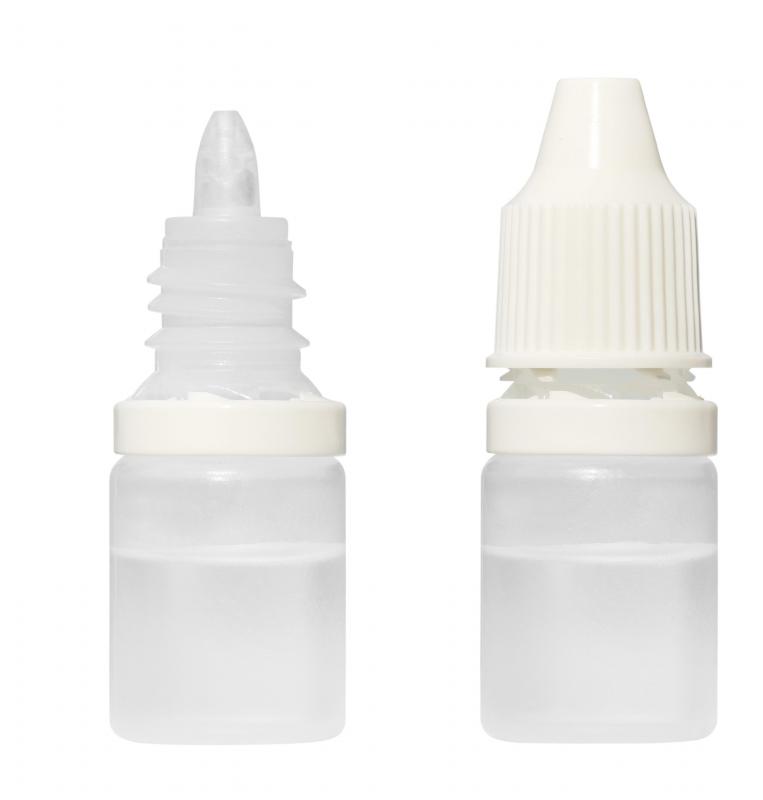
![There is no treatment for low eye pressure, only treatment for the underlying conditions, which are often treated with eye drops.]() By: Winai TepsuttinunThere is no treatment for low eye pressure, only treatment for the underlying conditions, which are often treated with eye drops.
By: Winai TepsuttinunThere is no treatment for low eye pressure, only treatment for the underlying conditions, which are often treated with eye drops. -
![Like blood pressure, eye pressure is measured in millimeters of mercury.]() By: niyazzLike blood pressure, eye pressure is measured in millimeters of mercury.
By: niyazzLike blood pressure, eye pressure is measured in millimeters of mercury. -
![A tonometer is used to measure the cornea's resistance to outside pressure.]() By: Subbotina AnnaA tonometer is used to measure the cornea's resistance to outside pressure.
By: Subbotina AnnaA tonometer is used to measure the cornea's resistance to outside pressure. -
![Some people with low eye pressure may feel no symptoms at all.]() By: DelphimagesSome people with low eye pressure may feel no symptoms at all.
By: DelphimagesSome people with low eye pressure may feel no symptoms at all. -
![Low eye pressure can be the result of too much drainage.]() By: chuugoLow eye pressure can be the result of too much drainage.
By: chuugoLow eye pressure can be the result of too much drainage. -
![Cataracts occur when part of the eye is damaged and the eyes' lenses become cloudy.]() By: rob3000Cataracts occur when part of the eye is damaged and the eyes' lenses become cloudy.
By: rob3000Cataracts occur when part of the eye is damaged and the eyes' lenses become cloudy.



Discussion Comments
I am definitely new to all of this. I actually began reading about intraocular eye pressure being too low because I had begun to see 'eye floaters'. Okay, I know that pretty much everyone has the occasional floaters. Big deal, until they suddenly get much worse. They are increased not only in their number or frequency (all the time, now), but also to the point where I think I am seeing a bee or a big fly that seems to be flying around my head, just out at the edges of my vision's periphery. Well, it sounds funny at first, but I am allergic to bees so I panic when I see them (or at least it is my first reaction) my point is that I can't ignore them when they look like a bee, but it also takes my focus away from whatever I was doing, and it only takes a second and a half of looking away from the road when driving. So, naturally, I began wondering if there was a way to increase eye pressure.
I suffered from an acute eye infection due to a corneal cut, after which the retina was detached. After two and half months, the silicon oil was removed (as the oil came in front and was touching the cornea) and an iol implant was done, but the retina detached again and it happened in the ot itself. Now again oil is put in, but my eye pressure is very low -- about 7mm. The doctor has advised nothing more can be done and the oil cannot be removed if the pressure does not increase.
Can silicon oil be left in the eye for a long period of time (a year or more) in the case of low eye pressure? What can be done to increase the eye pressure?
Diet and medications play a huge role in eye pressure. My sister was on a pain relieving medication for her arthritis that caused her eye pressure to drop. When she switched to another medication, her eye pressure returned to normal range.
I'm not sure if these can be used for low eye pressure but caffeine and salt are also know to increase eye pressure. I'm not suggesting this as a treatment though. Doctors know best and I'm sure that trying any home treatments without doctor supervision could make things worse.
@ddljohn-- Low eye pressure is just as dangerous as high eye pressure. They can both results in glaucoma which is when eye nerves are damaged.
Low eye pressure can also cause the retina to detach from the eye because it's the fluid that keeps everything together.
Low eye pressure has to be treated as soon as possible. There are drainage devices that can be implanted into the eye to regulate fluid drainage and eye pressure. Doctors may try changing medications, and prescribing eye drops first, but if low eye pressure is chronic, surgery becomes necessary.
I know that high eye pressure is dangerous and can cause severe complications and even loss of eyesight if it's not treated.
Are there similar complications with untreated low eye pressure?
Post your comments