
At HomeQuestionsAnswered, we're committed to delivering accurate, trustworthy information. Our expert-authored content is rigorously fact-checked and sourced from credible authorities. Discover how we uphold the highest standards in providing you with reliable knowledge.
What is Liquid Sandpaper?
Liquid sandpaper is a chemical solution that removes the thin top layers of the surface of a glossy painted item. It roughens the surface, making it easier to be repainted without having to be sanded down. Otherwise, the next coat of paint may not stick to the slick surface. This product can be found in hardware, home improvement, or paint stores.
The truth is that the solution does not actually do any real sanding, and it only removes gloss from a painted surface. If the surface has bumps or imperfections that need to be smoothed, it won't do that. It doesn't work as paint prep for shiny metal or tile, either. Liquid sandpaper can also be found under the names "deglosser," "liquid deglosser," and "wet sanding."

The main benefit of using deglosser is that it is quicker than traditional sanding and doesn't require the same physical strength. This is especially true if the particular surface has ornate designs or extensive detailing. Sanding can also be quite messy because it leaves dust behind that requires extra cleanup. Older paint products may even contain lead, releasing potential toxic dust if sanded the traditional way.

Before using liquid sandpaper, certain precautions should always be followed. Some of these chemicals have very strong fumes, so wet sanding techniques should only be used in well-ventilated areas to avoid possible injury. The chemicals can be dangerous if it comes into contact with the skin, so gloves must always be worn. If it does come into contact with the skin, the affected area should be washed promptly with soap and water. Eye protection should also be worn; if the chemical gets into the eyes, they should be rinsed with water immediately and medical assistance sought.
The first step in using this product is cleaning the painted surface thoroughly with a mild soap and some water. The surface can then either be wiped dry with a clean lint free cloth or left out to air dry. A lint free cloth is necessary to avoid leaving pieces of dirt, grit, or cloth on the item being restored or repainted.
Once all the moisture is completely gone, another lint-free cloth can be used to rub in the liquid deglosser. It should then be allowed to sit for the time specified in the directions on the package. The final step is to dry the surface with another clean cloth, although some brands require the surface to be rinsed instead. People should always follow the directions on the product package.
Liquid sandpaper contains strong flammable solvents, like naphtha and toluene, so it should be kept away from anything that might ignite it. Due to the combustible nature of this chemical compound, any cloths or rags used with it should be completely dried and disposed of properly.
AS FEATURED ON:
AS FEATURED ON:


-
![Liquid sandpaper is useful in repainting projects.]() By: severijaLiquid sandpaper is useful in repainting projects.
By: severijaLiquid sandpaper is useful in repainting projects. -
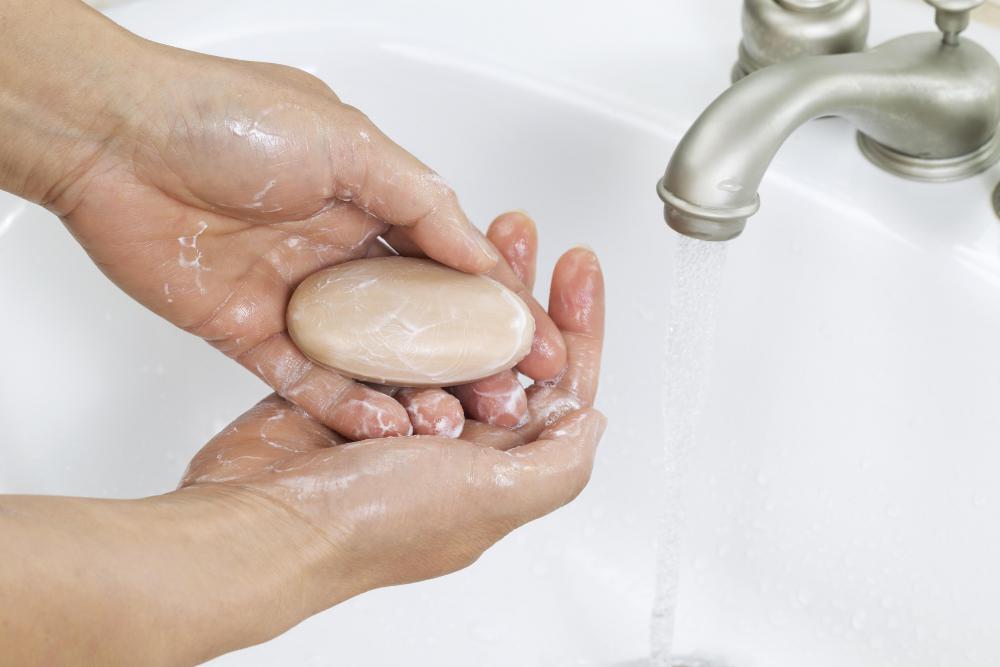
![Skin should be washed promptly with soap and water it it comes into contact with liquid sandpaper.]() By: tab62Skin should be washed promptly with soap and water it it comes into contact with liquid sandpaper.
By: tab62Skin should be washed promptly with soap and water it it comes into contact with liquid sandpaper.

Discussion Comments
I feel like this could be used a lot in art and furniture restoration and re-use. When you want to paint something but don't want to wreck it with sandpaper (which could all too easily remove details if you don't know what you're doing.)
If all you want to do is make something easier to paint, it sounds like liquid sand paper would do it.
Although I do wonder how many different kinds of gloss it would affect. Would it make it easier to paint old ceramics, for example?
@anon52495 - You've already got some good advice, but I would also say if you're worried about slipping down the stairs, you might want to add a strip of something rough to the edge of each stair. You can find these kinds of strips, like grit sandpaper, at the hardware store. They make the stairs easier to see in the dark as well.
Sand the stairs with course grade sandpaper to smooth and remove old paint. Finish sand with a smooth grit. Vacuum debris and clean with tack cloth. Prime surface. Paint the stairs with your choice of paint and a non-slip additive, available at hardware or major home improvement stores.
This product may be designed for exterior use but works equally well for an interior application, latex or alkyd.
I have a stairway to the basement (furnished) that was carpeted and since I'm getting a little older I didn't want to drag the vacuum up the stairs, sweeping would be marvelous. However when the carpet is up the stairs are rough and have old paint - how do you recommend I approach the stairs - paint or stain - some one told me paint would make the stairs slick but would be a whole lot easier.
Awwesome iformation here once I stumbled onto your site! Thanks!
Post your comments