
At SmartCapitalMind, we're committed to delivering accurate, trustworthy information. Our expert-authored content is rigorously fact-checked and sourced from credible authorities. Discover how we uphold the highest standards in providing you with reliable knowledge.
What is LIFO and FIFO?
LIFO and FIFO are acronyms that usually stand for, respectively, "last in, first out," and "first in, first out." Both terms are used in a wide variety of situations to determine the order in which something will be handled, from how luggage is put into and removed from a storage bay to determining which employees are laid off. One or both terms have special significance in the areas of inventory control, accounting, computer science, and employment.
Inventory Control

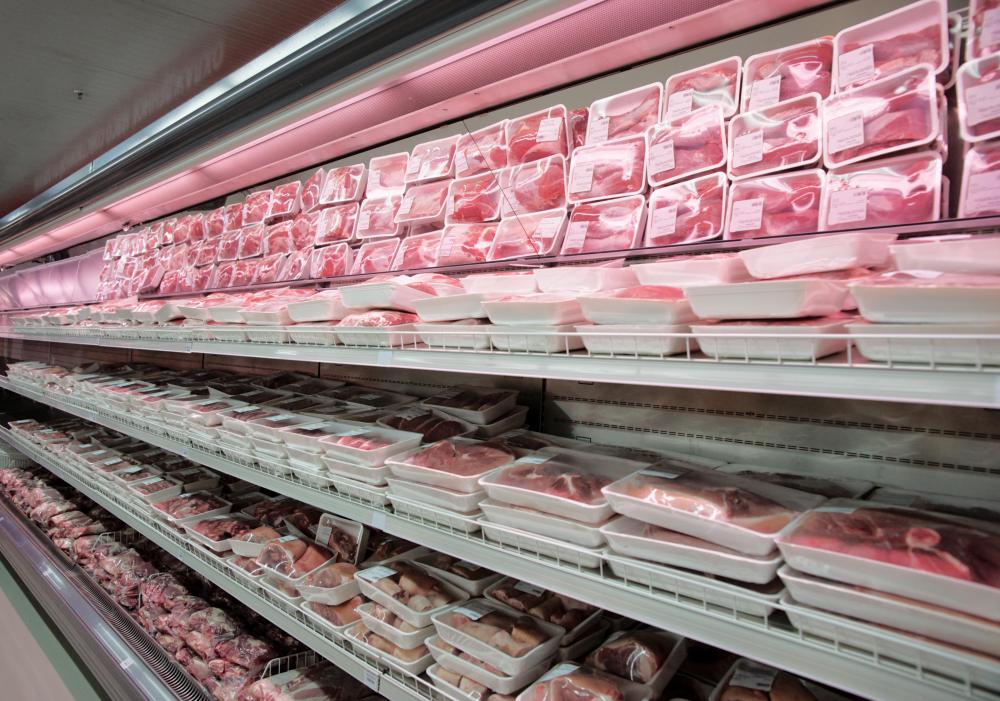
A company that operates on the FIFO principle has a policy of displaying and selling old stock before selling newly acquired stock. Such policies make sense when a business sells fresh food or items that may go out of fashion. Grocery stores, for example, often own refrigerated cases that make it easy to stock items from the back, pushing older products forward where shoppers are more likely to see and buy them. By rotating stock in this way, it's more likely that there will be less inventory waste; food is more likely to be purchased before it goes bad, for example.
Accounting

In cost accounting, LIFO and FIFO are two different ways of valuing a company's inventory. This valuation is key to determining the tax liability of a company. It is also important for investors to understand how accountants determined the value of a company's inventory, as, in some cases, the method may be used to increase or decrease a company's reported profits. Investors can use this information to make their own decisions regarding a company's prospects.

When using the FIFO method, an accountant bases his or her valuation on the assumption that the first goods sold were the first goods that a company bought or created for resale. This is not always the case, however, and some companies may stock inventory that contains both newer and older items. Since the cost to produce goods often rises over time, businesses valued according to this method will be more profitable, at least on paper, because the selling price of the goods may be significantly higher than their inventory value. If it cost $100 US Dollars (USD) per item to produce the first goods and $200 USD per item to make later ones, $100 USD is used as the cost of good sold under this method. This means that, if the inventory is sold for $500 USD per item, it appears that the company is making more money, based on the assumption that those less expensive to make items were sold first.

The LIFO cost accounting strategy, on the other hand, values inventory by assuming that the last goods produced are the first goods sold. This typically raises the value of the stock as the accountant bases his or her valuation on recent prices. It also typically lowers profitability, as there is little or no inflation gap between the original cost of an item and its selling price. The advantage to this method of cost accounting is that lowered profitability can mean lower taxes for a business. LIFO is not legal for tax purposes in some countries, including the United Kingdom.
Some businesses do not use either method in assessing the value of their inventories but may instead base the value on the average cost of the items. Accountants add the actual cost of each item together then divide by the number of items in stock. The accountant assigns this value to each item and adds it together to determine the value of a business's inventory.
Computer Science
For computer programmers, LIFO and FIFO refer to the way that data is handled, or the data structure. Different operations require that data be accessed in different ways, whether randomly or sequentially. Two types of sequential data structures are stacks and queues, which follow LIFO and FIFO principles, respectively.
A stack data structure can be imagined like a stack of papers, with new data always being added to the top of the stack. When data is removed from the stack, it is also taken from the top. In a word processing program, the "Undo" function uses this type of structure, where the most recently made change is the first one to be removed.
A queue operates on the first-in, first-out principle. Data is always added to the end of the queue and removed from the beginning. For example, if a number of people in an office all want to print using the same printer, the software would put each request into a queue and handle them on a first-come, first-served basis.
Employment
The term LIFO is also associated with employment law, specifically in determining which employees are laid off when an organization is downsizing. Using this method, the people who were the last to be hired are the first to be let go; it's also sometimes known as "first-in, last-out" or FILO. The employees who remain are those with the most experience and therefore, it could be argued, those who are best at the job. This method has been criticized for ignoring job performance, however, and as being discriminatory against younger workers. Although used in many industries, this method of downsizing is most commonly associated with education and teacher layoffs and is required by law in some places.
FIFO has the additional meaning of "fly in, fly out" among employers. The term refers to the practice of bringing non-local workers into a geographical area to work and then flying them home for breaks. Unlike traditional "job transfers," family members don't accompany the worker to the job site. Employers who offer these arrangements typically do so when there is a need for trained employees on a job site in a remote area; for example, mining is a profession that often makes use of FIFO schedules. The workers may work long hours for blocks of time and then return home for several days for rest and time with their families.
AS FEATURED ON:
AS FEATURED ON:









-
![Produce department at a grocery store.]() By: Andrey MilkinProduce department at a grocery store.
By: Andrey MilkinProduce department at a grocery store. -
![Desserts on display at a buffet.]() By: Gordana SermekDesserts on display at a buffet.
By: Gordana SermekDesserts on display at a buffet. -
![Meat department at a grocery store.]() By: Kondor83Meat department at a grocery store.
By: Kondor83Meat department at a grocery store. -
![Automated inventory control software equipped with barcode scanners may be used with either a LIFO or FIFO accounting system.]() By: Monkey BusinessAutomated inventory control software equipped with barcode scanners may be used with either a LIFO or FIFO accounting system.
By: Monkey BusinessAutomated inventory control software equipped with barcode scanners may be used with either a LIFO or FIFO accounting system.



Discussion Comments
With regards to stock control at lower levels not corresponding with pastel system, can anyone say what the causes may be?
What is the difference in terms of cost of goods sold between FIFO and LIFO approaches?
How can I apply fifo and lifo in our business?
How to record in stock card while we used fIFO or LIFO
The article adds clarity. My company has used both FIFO (80 percent) and LIFO (20 percent). I always thought this was dumb and overly complicated. Now, some 10 years later they have gone to just FIFO. Said they wanted to simplify things. Go figure.
Just curious! I studied cost accounting and remember that you can only change your inventory system from
lifo to fifo or vice-versa only once in so many years. Fed Reg. What do the oil companies use?
Please give me more details about where I can find more information.
how can i maintain the FIFO in an automobile company when i issue the material for production?
M y question is about FIFO and LIFO. Please let me know that which system is better in automotive spare and parts warehouses?
Which is the best for stock control lifo or fifo?
How can the change from LIFO to FIFO affect inventory balances and income taxes?
I clearly come from a different background...I have become familiar with the acronym FIFO meaning Fly In Fly Out - particularly when referring to employment and lifestyle situations.
I looked at this article as I was interested in what LIFO might mean (thinking along similar lines didn't make sense). Nice to see different perspectives on the things. Thanks guys! (NOTE: I think your website is great!)
can you give me an example for fifo in hotels related to kitchen?
are lifo and fifo the classes of paging?
What is the effect of LIFO in rising prices market?
Post your comments