
At DelightedCooking, we're committed to delivering accurate, trustworthy information. Our expert-authored content is rigorously fact-checked and sourced from credible authorities. Discover how we uphold the highest standards in providing you with reliable knowledge.
What is Licorice?
 Mary Elizabeth
Mary Elizabeth
Mary Elizabeth
Licorice, Glycyrrhza glabra, is a perennial in the pulse family that is grown for its taproot. It grows wild in Southern and Central Europe and parts of Asia. It is also known as licorice root, liquorice, and sweetroot. Anise or aniseed, Pimpinella anisum, has a similar flavor, but is a completely separate plant from a different family. However, since aniseed oil is often used to enhance the flavor of licorice candy, distinguishing the flavors can be difficult.
History

Used by the Ancient Chinese and by Native Americans — they would have used G. lepidota, which is native to the United States — licorice has a longer history as contributing to medical treatment than as a culinary fragrance. It was reportedly eaten by Alexander the Great. The plant was brought to England by Dominican friars, and the production of candy using the root was later begun at Pontefract Abbey in Yorkshire. Today, the town of Pontefract is the site of an annual licorice festival held in July.
Description
The plant grows to 3 to 7 feet (90 to 210 cm), and the taproot can reach a depth of 4 feet (1.2 m). It is late blossoming, with purple and white flowers and maroon seed pods. The root is not ready to harvest until three to five years after planting.
Food and Other Uses

Licorice’s chief role in cooking is in confections. It is used to make the German candy lakritz and the Scandinavian candy salmiakki. It is also used in brewing and in making aperitifs. There are far more recipes calling for the use of ready-made licorice candy than for power, but it is occasionally called for in milkshakes. It can also be used as an addition to Chinese five spice powder.

A combination of medicinal benefits and concerns have been studied in licorice, and anyone with questions should consult a health care professional. Among the benefits reported, there are 2006 reports that recount research that licorice root extract may have compounds that would help prevent tooth decay and that it could be a useful treatment for rosacea. On the other hand, it has also reportedly been associated with high blood pressure and reduced testosterone.
Mary Elizabeth
Mary Elizabeth is passionate about reading, writing, and research, and has a penchant for correcting misinformation on the Internet. In addition to contributing articles to DelightedCooking about art, literature, and music, Mary Elizabeth is a teacher, composer, and author. She has a B.A. from the University of Chicago’s writing program and an M.A. from the University of Vermont, and she has written books, study guides, and teacher materials on language and literature, as well as music composition content for Sibelius Software.
Learn more...
Mary Elizabeth
Mary Elizabeth is passionate about reading, writing, and research, and has a penchant for correcting misinformation on the Internet. In addition to contributing articles to DelightedCooking about art, literature, and music, Mary Elizabeth is a teacher, composer, and author. She has a B.A. from the University of Chicago’s writing program and an M.A. from the University of Vermont, and she has written books, study guides, and teacher materials on language and literature, as well as music composition content for Sibelius Software.
Learn more...AS FEATURED ON:
AS FEATURED ON:


-
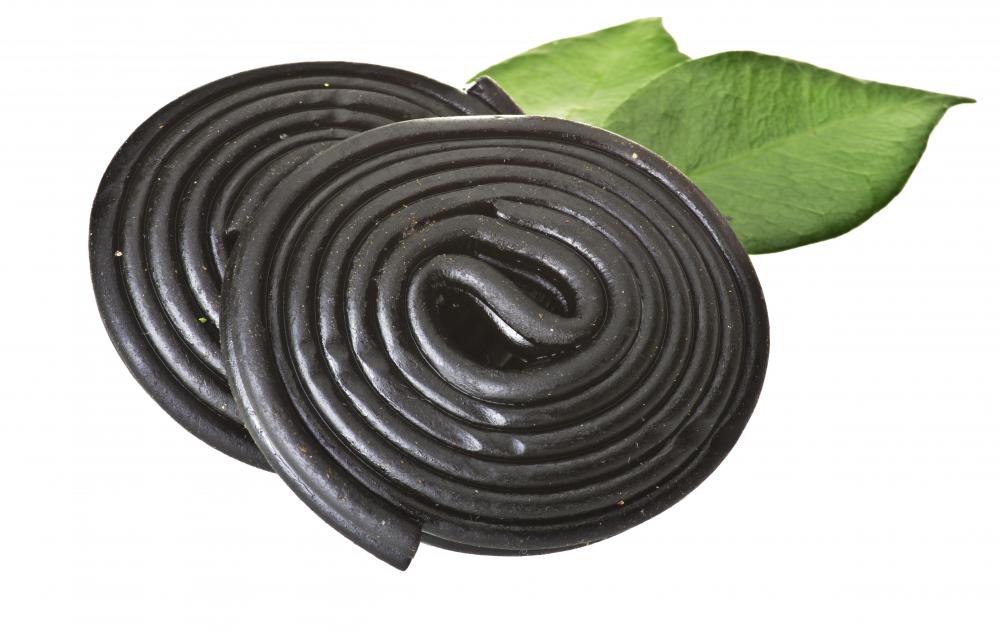
![Black licorice candy.]() By: Orlando BelliniBlack licorice candy.
By: Orlando BelliniBlack licorice candy. -
![Licorice root can help with tooth decay and rosacea.]() By: Hayati KayhanLicorice root can help with tooth decay and rosacea.
By: Hayati KayhanLicorice root can help with tooth decay and rosacea. -
![Licorice is known to have an adverse effect on blood pressure.]() By: Andrei TsalkoLicorice is known to have an adverse effect on blood pressure.
By: Andrei TsalkoLicorice is known to have an adverse effect on blood pressure. -
![Anise has a similar flavor to licorice.]()
Anise has a similar flavor to licorice. -
![High blood pressure, along with tiredness, diarrhea, fluid retention and other temporary changes to the body, is a side effect of licorice.]() By: Phase4PhotographyHigh blood pressure, along with tiredness, diarrhea, fluid retention and other temporary changes to the body, is a side effect of licorice.
By: Phase4PhotographyHigh blood pressure, along with tiredness, diarrhea, fluid retention and other temporary changes to the body, is a side effect of licorice.




Discussion Comments
@jmc88 - Outside of the black and strawberry licorice candies, I have never seen licorice offered anywhere in raw form. Since it would be uncommon for most people in the US to want it, I am guessing you would probably have to go to a specialty store to find it.
If you have any herbal stores near you, I would try there first. Since it sounds like licorice is a common flavoring in Asia, you may also want to try any Chinese, Indian, or Korean markets around you, as well. I have had a lot of success in the past finding uncommon products there.
I was very interested to hear that licorice is good at fighting tooth decay. It seems like that could be a much more cost-effective remedy for some people as compared to expensive medical treatments.
Personally, I am not a fan of licorice, either. I don't know that I have read any official information on it, but I have been told that the taste of licorice is partially genetic like some other foods. People with certain genes are more able to taste sweetness in real licorice, whereas others experience a more bitter taste.
I am prone to believe it considering no one in my family likes licorice. One of my friends like licorice, though, and so does the rest of her family.
So, is the licorice that is being talked about here the red or black variety? I never really understood which was the original flavor of licorice and which was a modified flavor. I think I am with the majority when I say that I absolutely hate the flavor of black licorice.
Whenever I think of black licorice, I automatically think of the black jelly beans that taste awful. I know a few people that really love them, so I always save the black jelly beans for them.
Red licorice is a little better, although I'm still not a huge fan. That being said, I think I have only had Twizzlers, and I am guessing that those don't taste anything like real licorice. I would be surprised if they even had actual licorice in them. They're probably just made of corn syrup and a gummy substance.
@anon47155-- I'm not sure exactly where you can find it but it should be easily found because Haryana is one of the places in India where licorice is cultivated. Just ask for "mulhathi" which is the Hindi name for licorice. I think any spice shop should carry it!
The reason I know this is because my dad is originally from Haryana and he has mentioned licorice being cultivated there before. He says that whenever he got sick and had a cough, his nanni (grandmother) would prepare a dawaai (medicine) made from mulhathi. It would work as an expectorant and help get rid of his cough.
@burcinc-- I think if you try all-natural licorice root, you might be surprised with the flavor. Licorice is very common in confectionery but from my experience, the flavor is not very similar to real, fresh or dry licorice. I think most of those candies are made with licorice flavoring not actual licorice root or extract. And you're probably right that there is a lot of aniseed in it too.
I'd recommend you to try some organic licorice tea. This is usually made from dry licorice root and it's really delicious, not to mention naturally sweet. It might change your opinion of licorice all together. Plus, licorice is really good for you. It's been shown to kill the bugs that cause cavities.
@anon180531-- I know! I have a Dutch friend who had a short holiday back home recently. His suitcase was basically full of different kinds of licorice candy! He loves the stuff.
Some of those candies looked really good, but unfortunately, I'm not a fan of licorice. I was given licorice candy as a child and since then I've never liked the flavor.
Although sometimes I do wonder if those candies were actually made of aniseed or a combination of aniseed and licorice. It's quite possible but I haven't had the courage to try licorice candies again. I don't even like the scent of it.
The Dutch eat more licorice than any other nationality. In most cities you can find shops that exclusively sell licorice (drop in Dutch) in hundreds of varieties, from sweet to salty, from hard to soft.
where can i get licorice in haryana (India)?
To remove corns, what form of licorice is used and where can it be purchased?
Post your comments