
At SmartCapitalMind, we're committed to delivering accurate, trustworthy information. Our expert-authored content is rigorously fact-checked and sourced from credible authorities. Discover how we uphold the highest standards in providing you with reliable knowledge.
What is Liability Insurance?
There are many different types of insurance policies available, but liability insurance is one of the most popular because it costs much less than many other options. For example, in regard to auto insurance policies, it costs far less than full coverage. The reason for this is because full coverage insurance must pay for both your vehicle and any other vehicle involved in a collision, as well as property damage and medical expenses due to injuries to you or another party.
On the other hand, liability insurance is only responsible for the other party's losses. Your person and your property are unprotected, but the insurance protects you from being held responsible for the other party's damages.

There are different types of liability insurance, including general liability, which covers businesses. General liability protects a company from third party claims. Aside from general liability, there is also D & O liability, employer liability, and professional liability insurance.
D & O liability stands for "directors and officers" liability and is intended to cover the acts or omissions of those in the director or officer position. An entire company should not be held liable for the statements, actions, failure to act, or other mistakes that are the responsibility of an officer or director.

Employer liability is also known as worker's comp, and it is a mandatory form of liability insurance coverage that all businesses must carry. While it sounds like it is intended to protect the employee, which it does to some degree, it is actually protection for the employer in case of injury, job related illness, or other damages for which the employee might sue the company.

Professional liability is similar to malpractice insurance, although the coverage may not be as comprehensive as some malpractice policies in different fields. The purpose for professional liability insurance is to protect those seen as professionals or "experts" in a given field, who may not be protected by general liability due to their expertise. When one is seen as a professional, he is held to a higher standard and is therefore often considered to hold greater liability towards his clients. Consequently, he needs more coverage than general liability insurance offers.
AS FEATURED ON:
AS FEATURED ON:









-
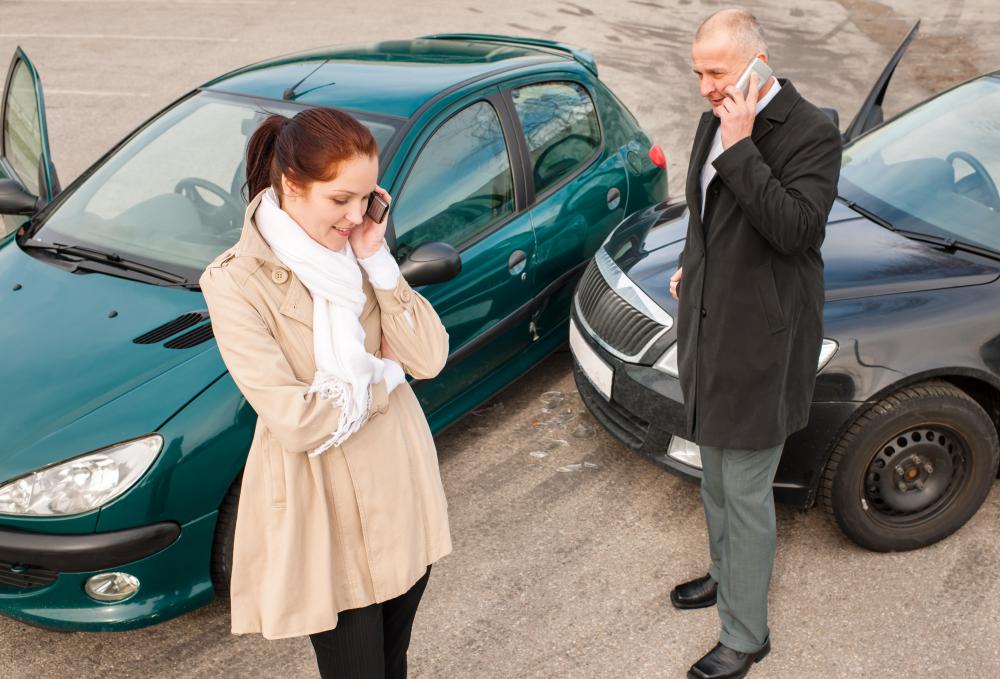
![Auto liability insurance covers only the other party's losses.]() By: CandyBox ImagesAuto liability insurance covers only the other party's losses.
By: CandyBox ImagesAuto liability insurance covers only the other party's losses. -
![Businesses will often have liability insurance in case someone is injured on their property.]() By: ulldellebreBusinesses will often have liability insurance in case someone is injured on their property.
By: ulldellebreBusinesses will often have liability insurance in case someone is injured on their property. -
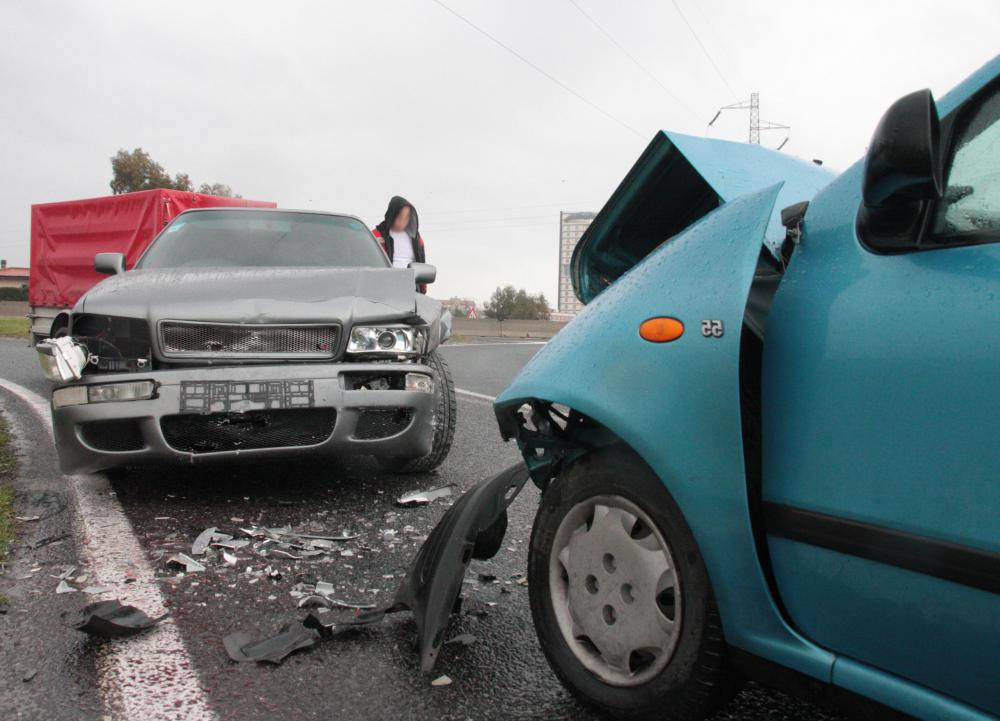
![Liability insurance protects the policyholder from losing money if they are at fault in an accident.]() By: lupoalb68Liability insurance protects the policyholder from losing money if they are at fault in an accident.
By: lupoalb68Liability insurance protects the policyholder from losing money if they are at fault in an accident. -
![Medical professionals such as surgeons typically have malpractice insurance.]() By: Tyler OlsonMedical professionals such as surgeons typically have malpractice insurance.
By: Tyler OlsonMedical professionals such as surgeons typically have malpractice insurance. -
![In regards to auto insurance policies, liability insurance costs less than full coverage insurance.]() By: Lisa F. YoungIn regards to auto insurance policies, liability insurance costs less than full coverage insurance.
By: Lisa F. YoungIn regards to auto insurance policies, liability insurance costs less than full coverage insurance.

Discussion Comments
My son fell and broke, sprained and tore ligaments in his ankle at school playing basketball in gym class. The school has liability insurance. Are they still responsible for his medical bills?
I fell down some stairs and broke my shoulder at my boyfriend's house. I was a guest at the time. I moved in a month after this happened so he could take care of me because I could not move my arm. Can I still go after his liability insurance for hospital bills and pain and suffering even though I'm now living there?
I fell down stairs broke my shoulder at boyfriends house I was a guest at the time. I moved in a month after this happened so he could take care of me because I could not move my arm can I still go after his liability insurance because I was a guest at the time I broke my shoulder at his house
My car was hit as I waited for a turning light. Car no. 1 sideswiped car no. 2, which hit me. Car no. 1 ran. Car no. 2 has the same insurance as I have. Car no. 2 also hit two other cars after my car. My insurance company, which is the same as car no. 2, said I must pay for my own damage because I have liability only.
I am a senior and depend on my car to go to doctor's appointments and food shopping. I have a small pension, but it's not enough to pay for this kind of damage. What can I do? I need help.
My niece had used my car to run to the store and hit someone's mailbox. Would liability pay for the damages to my car and mailbox?
I let someone borrow my car and the driver was involved in an accident with another vehicle. I have third party liability insurance, which isn't much. What I would like to know is what action will the insurance company take on this?
What do you need to become an authorized dealer/retail for brand name products?
My medical is 75,000.00 so far. The accident was not my fault. Her coverage was state required liability. My lawyer says everything is going to go to my insurance and doctors. I'm still getting treatment. Is this true?
If you are in an accident and your vehicle is towed to a towing compound and you only have liability insurance and not collision, will the insurance company pay for the towing and storage costs?
i was recently in a car accident where i was at fault. it was due to a manufacturing error. my tie rod snapped and threw me out of control and caused me to flip my vehicle. i have full coverage on my insurance and i purchased my vehicle threw a loan. should my insurance cover the remaining cost of my loan? please help. i am flat broke and have been having the worst luck. what should i do.
what is the difference between General liability insurance and employee liability insurance?
Re: Post #26: Unless you can show that the owner of the home was somehow negligent, the only source of insurance compensation from his homeowner policy will be under "Medical Payments", sometimes called Guest Medical. Typical limits on that coverage is from $500 to $5,000 and it will only pay for your medical expenses, not lost wages, pain and suffering, etc.
Dining at my neighbours i slipped outside on their tiled verandah, fracturing my left humerus. I have had to go through surgery where pins were inserted, and I've been off work for six weeks now. Any chance of supplying me with info on claiming! Please help!
To post#23. You always have the greater duty of care owed when you are backing, whether it's on a military base or a civilian road.
The person who struck you may have a small degree of what's called comparative negligence, if you can prove they were speeding or inattentive and should have seen you backing, but you would typically need a witness who could verify their negligence for you to recover anything for your own damages. This varies by state.
In a pure comparative negligence state like NY or CA you might recover a small percentage like 10-25 percent, but the backing vehicle is almost always presumed at fault.
In a parking lot accident where both parties were backing from opposing sides of the aisle, both would likely be found at fault because they had the same duty owed. Hope this helps. I am an auto adjuster.
Anytime you strike the car you are following behind in the rear, without many exceptions, you are at fault for at least their rear damages.
If they strike the vehicle in front of them, it needs to be determined if that lead driver felt one or two impacts.
One impact means you pushed them into the lead car and two means that the middle driver struck them first and then you struck them. In this instance you would likely only have to pay for the rear damages of the vehicle that you struck and that vehicle would pay for the rear damages of the lead vehicle which is all determined by a thorough liability investigation on the adjuster's part.
You always have a duty owed to follow at a safe distance and speed and should anticipate that the driver in front of you may have to come to a sudden stop for a myriad of reasons.
In the instance above with the drunk driver, the drunk driver could and would be liable for any impact between them and the car you were following but you always are responsible for rear ending another driver.
my wife was backing up when a car came from behind and ran into her. nothing happened to our vehicle -- only to the one that ran into us.
When the cops showed up they said we were at fault because we failed to back up properly, and that on the military post we were on, the rule is if you're involved in an auto accident while backing up, the one backing up is at fault.
Is there any way we could fight this? i never heard of something like this.
I want to run a fitness program at a local school, but they are requesting a certificate of proof of my liability insurance? How much does this cost? I wanted to run the program throughout the year but don't know if it will warrant spending big money on insurance.
Thanks!
i have requested my underwriter to come and conduct pre-loss loss but he has not yet come. there was flood damaged to a portion of the fence and security gate. The post loss survey now indicates that a lack of drainage system contributed to the damage, thus imposing a penalty. can i accept or turn down the offer?
If i am owner of a flat in an apartment or building and have given the same on a lease to a company and the company has covered the building and equipment in the same property of mine, if any claim arises on the same property, am i liable for the claim in this situation? Please guide.
well I've started a old fashioned shoe shine business this month so do i need a liability insurance? i need help. i'm new at this job but i don't have money to pay for it. In the meantime I'm trying to pay bills and there's not enough from the new job i just started here. help me!
I do have liability insurance that covers any damage i do with my car. But i got into an accident where three cars were involved including mine.
The first car was trying to avoid another car that was going to hit her but she stopped, then the second car stopped so abruptly and i hit the back of it. I got charged with following too close. I don't know if any of the other drivers got charged too.
Does anyone know if i go fight this charge in court, if I'll have any chance to win?
If I let some one use my car and I have no insurance and they hit a deer, does their liability insurance cover the cost of my car?
i am an electrician doing electrical work in a building under construction by another contractor.
the owner is asking both of us for builders risk insurance. is that correct?
A veterans group I belong to wanting to put on a beer tent for our town, here in Ohio. We wonder about liability insurance and how much we should have, then what it would cost for a two-day event?
I operate a small general contracting LLC with no employees. My wife and I are the managing partners. Legally in Nevada. Do I need to carry general liability insurance? I do verify that my sub contractors have insurance. Thanks.
As regards the car damaged by your fiance's son there are two modes of redress:
1. The vehicle, if comprehensively insured, will admit the damages to your vehicle and made good the material damage to the vehicle.
2. If you intend to hold him legally liable at law you will take recourse to litigation. In this instance you will invite your insurer by subrogation of your rights since they would have made good the damages to your vehicle and any damages paid to you will be transferred to your insurer to the extent of their indemnity towards you.
In this aspect what is more important for the court to consider is whether the defendant would be legally liable to you for the damages caused to your vehicle, as you have voluntarily provided the vehicle for his usage and you shall be vicariously responsible, both for damages sustained to your vehicle and to third parties due to his negligent driving. Abdul
my fiance's son borrowed my car after his broke down. He flipped it 24 hours later. He has liability insurance as did I. Will his insurance cover the loss of my car?
I thought I would add to the public liability description given in this guide. If your business operations were to injure a member of the public or damage their property in some way, public liability insurance would cover you in the event of a claim being made against you. The amount of public liability cover that you might want to take out largely depends on the level of risk attached to your business. A lower limit of £1m may be appropriate for a ‘one-man-band’ builder, but £2m or £5m of cover may be more suitable for medium and large businesses.
I was working for a farmer when two steers went berserk and jumped the fence and broke off an eight-inch post. the gate landed on top of me with the steers. Now the lawyers are saying that the farmer is not responsible for what his steers did. I received a brain injury, lost the sight of one eye and partial sight of another eye, have no taste or smell and can't use my hands due to damage to my neck and shoulders. I can't get a CDL license to go back to trucking which was my former occupation before farming. Why isn't the farmer responsible for what his cattle did to me? I didn't ask for this to happen and now have over $70,000 in doctor and hospital bills that I can't pay.
i do have insurance liability and i got into an accident in which i was just trying to avoid hitting a running cat crossing my way. it so happened there was a concrete sewer manhole and as i turned i flipped my car on its side. So basically there's no others involved in the accident. do i get something on that insurance liability? please help me out. i could have something on that insurance i was paying for, besides no other vehicles were involved.
The third party liability coverage which is compulsory for any vehicle insurance covers the insured himself. During any motor accident whether you are at fault or not it gives you protection. For vehicle's own damage cover is available. So if you want to insure yourself, get liability coverage only. For your 12 scooters you can take floater cover but need to declare each and every scooter.
Mrs. M was shopping in the X Department store, and a salesgirl accidentally stepped upon her foot, breaking the skin. The customer did not believe the accident to be serious and shortly after left for a vacation. Before her return, blood poisoning developed. The woman brought suit, and her attorney contended the store to be liable on the ground of negligence. What is your opinion?
Legally, if you run into the back of the car in front of you, even if they stopped unexpectedly, you are still at fault, for failing to follow at safe distance. This I know for I was charged with the same, when the car in front of me came to a dead halt on the interstate, for no discernible reason. I ran into the back of that car, and the cop was ever so nice, but said he would have to charge me!
I want personal liability insurance that covers me. Not my vehicle. I want it to protect me from liability no matter what I am driving. I have 12 motor scooters, all antiques. Several of them get ridden two or three time a year. None of them are ridden more that 50 miles in a year, and only one even comes close to that. This is a collection, not a fleet. I have never had a scooter accident, but stranger things have happened. Obviously, I can't buy a policy for each of these scooters. I don't need collision insurance, just liability on myself.
Hi,
I was in a car accident recently where a drunk man ran onto the road, the car in front of me stopped abruptly and then I ran into the back of that car, having braked, but not fast enough.
Do I still have to pay the cost of damage to the other car? I genuinely believe that the car accident is not my fault.
Please help, I can't afford this right now!!!
Post your comments