
At TheHealthBoard, we're committed to delivering accurate, trustworthy information. Our expert-authored content is rigorously fact-checked and sourced from credible authorities. Discover how we uphold the highest standards in providing you with reliable knowledge.
What is Left Axis Deviation?
Left axis deviation, sometimes known in medicine simply as “LAD,” is an abnormal reading on the left axis of an electrocardiogram (EKG) graph. Healthcare professionals use EKGs to map and graph cardiac activity for a wide variety of patients, some with heart diseases and conditions and others who are otherwise healthy. The scans can give a good sense of the heart’s strength generally, and can also identify small problems with things like heart rhythm that could get worse over time. Most graphs are divided into left and right axes, and abnormalities on the left side are often referred to generally as left axis deviations. They can represent serious issues, but they can also be more or less normal; a lot depends on how serious the deviation is, and whether there are also aberrations on the right side. The most significant causes generally include cardiac diseases and heart attack. Healthcare providers usually order more tests and follow-up exams to determine the cause and any needed treatment.
Understanding EKG Axes Generally

An EKG graph is usually a printed image with a number of different waved lines, each representing an electrical charge given off by the heart. The lines are typically divided into left and right quadrants, usually to align with the left and right ventricles and atria of the heart. Medical experts have determined a “normal” range into which healthy people should fall, which is generally understood as -30° to +90° on each side. When the numbers on the left fall outside of this range, the aberration is frequently known as left axis deviation. In general, LAD is not in itself problematic unless it is deviated to a large extent, or unless it is accompanied by other cardiac problems.
Normal Variants

There are many different reasons why this sort of deviation can happen, and not all of them are worrisome. This is particularly true if the deviation is minor and doesn’t repeat. Deviations that look like small “blips” could be what is known as a normal variant; these are things that show up solely on an electrocardiogram without any other indications of heart disease or problems. Some studies have shown that LADs occur in up to 14% of all EKGs that are otherwise normal and were taken of patients without known heart problems. Any axis deviation from the normal range, however, is usually classified as an EKG abnormality, and further clinical testing is generally recommended in order to rule out something more problematic.
More Serious Causes

Cardiac disease is one of the most common causes of LAD, though some types are more serious than others. A left anterior fascicular block, which is also known as left anterior hemiblock, is sometimes the root of the problem, for instance; though this is an abnormality, it isn’t usually considered serious when it happens all on its own.
An abnormal left anterior hemiblock has been found to occur in about 4% of myocardial infarctions and typically has a left axis deviation of between -45° and -60°. Inferior myocardial infarctions are also known as heart attacks, and these are much more serious. In most cases, though, an LAD is just one of many troubling things on the EKG graph of someone having a heart attack. There are also usually physical symptoms of chest pain or loss of consciousness.
Breathing Disorders

Chronic obstructive pulmonary disease (COPD) and emphysema are also possible causes. The breathing difficulties experienced by those who suffer from either of these medical conditions can lead to the lungs becoming chronically overinflated, which in many cases actually shifts the heart to the right. This shift skews the EKG reading further toward the left axis than it would normally be. In these cases the problem is serious, but the readings make the problem seem more alarming than it actually is. This is also sometimes called a “mechanical deviation.”
Treatment Options

Patients presenting with LAD don’t always need immediate treatment. Healthcare providers usually want to know what the cause is, though, and if the deviation is found to be related to a more serious problem patients are often advised to start drug therapy and other interventions as needed to prevent further heart issues. Sometimes EKG abnormalities can help doctors identify looming cardiac events, but a lot depends on when the problem was caught and the whether any damage already done can be reversed.
AS FEATURED ON:
AS FEATURED ON:


-
![An electrocardiogram will identify left axis deviation.]() By: Gennadiy PoznyakovAn electrocardiogram will identify left axis deviation.
By: Gennadiy PoznyakovAn electrocardiogram will identify left axis deviation. -
![A left axis deviation is a common abnormality spotted on an electrocardiogram.]() By: KadmyA left axis deviation is a common abnormality spotted on an electrocardiogram.
By: KadmyA left axis deviation is a common abnormality spotted on an electrocardiogram. -
![Breathing disorders such as COPD may cause left axis deviation.]() By: AntonioguillemBreathing disorders such as COPD may cause left axis deviation.
By: AntonioguillemBreathing disorders such as COPD may cause left axis deviation. -
![Left axis deviation may be caused by a heart attack.]() By: WavebreakmediaMicroLeft axis deviation may be caused by a heart attack.
By: WavebreakmediaMicroLeft axis deviation may be caused by a heart attack. -
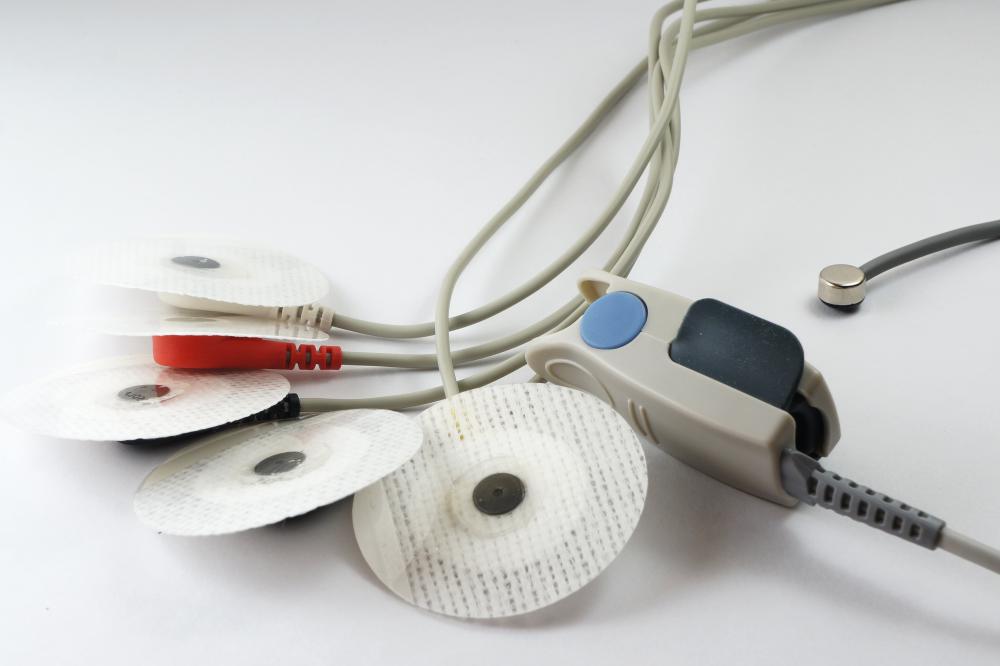
![During an electrocardiogram, electrodes are placed on the skin to monitor electrical impulses inside the heart.]() By: zayacskDuring an electrocardiogram, electrodes are placed on the skin to monitor electrical impulses inside the heart.
By: zayacskDuring an electrocardiogram, electrodes are placed on the skin to monitor electrical impulses inside the heart. -
![Left axis deviation may be caused by heart disease.]() By: sudok1Left axis deviation may be caused by heart disease.
By: sudok1Left axis deviation may be caused by heart disease. -
![An EKG is often used to continuously monitor the heart rate and rhythm of a critically ill patient in order to catch abnormalities quickly.]() By: sudok1An EKG is often used to continuously monitor the heart rate and rhythm of a critically ill patient in order to catch abnormalities quickly.
By: sudok1An EKG is often used to continuously monitor the heart rate and rhythm of a critically ill patient in order to catch abnormalities quickly. -
![Loss of consciousness may occur during a heart attack.]() By: francovolpatoLoss of consciousness may occur during a heart attack.
By: francovolpatoLoss of consciousness may occur during a heart attack. -
![COPD is a possible cause of left axis deviation.]() By: joshyaCOPD is a possible cause of left axis deviation.
By: joshyaCOPD is a possible cause of left axis deviation.






Discussion Comments
The most common test used to determine if a person has chronic obstructive pulmonary disease also called COPD or emphysema is the pulmonary function test.
The pulmonary function test is a comprehensive test including patient history, chest X-ray, blood gas analysis, physical exam and a test of the pulmonary function.
The test gives a clear picture of the severity of the decreased function as well as finding any problems.
Post your comments