
At InfoBloom, we're committed to delivering accurate, trustworthy information. Our expert-authored content is rigorously fact-checked and sourced from credible authorities. Discover how we uphold the highest standards in providing you with reliable knowledge.
What is Lecithin?
 Mary Elizabeth
Mary Elizabeth
Mary Elizabeth
Lecithin was first identified in 1846 by Maurice Gobley, a French chemist. It is the name for a mixture of phospholipids, an important component of food products, occurring both naturally and added as a supplement. The body breaks down this mix into choline, phosphate, glycerol, and fatty acids.
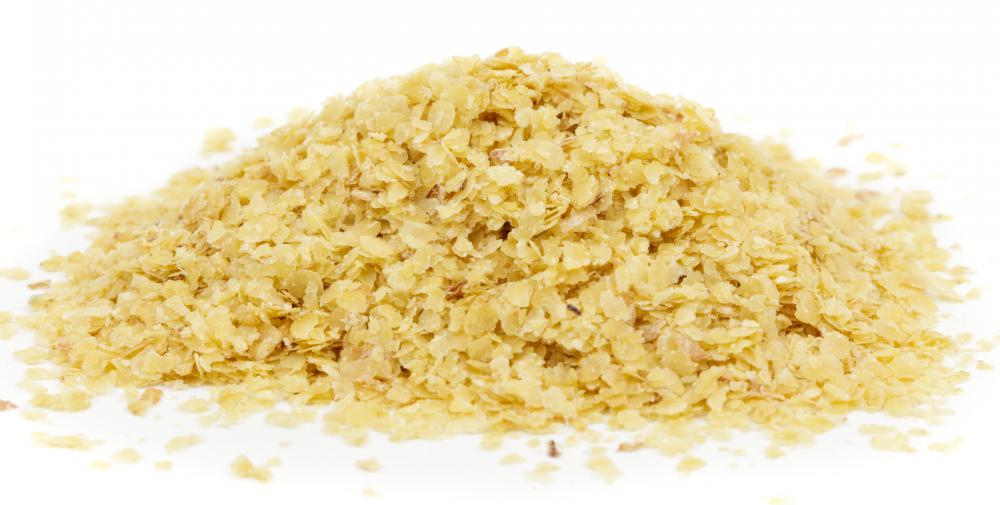
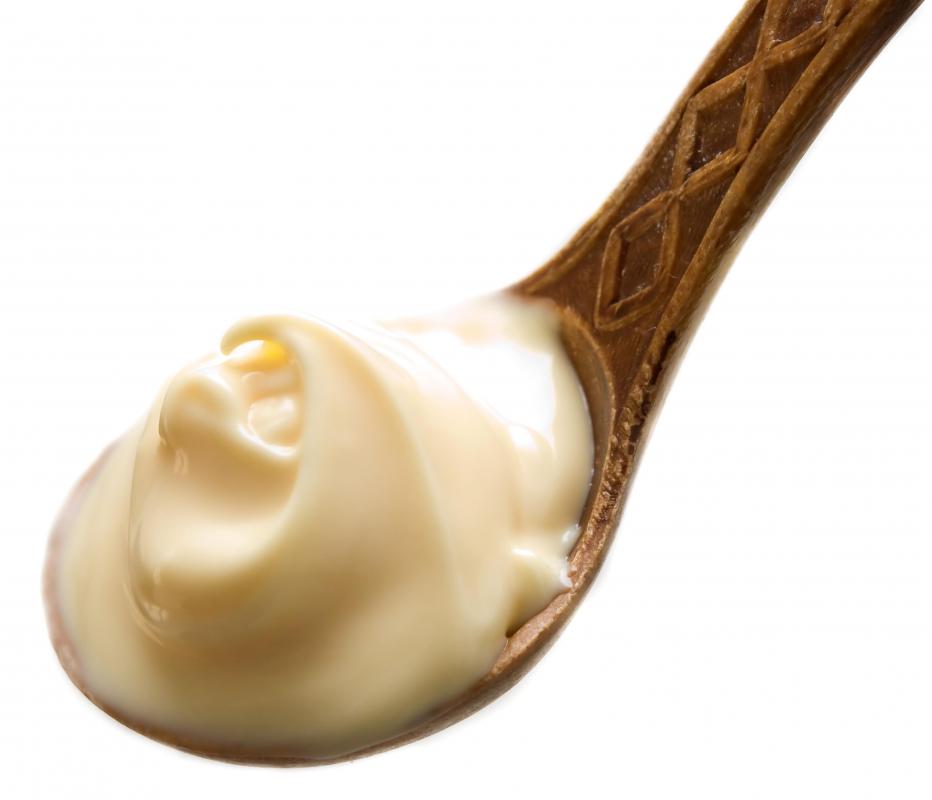
Found naturally in a number of foods, people can consume lecithin in egg yolks, fish, grains, legumes, peanuts, soybeans, wheat germ, and yeast. It is also used in food preparation to create products such as baked goods, chocolate, margarine, and mayonnaise because of its ability to moisturize, preserve, and emulsify. It is a key ingredient in cooking spray, the substance used to replace oils, margarine, and butter in sautéing and baking.

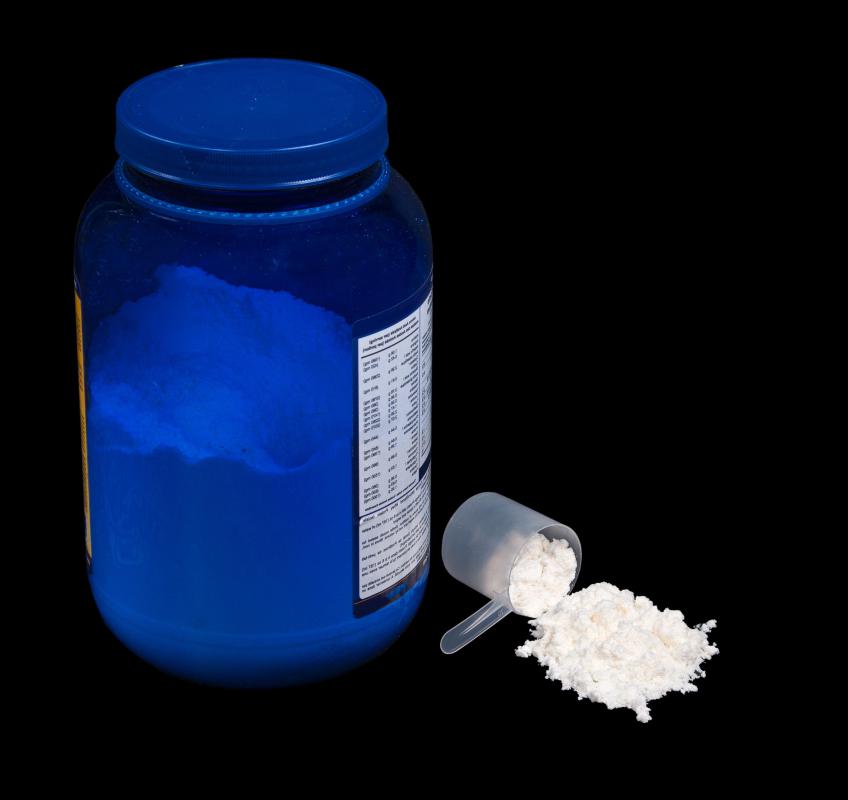
Lecithin is also used in medical practice as well as in other commercial products, such as plastics, pharmaceuticals, pesticides, cosmetics, soap, and paints. For these applications, it is extracted from eggs or soybeans. It is also sold in powder, grain, liquid, or capsules as a dietary supplement.
As a dietary supplement, lecithin is claimed to have a number of roles, including improving cardiovascular health, relieving the symptoms of arthritis, and improving liver function. It is primarily offered as a supplement to assist in weight loss and to provide boosts in fat metabolism, despite the fact that these claims are made without the presentation of any scientific evidence to show that lecithin is effective in weight loss and fat metabolism. Additionally, some claims have been made to suggest that phospholipids from soy improve the metabolism of cholesterol, although the studies that supported this have had their methodology called into question.

Despite this, lecithin does have a crucial role in the human body, as evidenced by the fact that approximately 30% of the brain's weight and 66% of liver fat is made of this substance. In addition, it is an essential constituent of every human cell. The American Heart Association believes that lecithin is best obtained naturally through foodstuffs, rather than through supplements, and no Recommended Daily Allowance (RDA) has been set by the US Food and Drug Administration (FDA).

Doses of over 25 grams per day of lecithin can cause negative side effects, including nausea, stomach upset, diarrhea, and vomiting. It can also be dangerous to a very small portion of the population with an extreme soy allergy. Although most of these people are allergic only to soy protein, and therefore not affected by soy lecithin, people who are extremely allergic may be sensitive all soy products and experience an allergic reaction.
Mary Elizabeth
Mary Elizabeth is passionate about reading, writing, and research, and has a penchant for correcting misinformation on the Internet. In addition to contributing articles to InfoBloom about art, literature, and music, Mary Elizabeth is a teacher, composer, and author. She has a B.A. from the University of Chicago’s writing program and an M.A. from the University of Vermont, and she has written books, study guides, and teacher materials on language and literature, as well as music composition content for Sibelius Software.
Learn more...
Mary Elizabeth
Mary Elizabeth is passionate about reading, writing, and research, and has a penchant for correcting misinformation on the Internet. In addition to contributing articles to InfoBloom about art, literature, and music, Mary Elizabeth is a teacher, composer, and author. She has a B.A. from the University of Chicago’s writing program and an M.A. from the University of Vermont, and she has written books, study guides, and teacher materials on language and literature, as well as music composition content for Sibelius Software.
Learn more...AS FEATURED ON:
AS FEATURED ON:









-
![Wheat germ is high in lecithin.]()
Wheat germ is high in lecithin. -
![Lecithin powder is sold as a dietary supplement.]() By: lculigLecithin powder is sold as a dietary supplement.
By: lculigLecithin powder is sold as a dietary supplement. -
![Lecithin is used in food prep to create baked goods.]() By: ViktorLecithin is used in food prep to create baked goods.
By: ViktorLecithin is used in food prep to create baked goods. -
![Lecithin is found naturally in egg yolks.]() By: andriigorulkoLecithin is found naturally in egg yolks.
By: andriigorulkoLecithin is found naturally in egg yolks. -
![Lecithin is offered as a supplement to assist in weight loss.]() By: ElenathewiseLecithin is offered as a supplement to assist in weight loss.
By: ElenathewiseLecithin is offered as a supplement to assist in weight loss. -
![Lecithin is a common ingredient in commercial mayonnaise.]() By: AlexandraLecithin is a common ingredient in commercial mayonnaise.
By: AlexandraLecithin is a common ingredient in commercial mayonnaise. -
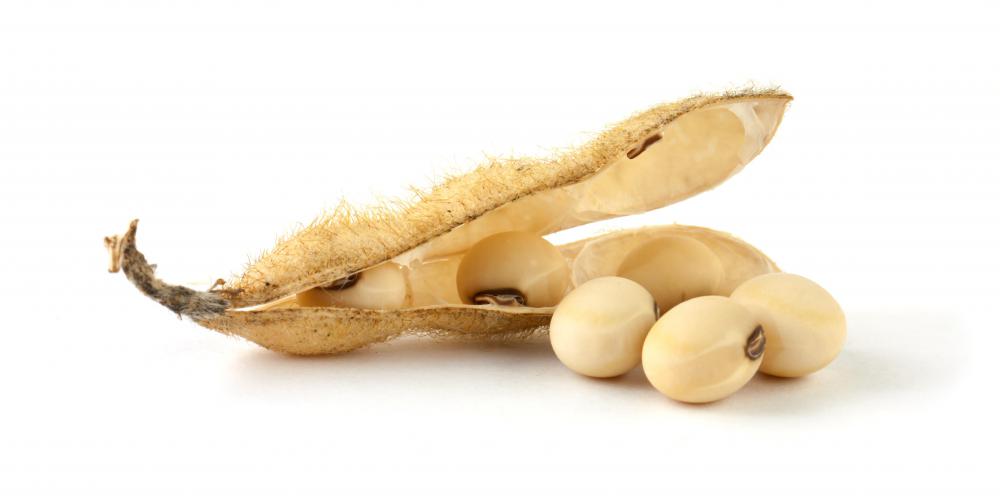
![Soybeans are a source of plant-based lecithin.]() By: VasiliusSoybeans are a source of plant-based lecithin.
By: VasiliusSoybeans are a source of plant-based lecithin.


Discussion Comments
Phosphatidyl choline, which is isolated from soy lecithin, will remove arterial plaque. Look around for it. I've taken a regimen of it twice, and can attest to its efficacy.
I was once told that taking a lecithin vitamin may help prevent dementia. I have no idea if there were any scientific studies done using this, but since I have a history of this in my family, figured I didn't have anything to lose by giving it a try.
Now after reading that 30% of our brain is made up of lecithin, this makes a lot of sense to me. I also find it interesting that it may be beneficial for arthritis as well. It sounds like this might become one of my favorite supplements as I continue to age.
We raise honeybees and try not to use any chemicals when we treat and feed them. I use some essential oils like wintergreen and thyme when I feed my bees. I also use a mixture of essential oils and water to spray on the bees when we are working them.
Many people will use a smoker, but I like to use the essential oils as this is much gentler on the bees. Because water and oil do not mix well, I add some liquid lecithin to the mixture so the oil and water will blend better.
I also know that the lecithin will not harm the bees, and may in fact be beneficial for them. When our state apiarist checked our bees, he said they were some of the healthiest hives he had ever seen so I must be doing something right.
I never realized there are so many different kinds of foods that contain lecithin. I like every one of the foods that was listed and hope that I am getting enough lecithin nutrition in my diet. I have a friend who sells food supplements and she told me that lecithin was good for someone trying to lose weight because it emulsifies fat.
I don't think this means you can go out and eat some greasy, fattening food and think you are not going to gain any weight because you are taking a lecithin supplement. If I were trying to lose weight, I wouldn't be opposed to trying a lecithin supplement along with a healthy diet to see if it would work.
@anon98148-- I agree that it is best if we get the bulk of our nutrition from the food we eat. Sadly, many Americans have such a poor diet that this is hard for most people to do. I also agree that many people who have a bad diet will take a supplement to make up for their poor eating habits.
I do think there is a place for supplements in our diet, but not as a replacement for good food that we should be eating.
When I was diagnosed with gastritis, my doctor recommended I try some lecithin to see if that would help. At the time I assumed she meant taking this in the form of a supplement. I did buy a lecithin supplement in the form of capsules, but didn't really notice any difference as far as helping with the gastritis.
It has been and still is my opinion that the best place to get vitamins, minerals and other desirable components is off your plate. I suspect, but have no documentation, that there is more in food substances than we know about. Supplements do not make up for not eating a balanced diet. When claims are made for miraculous results for supplements, I usually look to see who profits from the hype. There usually is a a product or a book in the background or maybe it is the foreground.
D.W. Bales, M.D. retired internist
Any information on allergic reactions to lecithin available?
Is there a lecithin equivalent to egg yokes in ice cream?
Post your comments