
At TheHealthBoard, we're committed to delivering accurate, trustworthy information. Our expert-authored content is rigorously fact-checked and sourced from credible authorities. Discover how we uphold the highest standards in providing you with reliable knowledge.
What is Laser Acupuncture?
A relatively new method of stimulation, laser acupuncture usually uses low-energy laser beams — instead of traditional acupuncture needles — to influence the flow of current at the acupuncture points. Beyond conventional medicine, this procedure is usually the preferred procedure for effective treatment of painful conditions such as carpal tunnel syndrome, tennis elbow, arthritis of the knee, and chronic headache in children. Most practitioners have an in-depth knowledge of traditional Chinese medicine and a clear understanding of how various acupuncture points function.
A laser acupuncturist typically aims a beam of light from a laser tube onto an acupuncture point, stimulating it similar to the way acupuncture needles do. The visible red laser beam, radiating from helium and neon gases, usually heats up the point. During the procedure, a practitioner may hold the beam steadily for a period that can range from ten seconds to a maximum of two minutes. The duration of the beam usually depends on the amount of tissue the laser must penetrate, and the power the acupuncturist needs to apply on a point. Sometimes, a practitioner may also have to use invisible infrared lasers.

Laser acupuncture is primarily used to serve two purposes: an anesthetic effect and the stimulation of acupuncture points in a therapeutic program. The procedure has some distinct advantages over the traditional needle method. Many patients who are usually afraid of needles, such as children, prefer the lasers. Use of a laser makes it a typically noninvasive, aseptic procedure, which significantly reduces the pain and recovery time associated with invasive treatments. Generally, this method can also treat the same range of complaints as needle acupuncture.

While laser therapy significantly reduces patient trauma, and is usually a good choice for treating conditions where the risk of cross infection is high, the effectiveness of this treatment is often limited to peripheral points. The acupressure points on a patient’s hands, feet, and ears often respond to laser treatment, but deeper abdominal points do not usually benefit, as most of the laser beams used cannot penetrate beyond 0.19 inches (5 mm).

Some acupuncture clinics have invested in a user-friendly and intelligent laser acupuncture system. This relatively new system can largely be controlled and monitored remotely over the Internet. In such systems, the software typically automatically recognizes the meridian points, and monitors the laser beam for more controlled treatment.
AS FEATURED ON:
AS FEATURED ON:


-
![Laser acupuncture is a newer stimulation method where a laser is used in lieu of a needle to stimulate acupuncture points.]() By: Hannes EichingerLaser acupuncture is a newer stimulation method where a laser is used in lieu of a needle to stimulate acupuncture points.
By: Hannes EichingerLaser acupuncture is a newer stimulation method where a laser is used in lieu of a needle to stimulate acupuncture points. -
![Lasers cannot be used to reach deep vital points like traditional acupuncture needles can.]() By: Max TacticLasers cannot be used to reach deep vital points like traditional acupuncture needles can.
By: Max TacticLasers cannot be used to reach deep vital points like traditional acupuncture needles can. -
![People who are facing infertility may turn to laser acupuncture as a treatment.]() By: JadePhotographyPeople who are facing infertility may turn to laser acupuncture as a treatment.
By: JadePhotographyPeople who are facing infertility may turn to laser acupuncture as a treatment. -
![People who suffer from tennis elbow and other sports injuries may benefit from laser acupuncture.]() By: Andres RodriguezPeople who suffer from tennis elbow and other sports injuries may benefit from laser acupuncture.
By: Andres RodriguezPeople who suffer from tennis elbow and other sports injuries may benefit from laser acupuncture. -
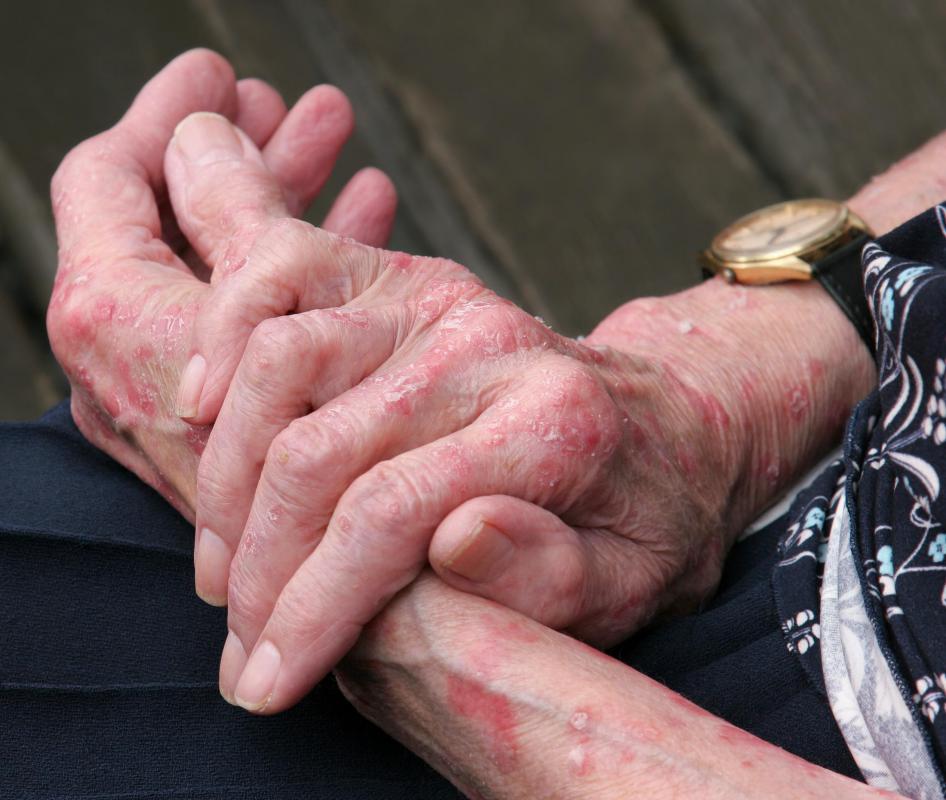
![Laser acupuncture may be used to treat arthritis pain.]() By: marilyn barboneLaser acupuncture may be used to treat arthritis pain.
By: marilyn barboneLaser acupuncture may be used to treat arthritis pain.




Discussion Comments
How safe is it?
I have to downgrade my opinion of this website, if it's willing to promote pseudo-scientific claims like this. Acupuncture has not done well at all after that industry has submitted the field to scientific testing. But the author of this article talks as though it's a thoroughly effective treatment, then goes on to speak of the effectiveness of this laser version in only the vaguest of terms.
Is laser good for bronchitis also? Does it only give temporary relief?
In fact, laser treatment can be use for sciatica and stenosis; it is mainly used for pain relief. And most important, it is non-invasive.
Also, for quitting smoking, I have not heard of this application, but it may not work. We are producing such equipment and I think my explanation is correct.
I have been having this treatment now over a year for hip pain and it has helped a lot, also with the addition of Moxibustion as well in the same session. I need a lot less pain medication now, so it's better for the liver.
I have just hard about this method of treatment from a friend. I suffer from sciatica and stenosis and I recently found out I have a blood disorder called factor five leiden, with a protein deficiency. Therefore, I am on Coumadin for the rest of my life. I am 53.
I would like to have a normal existence and was wondering if this laser treatment would help me. At present the only position where I'm comfortable is lying down. I hope you can help me.
@lovealot- Isn't this cool? I know a little bit about it because my sister is an acupuncturist, and she is thinking of training in laser acupuncture as well.
According to her, the way this works is that when the laser beam stimulates key points of the body, a message is sent to the brain telling it to heal. As hormones are stimulated, the person feels relaxed and calm.
At the present time, there are few scientific studies that show evidence that it works. But, there are many documented cases of success. It is normally a safe procedure so why not give it a try?
I've heard a little bit about the use of laser acupuncture treatment to quit smoking. It is such an unhealthy and costly habit, and so many smokers have such a hard time finding a way to quit. I'd like more information on this new method of treatment.
Post your comments