
At HomeQuestionsAnswered, we're committed to delivering accurate, trustworthy information. Our expert-authored content is rigorously fact-checked and sourced from credible authorities. Discover how we uphold the highest standards in providing you with reliable knowledge.
What is Lamp Oil?
Lamp oil is a liquid petroleum product that is designed to burn cleanly in brass and glass oil lamps, torches, and lanterns. In the same family as kerosene, it has been further processed and refined so that it doesn't produce as much harmful smoke, soot, and other pollutants. This oil can be used for everything from emergency indoor lighting during a blackout to soothing lamp light for a summer evening's barbecue.
When homes used to be lit solely by lamps, the fuel they burned was usually kerosene. This fuel, however, wasn't ideal, since it created a lot of black soot that darkened the glass globes of lanterns and dirtied windows, walls, fabric, and anything with which it comes in contact. Manufacturers, under pressure from eager consumers, decided to distill kerosene further so the fuel could be burned indoors without as much inconvenience.

Now, "ultrapure" or "ultraclean" lamp oil can be found at most supermarkets, outdoor suppliers, and camping stores. Some people keep a store of it along with other emergency supplies, such as a battery-powered radio, water, and first aid kit. Lamps are safer than candles and more reliable than flashlights.
As an oil distillate, this product is a flammable liquid that releases energy in the form of light and heat when its hydrocarbons burn. Like other hydrocarbon products, it must be treated with care. Users should always follow the instructions on the lamp or lantern when filling the reservoir, although usually, it's safe to fill it to within about 0.5 inch (1.27 cm) of the top. The wick should be cleaned and clipped before each lighting, and it should never be rolled down while it is alight. The fuel should be kept at or near room temperature, not in a garage or shed where it could freeze; frozen oil may defrost too quickly, posing an explosive hazard.

The standard variety of lamp oil resembles water in its viscosity, and it is also perfectly clear. There are many specialty varieties that appeal to people's sense of design, however, and the oil can be colored so it adds a decorative touch to lanterns with transparent reservoirs. Purple or red provide a romantic atmosphere, while green and blue evoke serenity.

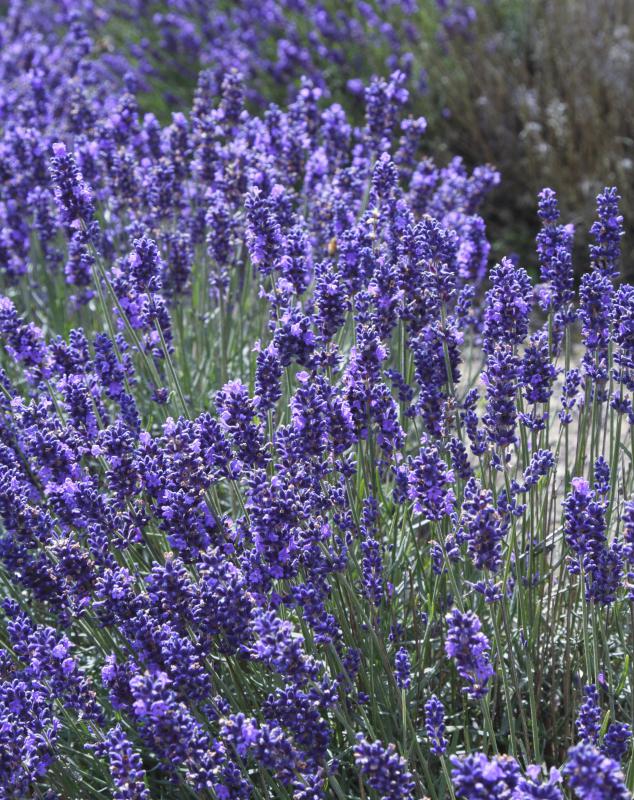
Oil can also be aromatic so that when it burns, it spreads a soothing scent through the air, much like an air freshener. Rose or lavender might be appropriate scents for a master bathroom or bedroom, while lemongrass or vanilla could scent a kitchen. Of course, citronella oil, when burned in outdoor torches, may help keep away mosquitoes and other bothersome insects.
AS FEATURED ON:
AS FEATURED ON:


-
![An oil lamp. Lamp oil is put in the bottom glass container, where it soaks into a wick which then burns in the glass chimney on top of the oil container.]() By: Aleksandar MijatovicAn oil lamp. Lamp oil is put in the bottom glass container, where it soaks into a wick which then burns in the glass chimney on top of the oil container.
By: Aleksandar MijatovicAn oil lamp. Lamp oil is put in the bottom glass container, where it soaks into a wick which then burns in the glass chimney on top of the oil container. -
![A kerosene lantern.]() By: Gino Santa MariaA kerosene lantern.
By: Gino Santa MariaA kerosene lantern. -
![Lamp oil is used to burn outdoor torches.]() By: Bert FolsomLamp oil is used to burn outdoor torches.
By: Bert FolsomLamp oil is used to burn outdoor torches. -
![Lamp oil is designed to burn cleanly in oil lamps.]() By: indigolotosLamp oil is designed to burn cleanly in oil lamps.
By: indigolotosLamp oil is designed to burn cleanly in oil lamps. -
![Lavender can be an appropriate scent for a master bathroom or bedroom.]() By: Elena MoiseevaLavender can be an appropriate scent for a master bathroom or bedroom.
By: Elena MoiseevaLavender can be an appropriate scent for a master bathroom or bedroom.


Discussion Comments
Can I use unscented lamp oil in an indoor kerosene space heater?
Can I use lamp oil in the salamander heater I have for the garage?
It's something Morshu sells.
Warning: In the UK, kerosene is called 'parafin.' They also have a medicinal product called 'liquid parafin' This is a different thing altogether. This could be the source of the confusion. I would not recommend taking kerosene internally.
Can you use citronella oil for lamp and torches on horses with baby oil and apple cider vinegar with no trouble?
Where do I throw away lamp oil? I don't think the trash will be wise.
I have several oil lamps through out the house. I only burn the one in the family room. The oil in some of the lamps has turned yellow with time. In the event of a blackout, is it still safe to burn it or does it need to be discarded now that it has discolored?
To post number 1; I have been told you can interchange lamp oil and Kerosene, but never mix them. However, Kerosene is a much different oil and burns hotter, smokier, fumes, and not nearly as safe. Be careful! Make sure your lamp is completely burned dry before beginning the Kerosene.
If you need to buy Kerosene, the home improvement places usually carry small amounts of Kerosene (like 5/10 gallon). Or you can go to an area oil company (ours was Bob Harris Oil Company) and they sell it to this day. It's also a gas station; just call around in your area.
To test if it's flammable, have a fire extinguisher handy and try to light it (I highly doubt that it is still flammable after being cleaned). Also, do not add anything to your kerosene. Kero-Klean is the only additive that may be safe (and adds a scent).
In reference to kerosene as a medicine: This is pretty horrific, but i have read in many accounts by vietnam pows that they would as often as possible secretly grab a kerosene lamp and swallow a slug of the fuel to fight the intestinal worms they got from the food and water they lived on in the prison camps.
And i do remember my scandinavian grandfather recommending a teaspoon of kerosene and a sweetener for whooping cough, along with onions fried soft in chicken fat, wrapped in a fat-soaked cotton cloth and applied to the chest and back. Whatever worked, i guess.
Can lamp oil damage a carpet or any other fabric or even plastic that binds the carpet? My son has an oil lamp in his room and according to the experts, some of it leaked onto the carpet and caused the plastic fibers in the carpet to stretch or something of that sort.
My dog knocked over my wine oil lamp on my rock hearth and I have been trying to clean it up. I used baking soda and vinegar several times. There is still a slight odor. I'm concerned that it can ignite. Does anyone have any suggestions for treating this?
30 - You could use the lamp oil to start a campfire.
Lamp oil is nothing but refined kerosene. I see no reason why they could not be mixed.
I just bought two lamps with a couple of inches of lamp oil in them. I want to use them at our cabin that has no electricity but for 60 years we have been using kerosene to light our lamps there. Can I mix lamp oil and kerosene? If not, how do I dispose of lamp oil?
#27, you said, "I am going to try taking a jug of home heating fuel out of our tank. It doesn't have that smelly additive that they put in gasoline and diesel fuel."
Does this mean you actually considered using gasoline in a kerosene lamp, inside your house, but you were only deterred by the smell?
That is if you did not already blow yourself up.
To the folks considering ingesting kerosene as medicine: Let's look at the story about the guy that accidentally got kerosene down his throat and noticed that he did not come down with colds or the flu when others did. This does not mean that kerosene prevents or cures illnesses! This only means that the two events, ingestion and not getting sick, happened at the same time.
It is a common mistake to hear a story such as this and think that it implies causation when it does not. It is just a coincidence.
#9, So you heard that antibiotics are bad for you so you want to drink kerosene instead?
Please do not give kerosene to others as medicine. You might kill them!
Can lamp oil be used in Zippo lighters?
To the person that posted #19: I have heard that kerosene does work for fungus infections. I have had first hand used kerosene for cuts. I have soaked my hand after cutting it with a knife and the healing has been swift. I also used kerosene when I got pricked by a number of cactus thorns and they came out. --eganstew
You can use lamp oil in kerosene lamps. I have a collection that I use to keep my front 'unheated' hall free from the deeper winter freezes. The temps stay below the twenties, and I keep two lamps burning 24/7. Kerosene is too sooty and very smelly.
There is a finer grade of lamp oil that you used to be able to buy, but that might be from a bygone era. I am going to try taking a jug of home heating fuel out of our tank. It doesn't have that smelly additive that they put in gasoline and diesel fuel.
As far as your antique kerosene lamps, I just burned mine dry. When the kerosene was gone, or whatever old fuel was in it, then I filled it with the liquid paraffin and they burn great, very clean and no real smell, I use scented candles along with them but I blow those out before I go to bed and always have a working smoke detector close to the 'burn zone'.
The fuel doesn't seem to last as long as the thicker old oils.
I collect oil lamps, but also I use them. I have seven of them across the mantel. The problem is that when I light them although they are really beautiful and add soft light to the room, but the fumes are so bad that it gives us a headache after about an hour.
I am wondering if the Northern light paraffin oil can be used in hurricane type lamps with wicks and if so, will there be that strong kerosene type smell when they burn? Will it ruin my lamps? some are very old and expensive.
eganstew,
I found kerosene at my local Home Depot store in 1 and 5 gallon containers.
"Kerosene ingestion is, unfortunately, a common and serious cause of childhood poisoning in under-developed urban areas of South Africa and other poor countries (De Wet et al. 1994). The pathology appears to be primarily localized to the lung with other manifestations, for example, in the central nervous system, being secondary to hypoxia and acidosis (Klein and Simon 1986)." Just in case the common sense boat set sail without you, *Don't Drink Kerosene.*
can you use lamp oil in a kerosene lantern? --hhsu
Can someone please tell me whether lamp oil or kerosene can be used as an antifungal? This sounds terrible but I have 2 toes that have awful fungus under the nail. I have heard of people using it for medicinal purposes but wanted to get feedback if possible.
'Does anyone know if I can make my lamp oil fragrant by adding a few drops of essential oil?'
As far as I know, alas, this will not work. I checked all over the place myself.
The problem being the fragrance will simply burn. If you have any doubts, know that if it were possible to do it, shelves in WalMarts throughout the land would already be stocked with scented lamp oils from cherry to grape harvest to vanilla ripple.
Stores did find a way to get around this by selling different scented oil warmers, where you pour a liquid in and light a flame under it, never touching.
I have an antique (Persian) oil lamp above the toilet, with a lighter, makes an excellent way for houseguests to freshen up the air after using the bathroom...finish your 'business', light the lamp and viola! Clean skies by the time you open the door. No embarrassing fog following you out.
Scented lamp oil would be arguably even better, I imagine.
As has been suggested, you might not be able to color lamp oil with food coloring as the two liquids are immiscible, but you can add coloured water to the oil, and it will form an attractive separate layer below the oil. This is also a useful technique to lift the liquid level if the wick no longer reaches the oil, and you have no spare oil.
Hi, I use Lamp oil for fire shows.
We dip the kevlar balls and ropes in the lamp oil and set it on fire and whirl it around us till it goes out basically.
Now we're starting to do this more often and we noticed that the colored ones don't burn as well and some non-colored ones burn better than others.
Now we want to order bigger amounts, but we can never say in advance how good it will be. Is there some kind of formula or ingredients in lamp oil we should look our for that will guarantee good burning?
Sorry for my strange question, but i cannot seem to get an answer to it anywhere.
If the lantern label on the side says to use simply "petroleum," but the leaflet enclosed with the same lamp specifies "citronella lamp oil" or "kerosene lamp oil," is it safe to use either plain kerosene bought at a gas station or lamp oil that has no other label other than "petroleum distillate?" The different labels are confusing.
Does anyone know if I can make my lamp oil fragrant by adding a few drops of essential oil? I know both are flammable so I want to know before I try it. Thank you.
I know this sounds terrible and I feel like an idiot, but my dog accidentally drank a small amount of lamp oil. She is not acting sick, but should I call the vet?
How does one dispose of lamp oil?
as someone mentioned it can be poisonous, but then again, so is nutmeg. as for info about it, just email the manufacturer asking for an MSDS sheet. they are required by law to send you one. MSDS sheet, meaning material safety data sheet.
So you're aware, the lamp oil bottle I've got says "harmful or fatal if swallowed." And I've been told when asking about water purification for hiking that hydrocarbons do bad things to your stomach. That justified not taking water from a lake that motorboats went on.
To the anonymous person that responded about the grandfather. I thank you for the information. I remember the sugar but didn't remember exactly how it went. You have jogged my memory and I can see my grandmother doing the same.
Now I would like to ask is the kerosene I would find in the store the same as what they used back then? I have been on the Internet trying to get answers from distributors and they have not answered me back.
I would think of using it for myself as I have been reading about the antibiotics and the bad effects they are having on our bodies. Also doctors have given out so much they are almost of no effect. I am looking for other ways of treating myself and maybe others that are willing.
I have a friend, Ed, who also said he was in charge of filling the lanterns and he would ever so often get some down his throat and he did not have colds or flu. Maybe since he is much older then I he might know where to get the kerosene. Esther Mae:
To the person posting the comment about ingesting Kerosene: My grand folks would use home concoctions of kerosene. When my grandfather felt a cold coming on he would get a level Tablespoon full of sugar and then pour some kerosene into it until full. He would, on occasion, put a dab of Vicks Rub into the mixture. When I pressed him the reason he told me that it cured the FLU. He would have gone through the Flu Pandemic of the early 1900's and I believe that is where the use came from. I would not think of using it myself
There was a widely-used insect repellent in this country (NZ) many years ago, when the pioneers were said to have consumed lump sugar dipped in kerosene which, when exuded through the pores kept sandflies away.
It was said to have worked for that purpose, though the personal freshness of a Model T Ford must have been a bit of a drawback I imagine!
Dave (NZ)
Thank for that information. I had forgotten about the cats and hairballs. A friend of mine was telling me that as a boy it was his job to fill the lanterns. He said he would suck on the hose to get it started and once in awhile he would get some of the fluid down his throat. He did not take much but he noticed he was not coming down with colds or flus like the rest of the family.
Basically, my question is; kerosene, is it the same today as it was 50-100 years ago? I know we have the scented stuff but that is not what I am looking for. I was hoping for someone to have used it as well. eganstew
I am guessing your grandmother's use of kerosene as a home remedy was part of a once-popular idea that a host of ills could be cured by "cleaning out your system." Essentially, it probably worked as a laxative. I'm not sure I'd recommend the use of kerosene for this purpose, but petroleum jelly is an effective stool softener, safe when used in small amounts. Veterinarians often recommend, for example, that cats be given a fingertip-size dose of petroleum jelly every few days as a preventive for hairballs.
When I was a child my grandmother would give me a teaspoon of kerosene. I do not know the purpose of it and would like to find out if anyone has any knowledge to why, what, and the purpose. So far I have had one person say it is for parasites, and another said it took care of colds. Does anyone have any information?
You cannot add food coloring to lamp oil. Food coloring is water based and as the saying goes "oil and water do not mix." You can easily purchase colored oil for the same price as clear.
Wil it be safe to burn my lamp oil if I add food coloring into it?
I see that the difference between 'Lamp Oil' and 'Kerosene' is the processing, so can I interchange the two. If not where can I find Kerosene?
Post your comments