
At TheHealthBoard, we're committed to delivering accurate, trustworthy information. Our expert-authored content is rigorously fact-checked and sourced from credible authorities. Discover how we uphold the highest standards in providing you with reliable knowledge.
What is Klebsiella Oxytoca?
Klebsiella oxytoca is a type of bacterium that is frequently spread in intensive care units or nursing homes. It is closely related to Klebsiella pneumonia. Both are rod-shaped, gram-negative bacteria that cause similar types of diseases. They are typically found in the intestinal tract, where they are part of a healthy colon’s ecosystem. The bacteria can spread to other parts of the body, however, and cause life-threatening diseases.
People who become infected with this bacteria are primarily those whose immune systems are not functioning well. Such organisms are known as opportunistic pathogens. Many of these infections occur in patients who are hospitalized for some other reason, and the bacteria can be easily spread on the hands of hospital workers. People who are particularly susceptible include those with diseases such as alcoholism, diabetes, and chronic bronchopulmonary disease. Other at-risk patients are those who have had organ or stem cell transplants, or who have undergone general surgery.

Additional risk factors include the use of a catheter or feeding tube, which can allow the bacteria to enter the body and bypass its defense mechanisms. The widespread use of antibiotics in hospitals has led to the development of multi-drug resistant strains of Klebsiella that are highly virulent and spread rapidly. Medical professionals usually immediately start treatment when an infection is suspected, and they will generally culture the organism to determine the most effective antibiotics to use.

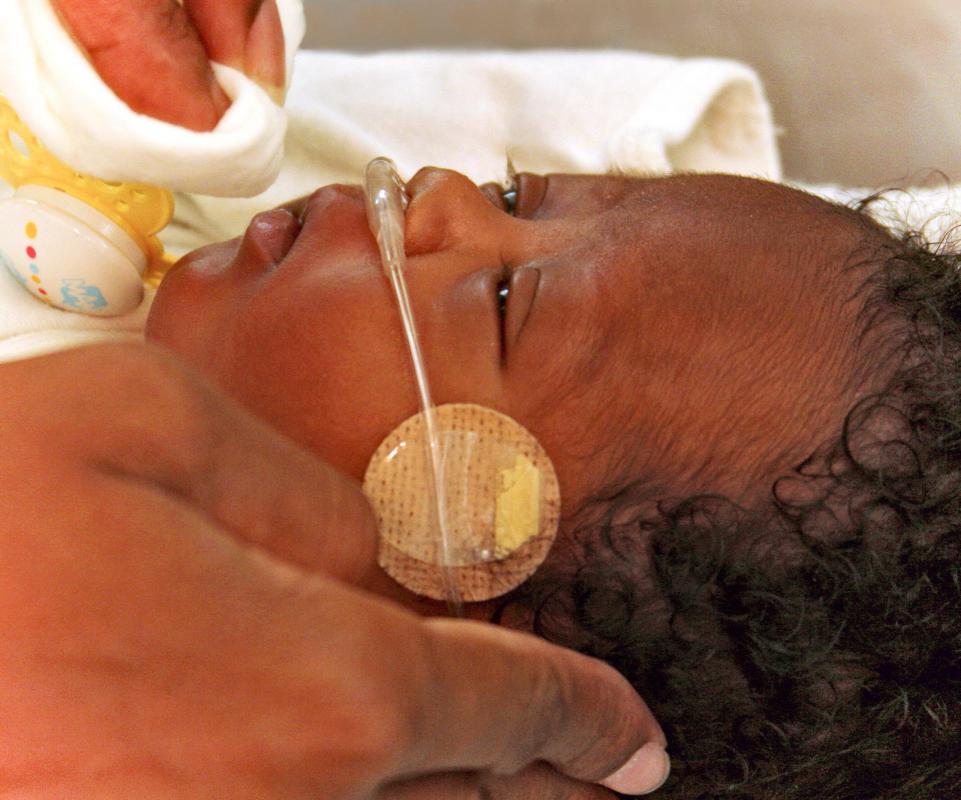
Neonatal units, or specialized wings for babies, are becoming an area of particular concern with Klebsiella oxytoca. In the United States, it is among the top four pathogens causing disease in these units. This is especially true for premature babies.
One systemic disease that can be caused by this strain of bacteria is bacteremia, which is when the bacteria colonize the blood and spread throughout the body. It can lead to septic shock and be fatal. The bacteria is most widely known for causing urinary tract infections. Such infections can spread to the kidneys and lead to renal failure. If the disease progresses to this stage, it can also be life threatening.

Both species of this bacteria can live inside the nose without causing any symptoms. From there, they can be carried into the lungs. This can lead to very serious cases of pneumonia, which is the most common disease caused by these bacteria outside of a hospital. One classic symptom of this type of pneumonia is coughing up mucus known as currant jelly sputum because of its appearance: it is often thick and mingled with blood. Mortality with this condition is fairly high due to a combination of the severity of the pneumonia and the poor health status of the individuals who typically contract it.
AS FEATURED ON:
AS FEATURED ON:


-
![A dish of klebsiella oxytoca bacteria.]() By: czardasesA dish of klebsiella oxytoca bacteria.
By: czardasesA dish of klebsiella oxytoca bacteria. -
![People suffering from alcoholism are at a higher risk of klebsiella oxytoca.]() By: kmiragayaPeople suffering from alcoholism are at a higher risk of klebsiella oxytoca.
By: kmiragayaPeople suffering from alcoholism are at a higher risk of klebsiella oxytoca. -
![Patients who require a catheter for urine drainage are at an increased risk for infections caused by Klebsiella oxyoca.]() By: sudok1Patients who require a catheter for urine drainage are at an increased risk for infections caused by Klebsiella oxyoca.
By: sudok1Patients who require a catheter for urine drainage are at an increased risk for infections caused by Klebsiella oxyoca. -
![Klebsiella oxytoca is a bacterium typically found in the intestinal tract.]() By: Spectral-DesignKlebsiella oxytoca is a bacterium typically found in the intestinal tract.
By: Spectral-DesignKlebsiella oxytoca is a bacterium typically found in the intestinal tract. -
![Klebsiella oxytoca is among the top four pathogens that cause disease in neonatal units in the U.S.]() By: Sabryna WashingtonKlebsiella oxytoca is among the top four pathogens that cause disease in neonatal units in the U.S.
By: Sabryna WashingtonKlebsiella oxytoca is among the top four pathogens that cause disease in neonatal units in the U.S.


Discussion Comments
My 8 week old grandson has been in and out of the hospital since birth. Two days after his birth, his bilirubin levels were too high to leave, so he was in light therapy and his numbers went up but then they got them under control and he was able to go home a few days later. Also I need to say that at some time during these 5 days he was circumcised. Then a week later, my daughter said that he hasn't been having bowel movements (only one since he was home).
Since then she has had him to his doc because he developed an abscess in his privates, so she has been to the hospital four times to either have the abscess drained, have him put on antibiotics, x-rays, scans, etc. Finally he was admitted. She has now had to deal with the hospital, a surgeon, infectious disease doctors, GI doctors. Yesterday he went under and they did a biopsy of his intestines and esophagus for fistulas. Today they told her that they still don't know what is causing the abscesses to show up, but they know what the bacteria is. He is 8 weeks old and has E-Coli and Klebsiella Oxytoca. I'm not sure how he got infected with either of those. Any thoughts?
My condolences to those who lost loved ones to infection. Bear in mind though, that Kelbsiella oxytoca is normally found in the colon where it serves a useful function as part of our microbiome. It usually causes disease only in the very young, the very old, and those whose immune system has been weakened by other diseases. If you are a normal healthy person, you should not be affected by exposure to this or most other bacteria normally found in and on humans.
I was exposed to Klebsiella Oxytoca, Citrobacter, and Bacillus by drinking chocolate milk From Hometown Buffet. I was exposed back in May, but I just got the lab results. What can I do to make sure I am OK, health wise? I have been having respiratory trouble since the incident. My husband also drank it and has had gastrointestinal and respiratory problems ever since. How bad are these bacteria?
Is this klebsiella infection caused in ICU or from the mother's vagina in premature babies? Is it curable?
@christycrr91: I am not a doctor, but I am a veteran of four bronchitis rounds. Not fun. I recommend you call your regular doctor and get an appointment. Your doctor should be able to listen to your chest to tell if you have bronchitis, but a chest X-ray might not be a bad idea, either.
If your children have a separate pediatrician, make an appointment for them, too. The main thing is to get someone to listen to your chest who knows what to listen for. You do not want this to turn into pneumonia, especially with your asthma. See your regular doctor as soon as you can.
My daughter 8 months old, and son 2 years old, and I, all had sore throats in early August. I took us to the doctor a couple of days later.
My son had an ear infection and tested negative for anything on the throat culture. However, I tested positive for klebsiella Oxytoca and Strep C, but they did not test my daughter. The doctor said she would contact us in three days. I was not contacted until one week later. I had already started developing a severe stomach bacterial infection with extreme pain and my primary doctor put me on Flagyl and Cipro.
When the urgent care clinic called me after one week I told them I was on Flagyl and Cipro and they also put me on Penicillin. About two weeks ago, the day my son finished his amoxycillin for his ear infection, we had sore throats again, and they slowly became a constant cough. It is worse for me, but I also have mild asthma. I never wheeze from my asthma; I just have shortness of breath.
Now it's been twelve days and my son and daughter and I have deep coughs, are wheezing and coughing up small amount of phlegm. I know this can be a sign of pneumonia and/or bronchitis. Does anyone have any idea if the klebsiella oxytoca could have survived all of the antibiotics and now my children and I are coming down with pneumonia?
My cough has gotten very bad the past few days, I am up for hours coughing and dry heaving, feeling exhausted. My son is also sneezing a lot today and very tired. They have the phlegm, too. I can hear it when they cough. I am extremely worried about them and considering suing this doctor. Thank you. Any help would be appreciated.
@clintflint - Well, yes and no. I'm sure all the people who had had contact with her would have completely decontaminated themselves. And really, when you think about the premature babies and elderly people that could be effected by that bacteria, I think it's appropriate to take what precautions they can, even if it's too late.
It does suck for your mother, of course, since it's bad enough to be in hospital without something like that happening. But you can't really blame the hospital for that.
Then they found out she had recently been in another hospital which was known for having one of the antibiotic resistant bacteria, it might have been k. pneumoniae.
Immediately, she was pushed upstairs, given her own, extremely run-down room and no one came to visit her from that moment on. They took swabs an told her that if the cultures came back clear (in three days!) she would be allowed access to the rest of the hospital again.
I mean, I get it, they can't take risks, but they'd all already touched her. Surely the damage was already done!
@anon251880 - I am so sorry for your loss. I hope you don't blame yourself. Unfortunately, sometimes things like this happen and there's nothing you can do to prevent it. Life is still so precious, even with all our medical advancements.
My baby Brandon, was born 5 1/2 weeks premature. He was doing great, gaining weight, and was only in the NICU for nine days. At seven weeks old we took a trip to Utah and he caught the airborne bacteria called Klebsiella Oxytoca Septicemia. It was only in his system for 12 hours or less, but caused his blood vessels to burst, his lungs filled up with blood and the doctors could not save him. He passed away.
My son was born six weeks premature but was at a healthy weight of 5lbs 4 oz. I was able to take him home at three days old as there were not any complications.
At one week he was jaundiced and not eating well. His bilirubin was at 19 so he was admitted to the pediatric unit. Turned out he was septic with the klebsiella gram negative rods. Our pediatrician said he probably would not have made it through the night had I not brought him in when I did.
After 12 days in the hospital on IV antibiotics we were able to go home. Today he is a healthy 13 year old boy.
I knew someone who had a urinary tract infection that was caused by the Klebsiella bacteria. She got it from a catheter that she had to have placed in her urinary tract. She was put on antibiotics and the infection went away in about three days, which was good because the doctor told her she may have to take them for about 21 days depending on how quickly the infection responded to the antibiotics.
@JillT – Depending on the severity of the infection, treatment may start with antibiotics given intravenously in the hospital. If the patient responds quickly to intravenous therapy, then they can be switched to oral antibiotics.
Can anybody tell me what kind of treatment is used to treat klebsiella pneumonia?
Post your comments